
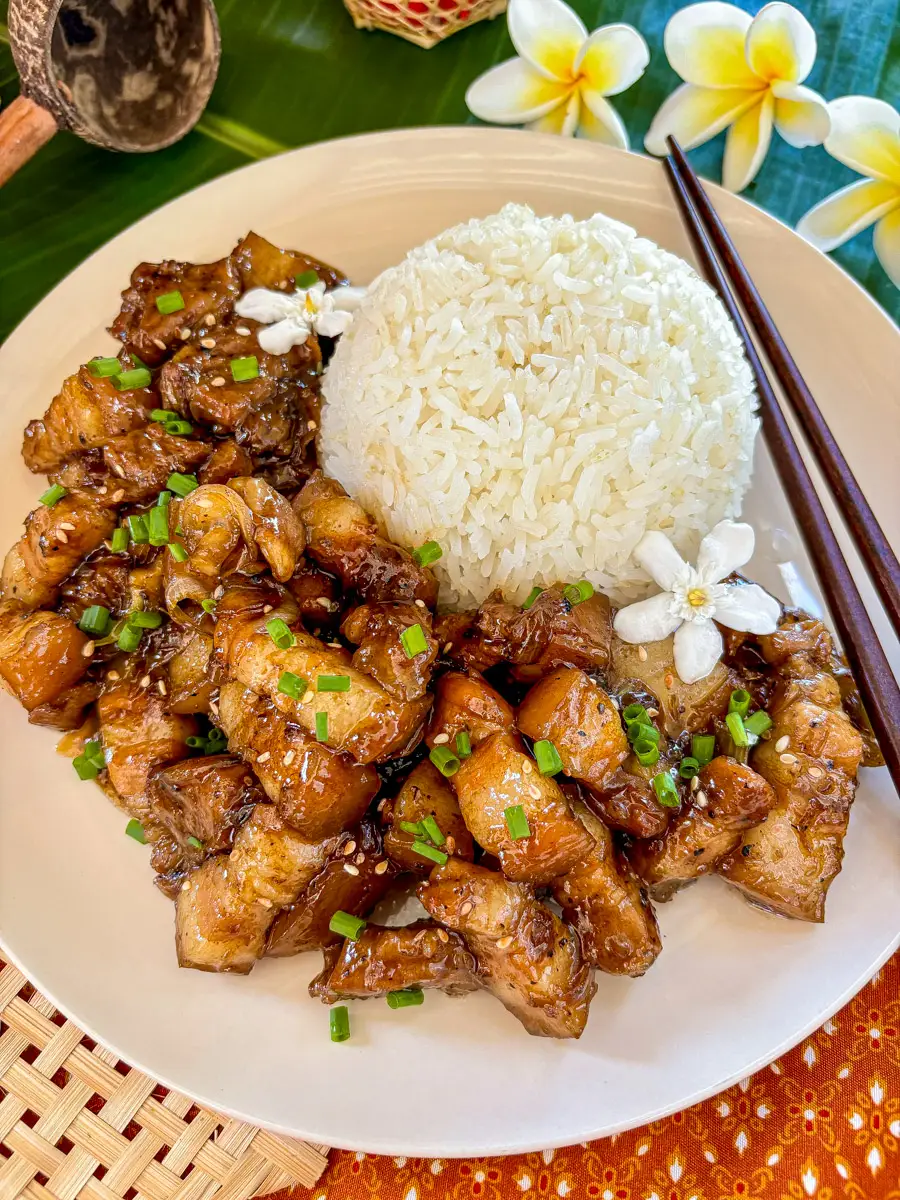
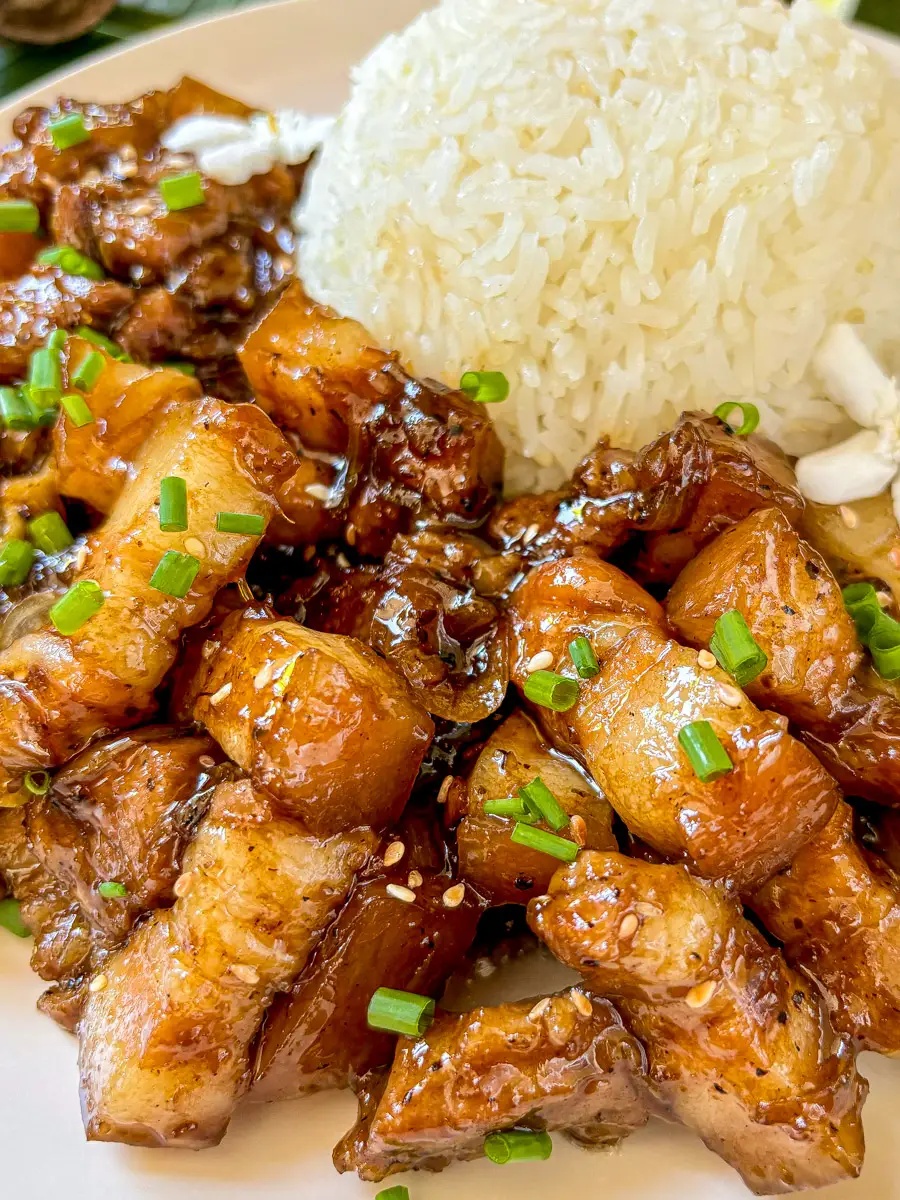
At first glance, Thai sweet pork (moo wan) looks like a simple pork belly stir-fry, but it’s quite different. After simmering, the pork becomes incredibly tender and coated in a sticky, caramel-like sauce that’s sweet, savory, and full of flavor.
What readers say:
“This recipe is divine! I’ve made it two or three times already. Will need to make it again this upcoming week. Yum!!!“
— Jason
What is moo wan?
Moo wan (หมูหวาน), which literally means “sweet pork,” is a traditional Thai dish made by slowly cooking pork in a mixture of palm sugar, soy sauce, fish sauce, garlic, coriander root, and black pepper.
Unlike many Thai stir-fries that come together in just a few minutes, moo wan is cooked a little longer. That extra time allows the pork to become tender while the sauce slowly reduces into a thick glaze that coats the pork.
It’s a dish you’ll often find as part of a larger Thai meal, served alongside steamed rice and several other dishes to balance the sweet flavors.


Praew’s cooking tips
These are the tips I use every time I make it to get tender pork and that signature sticky sauce.
I often make a double batch because the leftovers make an easy lunch with a bowl of steamed rice. The flavors only get better overnight.
Praew ♡
Learn Thai cooking step by step
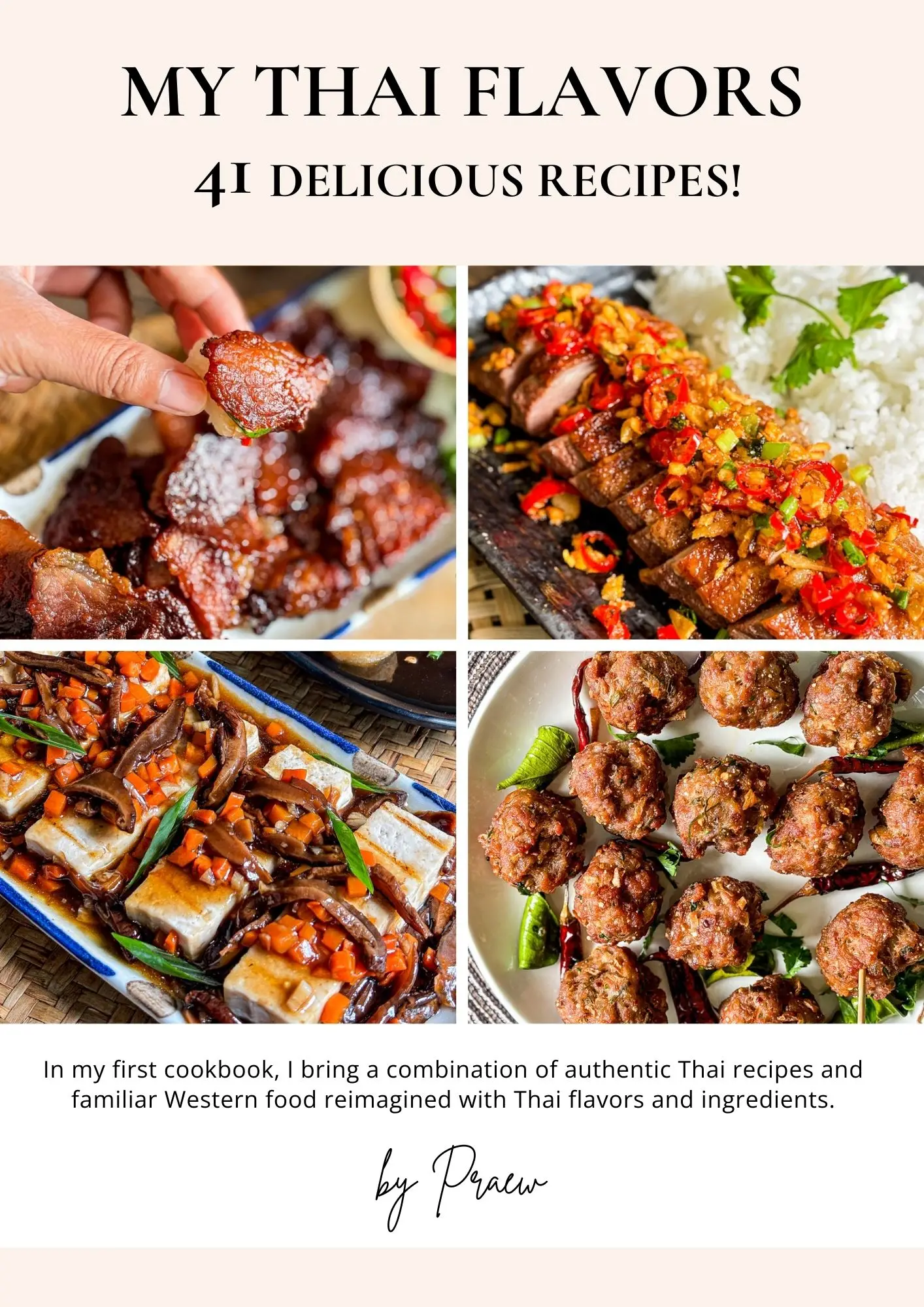
My cookbook is a combination of authentic Thai recipes and Western dishes cooked with Thai flavors and ingredients. It’s a great starting point if you’re new to Thai cooking or want to cook it more often.
Ingredient notes & substitutes
You can find everything at Asian grocery stores or markets. Head to the recipe card at the bottom of this post for the exact measurements.
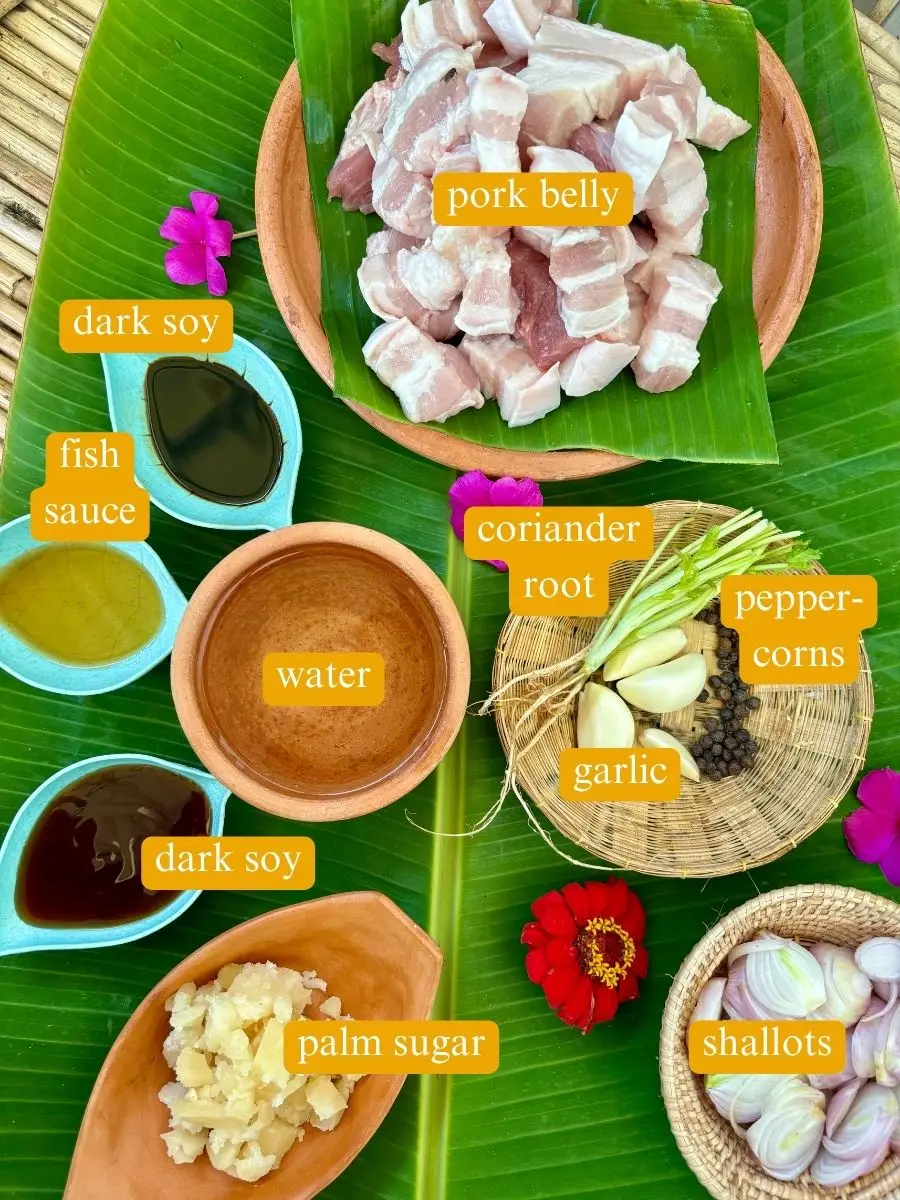
- Pork belly: Try to find a piece with a good balance of meat and fat rather than thick layers of fat. Pork shoulder works too, but you’ll miss some of that richness.
- Black peppercorns: Once pounded with the garlic and coriander root, they add a gentle warmth that ground black pepper can’t match.
- Coriander root: One of the signature flavors in Thai cooking. It adds an earthy, aromatic base that’s difficult to replace.
- Garlic: I always pound it together with the peppercorns and coriander root rather than chopping it because it releases much more flavor.
- Shallots: I prefer shallots over onions here because they become sweet as they cook and blend into the sauce instead of standing out.
- Dark soy sauce: This isn’t here to make the dish salty. I use it mostly for that beautiful deep brown color that moo wan is known for.
- Oyster sauce: This rounds out the sauce and adds richness. It helps balance the sweetness without making the dish taste overly salty.
- Palm sugar: The traditional sweetener for moo wan. It melts into a rich, caramel-like glaze that white sugar can’t quite replicate.
- Fish sauce: Without it, the sauce tastes flat instead of having that sweet-salty balance Thai food is known for. I always use Megachef fish sauce.
- Water: Helps the pork simmer gently while the sauce slowly reduces into its signature sticky glaze.
How to make Thai sweet pork
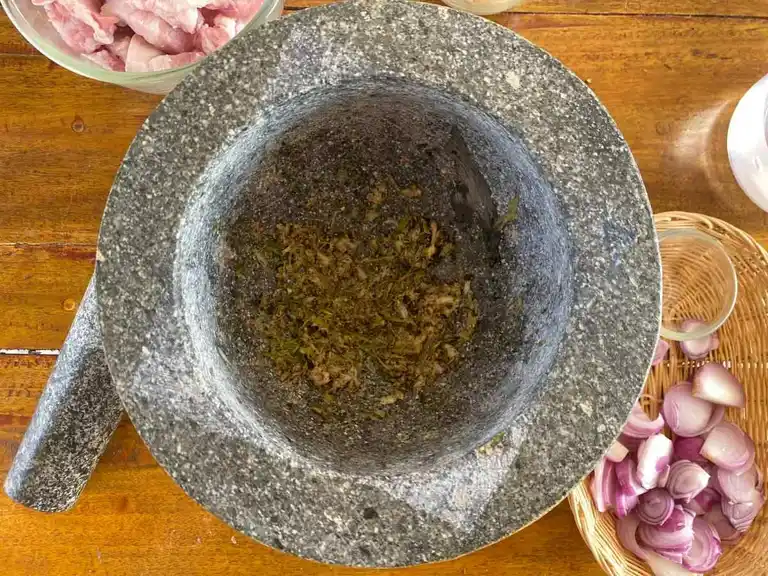
1: Make the spice paste. Pound the garlic, coriander root, and black peppercorns together in a mortar and pestle until you have a coarse paste. It doesn’t have to be perfectly smooth. A little texture is completely fine.

2: Simmer the pork belly. Place the sliced pork belly in a pot and add enough water to completely cover it. Bring to a boil, then reduce the heat to a gentle simmer. Cook for 15 to 20 minutes, or until the pork is tender but still holds its shape. Drain and set aside.

3: Build the flavor base. Heat the oil in a wok or large pan over medium heat. Add the shallots, followed by the pounded spice paste and palm sugar. Stir frequently until the shallots soften and the palm sugar melts into a light caramel.

4: Make the sauce. Pour in the dark soy sauce, oyster sauce, fish sauce, and water, then stir until everything is well combined.
5: Add the pork. Add the cooked pork belly and toss to coat every piece in the sauce.

6: Simmer until sticky. Let the pork simmer gently for about 20 minutes, stirring every few minutes. As the sauce reduces, it will become thick, glossy, and coat every piece of pork. If it still looks thin, let it simmer a little longer.
Serve with jasmine rice and garnish with fresh herbs like cilantro or chopped green onions for color and freshness. Sprinkle with sesame seeds just before serving.
How to store & reheat leftovers
- Refrigerate: Let the moo wan cool completely, then store it in an airtight container in the refrigerator for up to 4 days.
- Reheat: Warm it gently in a pan over low heat until heated through. If the sauce has become too thick, stir in a splash of water to loosen it.
- Freeze: Transfer cooled moo wan to a freezer-safe container and freeze for up to 3 months. Thaw overnight in the refrigerator before reheating.


Thai Sweet Pork (Moo Wan Recipe)

Equipment
- Mortar and pestle or food processor
- Medium pot
- Wok or large skillet
- wooden spoon or spatula
Ingredients
- 4 cloves garlic
- 4 coriander roots
- 1 tsp black peppercorns
- 1 lb pork belly, sliced into bite-sized pieces
- ⅔ cup water, for the sauce, plus extra for simmering the pork belly
- ½ tbsp oil
- ½ cup shallots, finely sliced
- ¼ cup palm sugar, chop to measure
- 2 tsp fish sauce
- 2 tbsp oyster sauce
- 1 tsp dark soy sauce
Instructions
- Pound the garlic, coriander root, and black peppercorns into a coarse paste using a mortar and pestle.
- Place the pork belly in a pot and add enough water to cover. Bring to a boil, reduce to a gentle simmer, and cook for 15–20 minutes until tender. Drain and set aside.
- Heat the oil in a wok or large skillet over medium heat. Add the shallots, spice paste, and palm sugar. Cook, stirring frequently, until fragrant and the palm sugar begins to caramelize.
- Stir in the dark soy sauce, oyster sauce, fish sauce, and water until combined.
- Add the cooked pork belly and simmer for about 20 minutes, stirring occasionally, until the sauce has reduced into a thick, sticky glaze that coats the pork.
- Serve immediately with steamed jasmine rice.
Notes
- Use the nutrition card in this recipe as a guideline.
Your moo wan recipe is divine! I’ve made it two or three times already. Will need to make it again this upcoming week. Yum!!!
Thank you so much!
I made this and it was such a big hit! I couldn’t find the coriander roots and was going to sub with coriander seeds but last minute decided to google what a good substitute would be. I am so glad I did! It was suggested to use parsley root and that using the coriander seed would have completely changed the flavor. I used parsley root and after tasting when finished, could totally see how using coriander seeds would have been a big mistake. For the palm sugar I substituted with light brown sugar but only because that is what I had on hand. I probably would have used dark brown sugar to substitute if I had it. I have picky eater sons and they both enjoyed this but the pickier eater of the two enjoyed it GREATLY. My husband and I are excited to add this to our rotation as we loved this so much! Directions were very easy to follow. Served with white rice and some steamed chinese broccoli but my sons only ate the moo wan, lol.
Thank you so much for trying my recipe!