
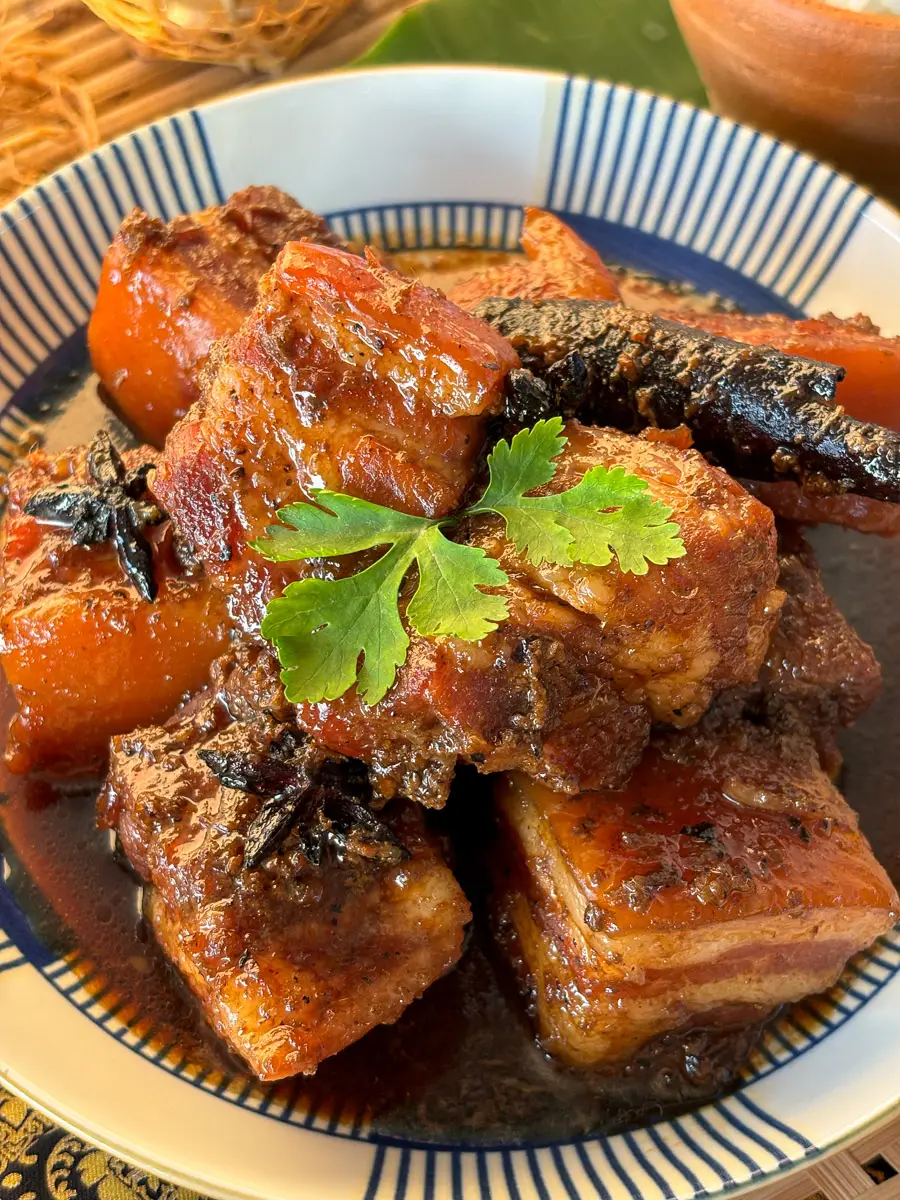
This moo hong recipe is a Southern Thai pork belly stew with tender chunks of pork, a dark, savory-sweet sauce, and the warm aroma of garlic, pepper, and spices. It takes a little time to simmer, but most of the cooking is hands-off. Plus, the pork and sauce are even better the next day!

What is moo hong?
Moo hong (หมูฮ้อง) is a Southern Thai braised pork belly dish closely associated with Phuket’s Chinese-Thai food culture. Pork belly is cooked slowly with soy sauce, sugar, garlic, black pepper, coriander root, and aromatic spices until the meat is tender and the sauce turns dark and rich.
It’s not a spicy dish. The flavor is savory and gently sweet, with fragrant notes from the spices and plenty of richness from the pork belly. Unlike a soup with lots of broth, moo hong is served with a smaller amount of concentrated sauce that coats the meat and is delicious spooned over rice.
Moo hong shares similarities with other Chinese-influenced Thai braised pork dishes, such as moo palo (pork with eggs) and khao kha moo (braised pork leg). Each has its own seasoning and cooking method, but they all have that lovely combination of tender pork and a rich, savory sauce.

Praew’s cooking tips
A few things are worth knowing before you start. Especially when you’re cooking pork belly for several hours, it’s helpful to know what to look for rather than relying on the cooking time alone.
Let the pork take on some color before adding water.
I brown the pork belly directly in the palm sugar and seasoning mixture. Turn the pieces around so the outside gets coated in that dark sauce. The goal is to get the pork nicely coated and give it some color before the long simmer.
Don’t rush the pork just because it looks cooked.
The outside can turn dark quite early, but that doesn’t mean the pork is tender yet. Pick up a piece with chopsticks or pierce it with a fork. You should be able to get through it easily, without the meat feeling chewy.
Watch the bottom when the sauce gets thick:
As the liquid reduces, the sugar and soy sauce become more concentrated and can stick to the pot. Stir gently and more often towards the end.
Praew ♡
my COOKBOOK
My cookbook brings together authentic Thai recipes and Western favorites made with Thai flavors. It’s a lovely place to start if you want to cook more Thai food at home.
Ingredient notes & substitutes

- Pork belly: Choose a piece with a good balance of meat and fat. You want distinct layers rather than a piece that’s almost entirely fat. Cut the pork into evenly sized chunks so they cook at roughly the same rate.
- Coriander root, garlic, and black peppercorns: These form the aromatic base of the dish.
- Cinnamon stick and star anise: These give the sauce its warm, sweet-spiced aroma. Keep them whole so they can infuse the stew.
- Dark soy sauce: Adds a deep brown color and a little sweetness.
- Light soy sauce: The savory seasoning.
- Palm sugar: This adds sweetness with a rounded caramel note. If you’re using a hard block, chop or grate it first so it melts more evenly.
- Salt and water: The amount of liquid also affects the final sauce, so follow the quantity in the recipe card and check the pot during cooking.
You can find most of these ingredients at Thai or Asian grocery stores. Head to the recipe card at the bottom of this post for the exact measurements.
How to make Thai pork belly stew

1. Pound the aromatics. Crush the garlic, black peppercorns, and coriander root together using a mortar and pestle. Make sure the peppercorns are broken down so you don’t end up with whole peppercorns in your finished stew.

2. Fry the aromatics and spices. Place a pot over low-medium heat and add the crushed mixture, star anise, and cinnamon stick. Fry until fragrant, then add the palm sugar. Keep stirring until the sugar melts and starts to caramelize slightly. Don’t let it smoke or become very dark, as burnt sugar can make the sauce bitter.

3. Add the sauces and brown the pork. Stir in the dark soy sauce, light soy sauce, and salt. Add the pork belly chunks and turn them in the mixture until they’re coated and nicely browned.

4. Add water and simmer. Pour in the water and bring everything to a gentle simmer. Lower the heat and cook for about 3 hours, or until the pork belly is very tender. The pork doesn’t need to be completely submerged, but turn the pieces occasionally so they cook evenly.
Tip: If the liquid gets too low before the pork is tender, add a little hot water. Once the pork is ready, simmer uncovered if needed to reduce the sauce. Serve hot with jasmine rice.
How to store and reheat braised belly
Refrigerate
Freeze
Reheat
Muu hong tastes even better the next day! The pork has more time to soak up the savory-sweet sauce, making leftovers especially good. I often make extra so there’s some waiting in the fridge.
Tried this Thai pork stew recipe?
Please leave a star rating or a comment below. I’d love to hear how it turned out for you. You can also follow Hungry in Thailand on Facebook, Instagram, and Pinterest.
Leave a ReviewMoo Hong Recipe (Thai Pork Belly Stew)

Equipment
- Sharp knife and cutting board
- large pot
- ladle
Ingredients
- 4 cloves garlic, peeled
- 1 teaspoon black peppercorns
- 3 coriander root
- 3 star anise
- 1 cinnamon stick
- 1.5 lb pork belly, sliced into chunks
- 1 tablespoon dark soy sauce
- 2 tablespoons light soy sauce
- 3 tablespoons palm sugar
- 1 teaspoon salt
- 4¼ cups water
Instructions
- Pound the garlic, black peppercorns, and coriander root together using a mortar and pestle.
- Heat a pot over low-medium heat. Add the crushed aromatics, star anise, and cinnamon stick. Fry until fragrant, then add the palm sugar and stir until melted and caramelized.
- Add the dark soy sauce, light soy sauce, and salt. Add the pork belly chunks and brown them in the mixture.
- Pour in the water and bring to a gentle simmer. Reduce the heat to low and simmer for about 3 hours, or until the pork belly is very tender. Serve hot with jasmine rice.
Notes
- Use the nutrition card in this recipe as a guideline.