
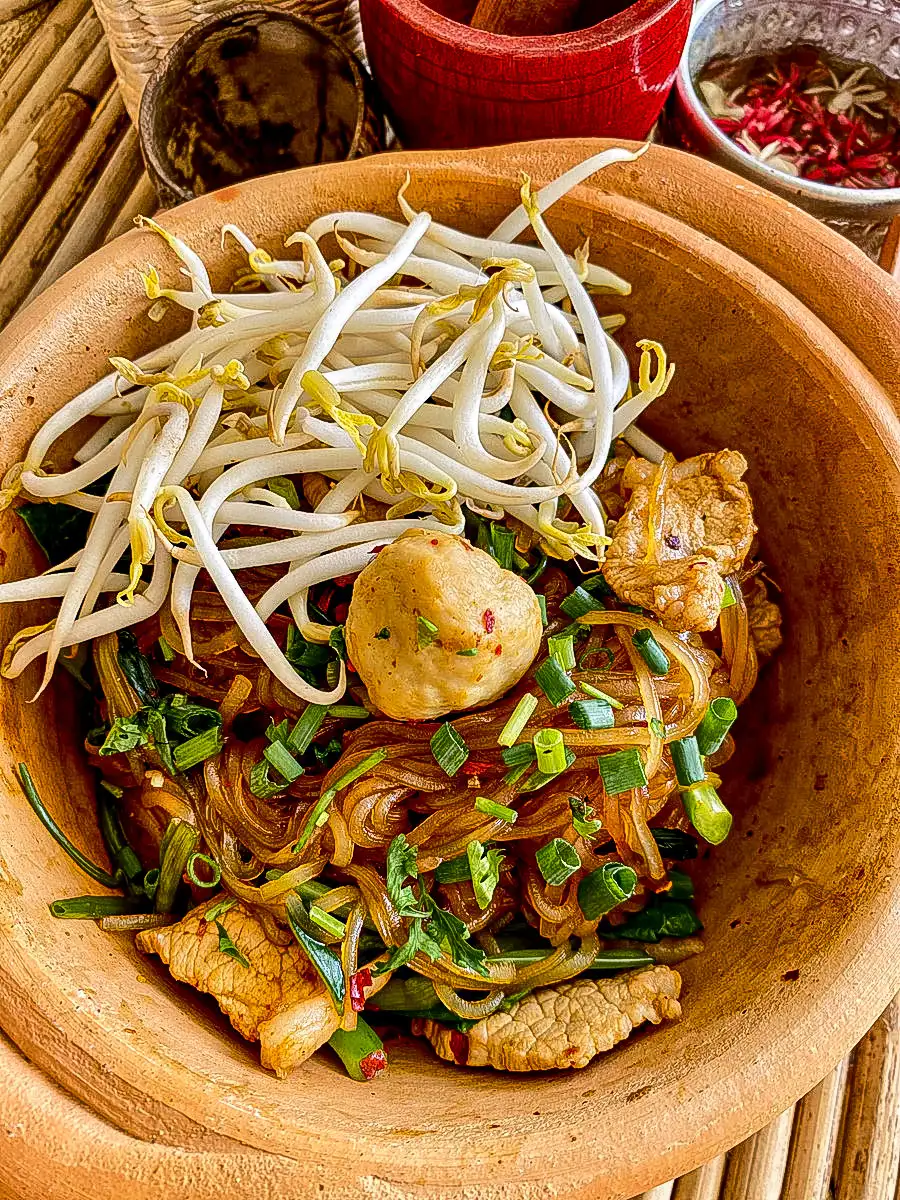
This Thai dry noodles recipe turns rice noodles, pork, look chin, and fresh vegetables into a saucy Thai noodle bowl. Everything is tossed with a savory, tangy sauce for an easy meal without having to make a pot of broth.
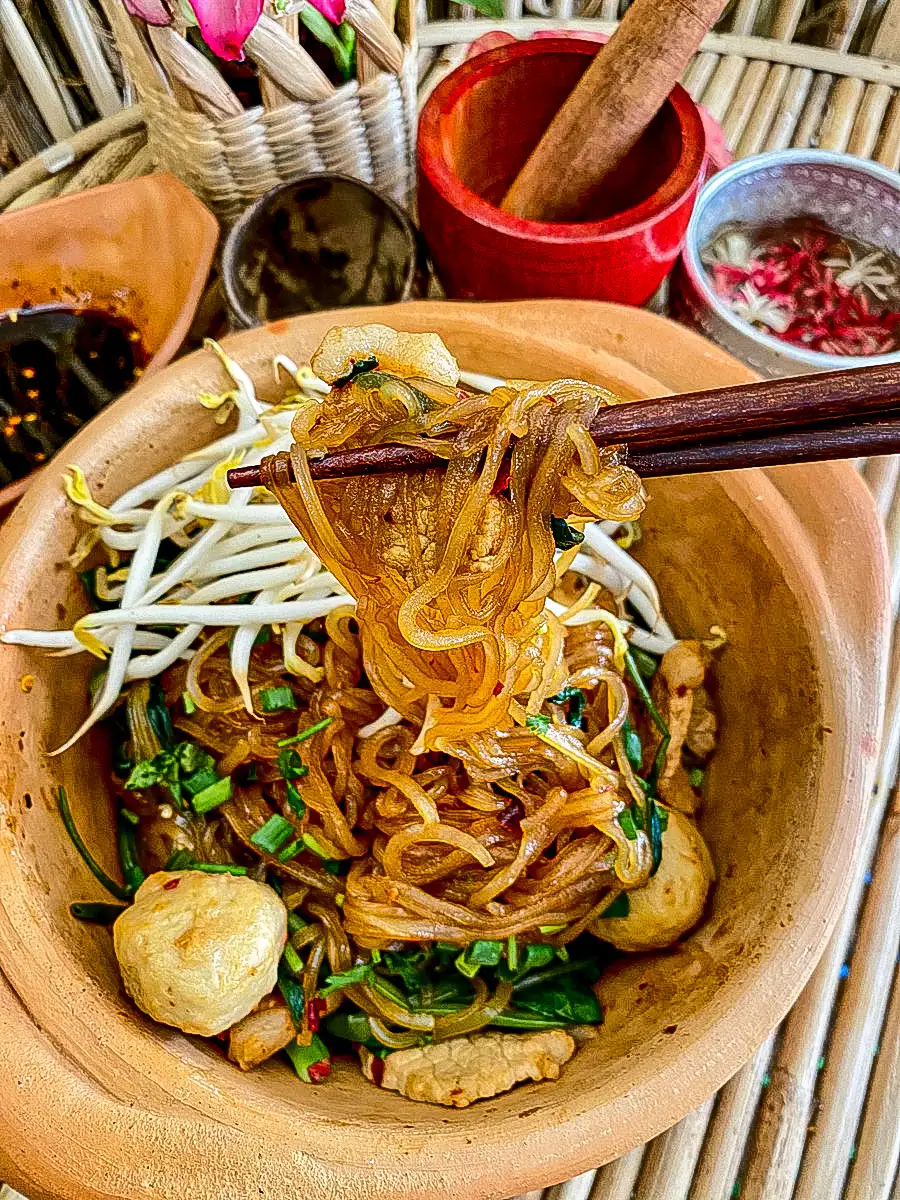
What are Thai dry noodles?
Thai dry noodles are noodle dishes served without broth. In Thailand, some noodle dishes can be ordered nam (with broth) or haeng (dry). For the dry version, the cooked noodles are seasoned and served with protein, vegetables, and toppings instead of sitting in a bowl of soup.
The seasoning varies from one noodle dish to another. Some versions use a simple savory sauce, while others take inspiration from the spicy, sour flavors of tom yum (dry tom yum noodles). My version uses a tangy sauce with Thai seasonings, vinegar, sugar, and chili flakes, giving you those familiar Thai noodle soup flavors without the broth.

Praew’s cooking tips
Thai noodles are forgiving, but there’s one thing I don’t like: a bowl of noodles that’s watery at the bottom and bland on top. A couple of small things help avoid that.
Cook the components separately:
The noodles, protein, and greens need different cooking times.
Drain before mixing:
Excess water can dilute the sauce and leave you with bland noodles. This matters especially with rice noodles and blanched vegetables.
Add the sauce to taste:
Start with enough to coat the noodles and add more as you toss. You want the flavor on the noodles, not a puddle sitting underneath them.
Praew ♡
Ingredient notes & substitutes

For the Thai dry noodle sauce
- Golden mountain seasoning sauce: Golden mountain sauce is a Thai seasoning sauce that gives the noodles a salty, savory flavor.
- Dark soy sauce: This gives the noodles their darker color and adds a little sweetness. Don’t confuse it with light soy sauce, which is thinner and mainly used for seasoning.
- Fish sauce: Adds saltiness and umami. Different brands vary in intensity, but I always use Megachef.
- White vinegar: Gives the sauce its tangy edge. It helps balance the savory seasonings and sugar.
- White sugar: Softens the sharpness of the vinegar and balances the salty sauce. You want the flavors to work together, not make the noodles taste sweet.
- Thai chili flakes: Add these according to how spicy you like your noodles. You can always sprinkle more on at the table.
- Water: Helps dissolve the sugar and combine the seasonings into a sauce that’s easy to toss with the noodles.
For the noodles, protein, and vegetables
- Rice noodles: Dried rice noodles work well here. You can also use fresh wide rice noodles (sen yai), glass noodles, egg noodles, or instant noodles. The texture will change depending on what you choose, so follow the packet instructions for cooking.
- Pork or other protein: I use pork, and Thai fish balls (look chin) are another good addition. You can use chicken, beef, shrimp, squid, or tofu. Slice pork, chicken, or beef thinly so it cooks quickly and is easy to eat with the noodles.
- Chinese broccoli: Chop it into bite-sized pieces. If the stems are thick, slice them lengthwise so they soften at the same pace as the leaves.
- Bean sprouts: Rinse and drain them well. I add them at the end for their fresh crunch, rather than cooking them until soft.
- Green onions and coriander: Chop these for the final garnish.
You can find most of these ingredients at Thai or Asian grocery stores. Head to the recipe card at the bottom of this post for the exact measurements.
How to make a Thai noodle bowl
1: Make the sauce. Add the water, white sugar, Golden Mountain seasoning sauce, fish sauce, white vinegar, chili flakes, and dark soy sauce to a small saucepan or wok over medium heat. Stir until the sugar dissolves and the mixture begins to bubble. This should only take a couple of minutes; you want the ingredients combined, not a thick, reduced syrup. Set the sauce aside.

2: Cook the protein. Bring a pot of water to a boil and add your chosen protein. Cook until fully done, then remove and drain. Thin slices of pork or chicken cook faster than larger pieces, while shrimp and squid need less time than most meat. If you’re using Thai fish balls, cook them until heated through.

3: Cook the noodles. Prepare the noodles according to the packet instructions. If you’re using dried rice noodles, soak them first if the package calls for it. Drain them well once they’re tender. Don’t leave them sitting in water while you prepare the other ingredients, or they’ll continue softening.

4: Blanch the Chinese broccoli. Bring water to a boil and blanch the chopped Chinese broccoli for about 10 seconds, as in this recipe. The leaves should soften slightly while the stems keep some bite. Drain thoroughly so the extra water doesn’t end up in your sauce.

5: Toss the noodles with the sauce. Add the cooked noodles, protein, and Chinese broccoli to a large bowl. Pour over enough sauce to coat everything and toss well. Start with part of the sauce, then add more as needed.
6: Finish and serve. Top with the fresh bean sprouts, chopped green onions, and coriander. Add extra chili flakes if you like more heat. Serve straight away while the noodles are warm and the sprouts are still crunchy.
How to serve
Taste and adjust: Before you serve, taste a noodle rather than tasting the sauce on its own. The sauce should taste a little stronger by itself because it has to season the noodles, meat, and vegetables too.
If the bowl tastes too salty, add a little more plain cooked noodles or vegetables rather than more sugar. If it’s too sharp, a small pinch of sugar can help.
Add your favorite condiments: In Thailand, noodle dishes are often served with condiments on the table so everyone can adjust the flavor to their liking.
Try extra Thai chili flakes or chili vinegar for more spice. Sprinkle on a little crispy fried garlic for a crunchy texture and roasted garlic flavor.
How to store & reheat leftovers
This Thai rice noodle bowl is best eaten freshly tossed, but leftovers can be kept if needed.
Refrigerate
Freeze
Reheat
Make ahead tip
You can make the sauce ahead and keep it in a covered container in the refrigerator, and you can wash and chop the vegetables in advance.


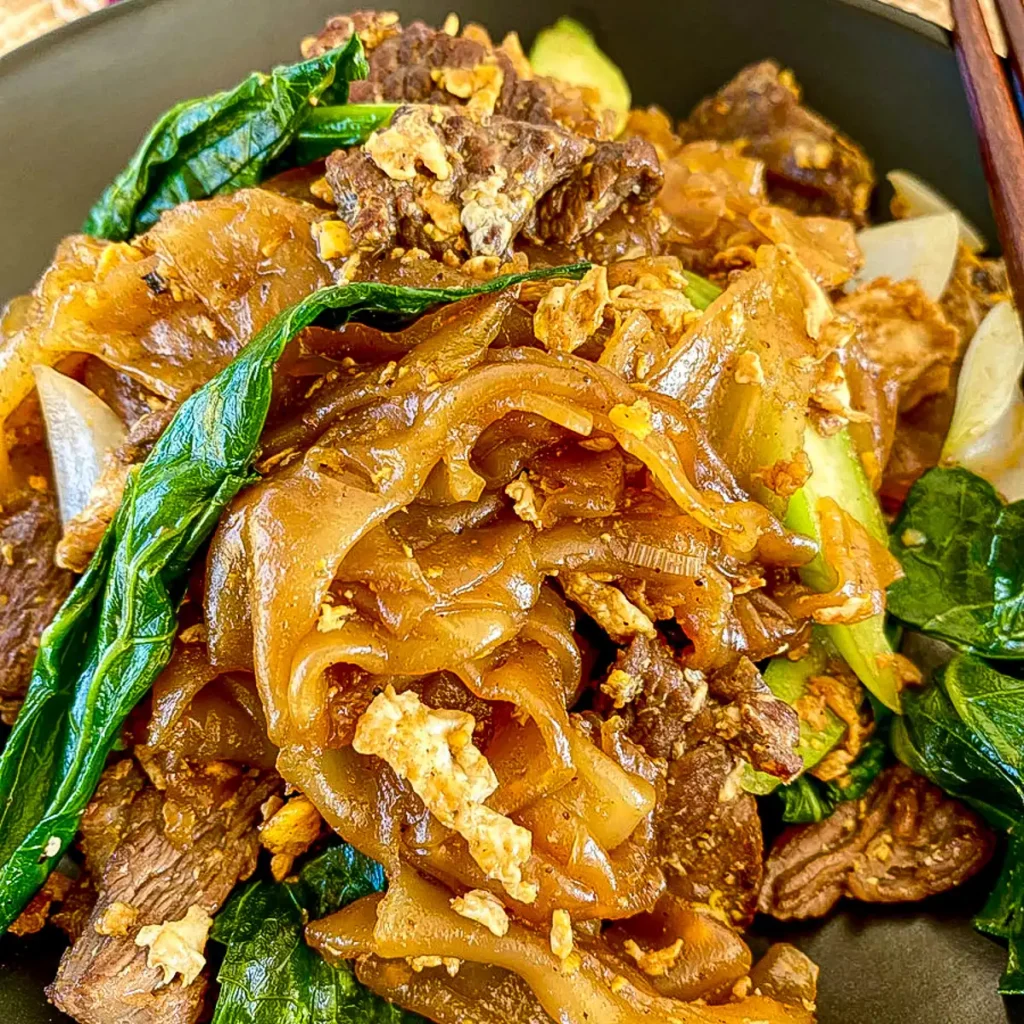
Tried this Thai dry noodle recipe?
I’d love to hear what protein and noodles you used! Please leave a rating and/or a comment, and follow me on Facebook, Instagram, and Pinterest.
Leave a Reviewmy COOKBOOK
My cookbook brings together authentic Thai recipes and Western favorites made with Thai flavors. It’s a lovely place to start if you want to cook more Thai food at home.
Thai Dry Noodles Recipe (Thai Noodle Bowl)

Equipment
- large pot for cooking the protein, noodles, and vegetables
- Small saucepan for preparing the sauce
- Colander or fine-mesh strainer
- Large mixing bowl for tossing everything together
- Cutting board and sharp knife
Ingredients
For the sauce
- 1/½2 cup water
- 2 tbsp golden mountain sauce
- 3 tbsp white sugar
- 1 tbsp dark soy sauce
- 2 tbsp fish sauce
- 1 tsp Thai chili flakes, adjust to taste
- 2 tbsp white vinegar
For the noodles, vegetables, and protein
- ⅔ cup pork, or a protein of your choice, thinly sliced
- 4 oz dried rice noodles
- Chinese broccoli, chopped; amount to taste
- bean sprouts, rinsed and drained; add to taste
- green onions, chopped, for garnish
- coriander, chopped, for garnish
Instructions
- Make the sauce: Combine the water, golden mountain seasoning sauce, white sugar, dark soy sauce, fish sauce, white vinegar, and chili flakes in a small saucepan over medium heat. Stir until the sugar dissolves and the sauce begins to bubble, then remove from the heat.
- Cook the pork: Bring a pot of water to a boil. Add the thinly sliced pork and cook until fully cooked through. Remove and drain well.
- Prepare the noodles and vegetables: Cook the rice noodles according to the package instructions, then drain thoroughly. Blanch the chopped Chinese broccoli in boiling water for about 10 seconds and drain.
- Toss everything together: Add the cooked pork, noodles, and Chinese broccoli to a large mixing bowl. Pour over enough sauce to coat everything and toss well, adding more sauce as needed.
- Garnish and serve: Top with fresh bean sprouts, chopped green onions, and coriander. Serve immediately with extra chili flakes if desired.
Notes
- Use the nutrition card in this recipe as a guideline.