
If you have a few eggs to use up, there are plenty of Thai egg recipes you can make with them. In Thailand, we steam them, toss them into spicy salads, deep-fry them, and even cure them in salt.
I’ve gathered eight easy recipes in one place, with ideas for breakfast, lunch, or dinner. I’m sure you’ll find a few dishes you’ll love, including some you might never have tried before. Most are easy to make with everyday Thai ingredients!

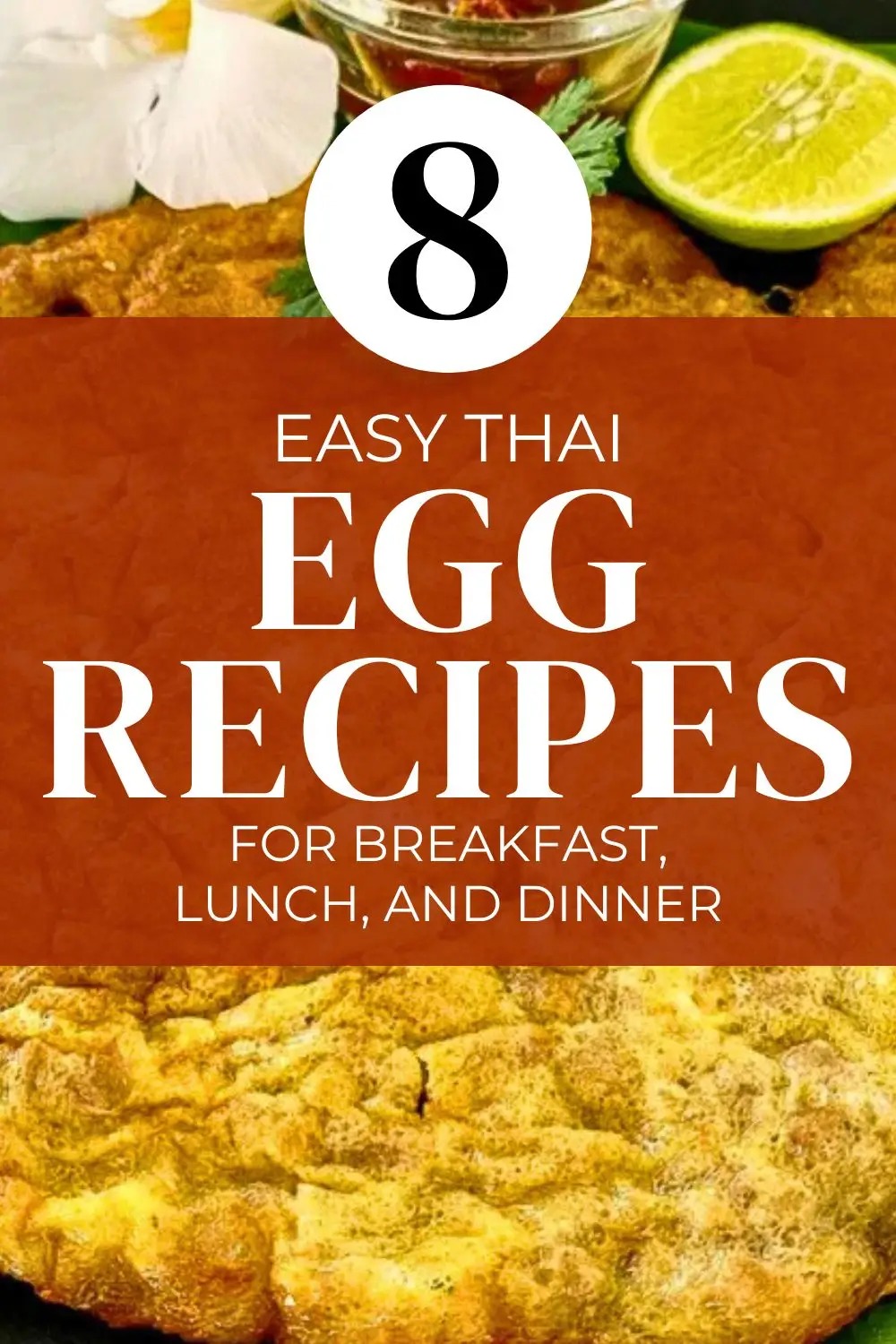
1. Kai jeow moo sab (Thai pork omelette)

Kai jeow moo sab is a Thai omelette made with minced pork, garlic, fish sauce, and oyster sauce. It’s one of those simple everyday dishes that tastes so much better than a standard Western omelette seasoned with just salt and pepper.
The eggs are fried in hot oil, which gives the omelette its signature puffy shape and crispy, golden edges. The inside stays soft and fluffy, with little pieces of savory pork in every bite.
This is a great choice when you need a quick lunch or dinner. In Thailand, we usually serve it over steamed jasmine rice, with a little prik nam pla (Thai chili fish sauce) on the side.
2. Kai dao (Thai fried egg)
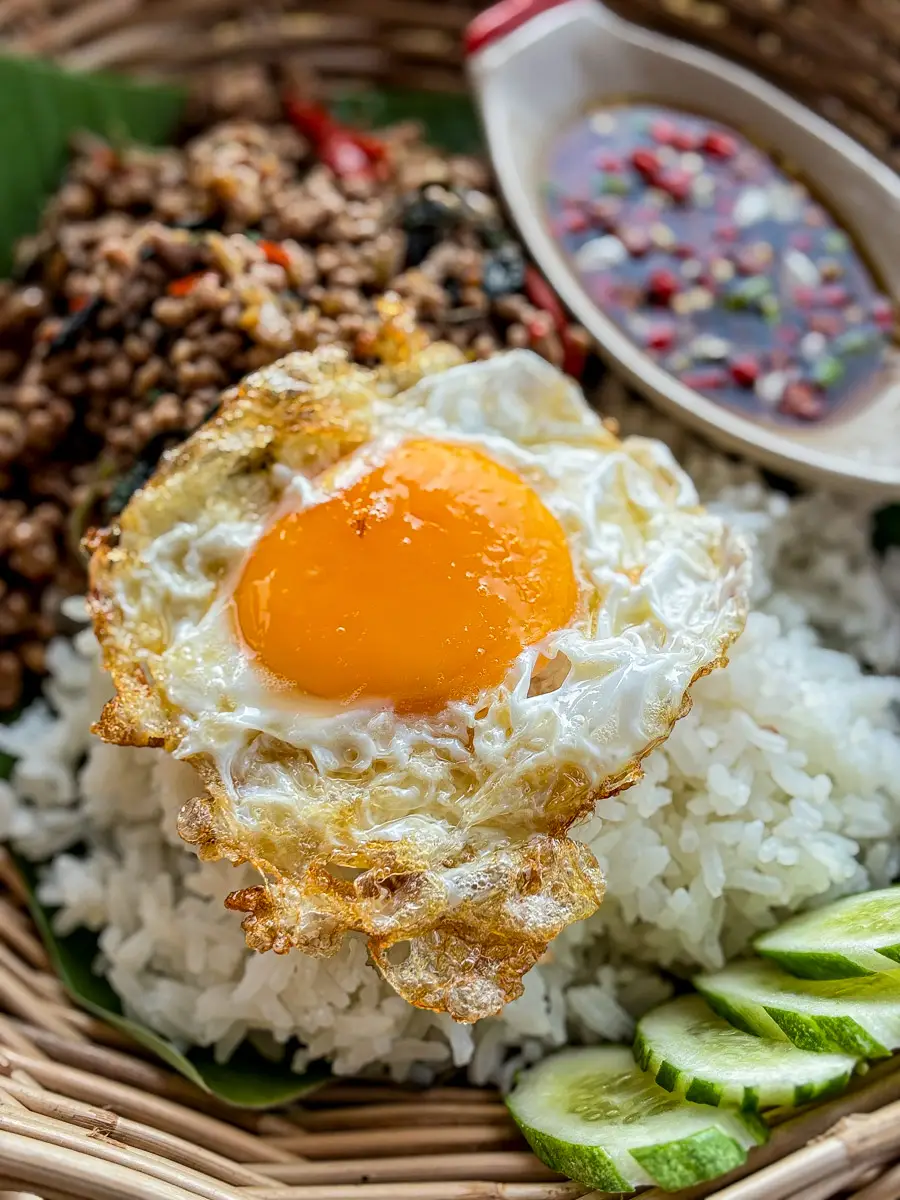
A Thai fried egg is quite different from the usual Western-style sunny-side-up egg. We cook it in plenty of hot oil until the white bubbles up and the edges become crispy and golden.
I love the contrast between those crunchy edges and the soft yolk in the middle. You can leave the yolk runny or spoon hot oil over it to cook the top a little more.
Serve kai dao over jasmine rice with a few drops of Maggi seasoning, or add one to your favorite Thai rice dishes.
3. Yum kai dao (Thai fried egg salad)
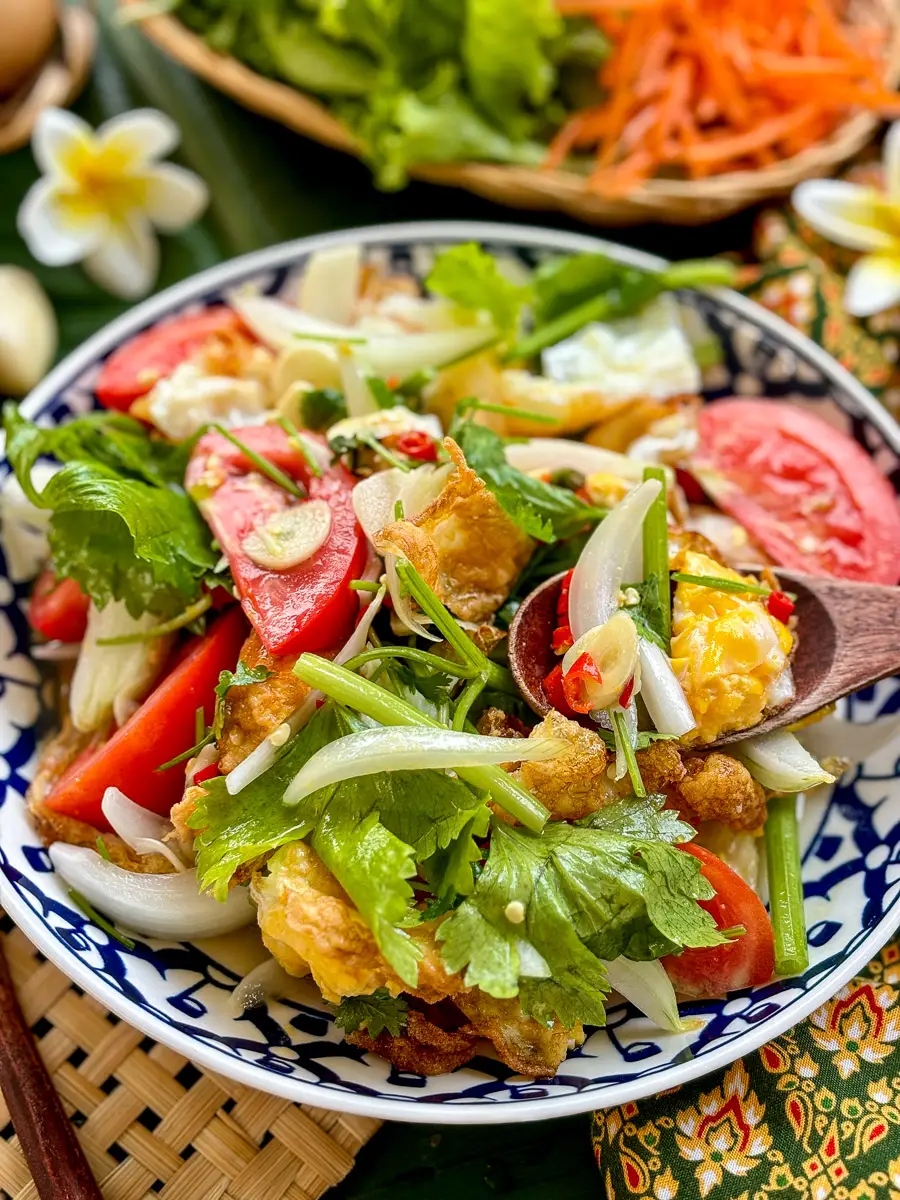
Yum kai dao is a Thai egg salad made with crispy fried eggs, fresh vegetables, and a spicy, tangy dressing. It’s a lovely option when you want something lighter, especially for a warm-weather meal, but still full of flavor.
The fried eggs are cut into bite-sized pieces and tossed with ingredients like tomato, onion, celery, fresh herbs, and chilies. The dressing brings everything together with the familiar Thai combination of sour, salty, sweet, and spicy flavors.
It’s a simple salad that works well for lunch or as part of a larger Thai meal.
4. Kai look keuy (Thai son-in-law eggs)

Kai look keuy, or Thai son-in-law eggs, are hard-boiled eggs that are fried until their outsides turn golden and slightly crispy. They’re then sliced in half and covered with a sweet, salty, and sour tamarind sauce.
The sauce is what makes this dish so yum. It’s made with ingredients like tamarind, palm sugar, and fish sauce, then finished with crispy fried shallots and dried chilies.
You get creamy egg yolks, golden egg whites, and plenty of sticky, tangy sauce in every bite.
5. Kai toon (Thai steamed egg)
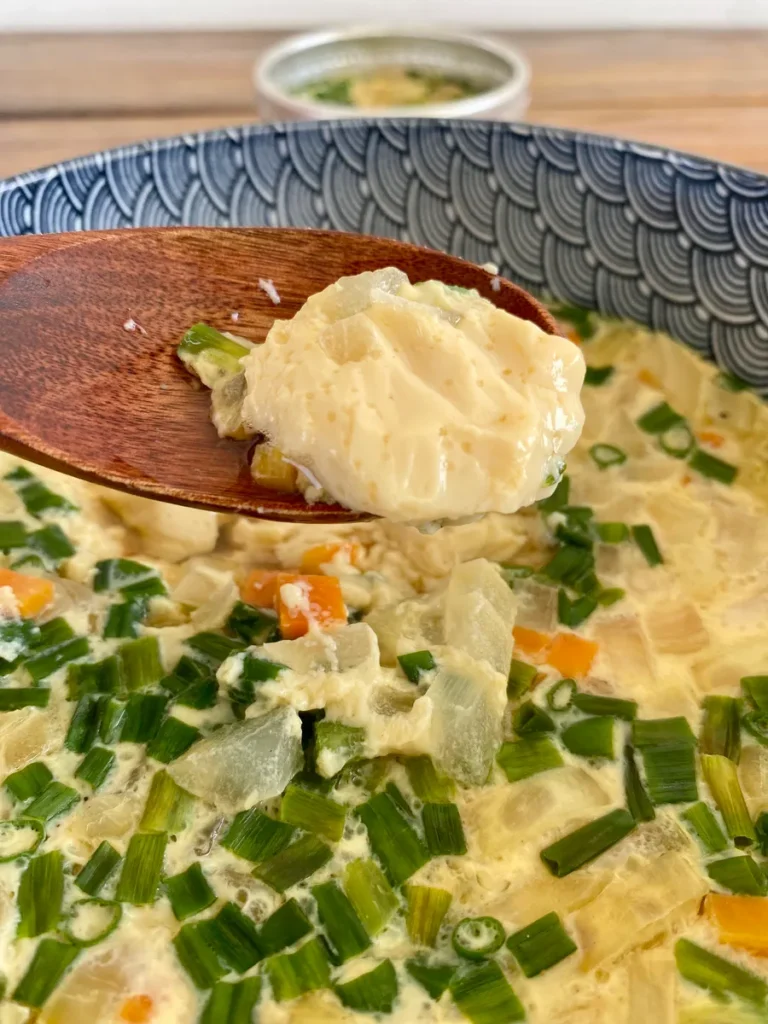
Kai toon is a soft, savory Thai steamed egg with a texture that’s almost like a delicate custard. It’s made by whisking eggs with water, light soy sauce, and white pepper before gently steaming the mixture until just set.
I often add vegetables like carrots, onion, and green onions, but you can also add minced pork or shrimp. It’s a great recipe for using up a few vegetables in the fridge!
6. Kai luak (Thai soft-boiled eggs)
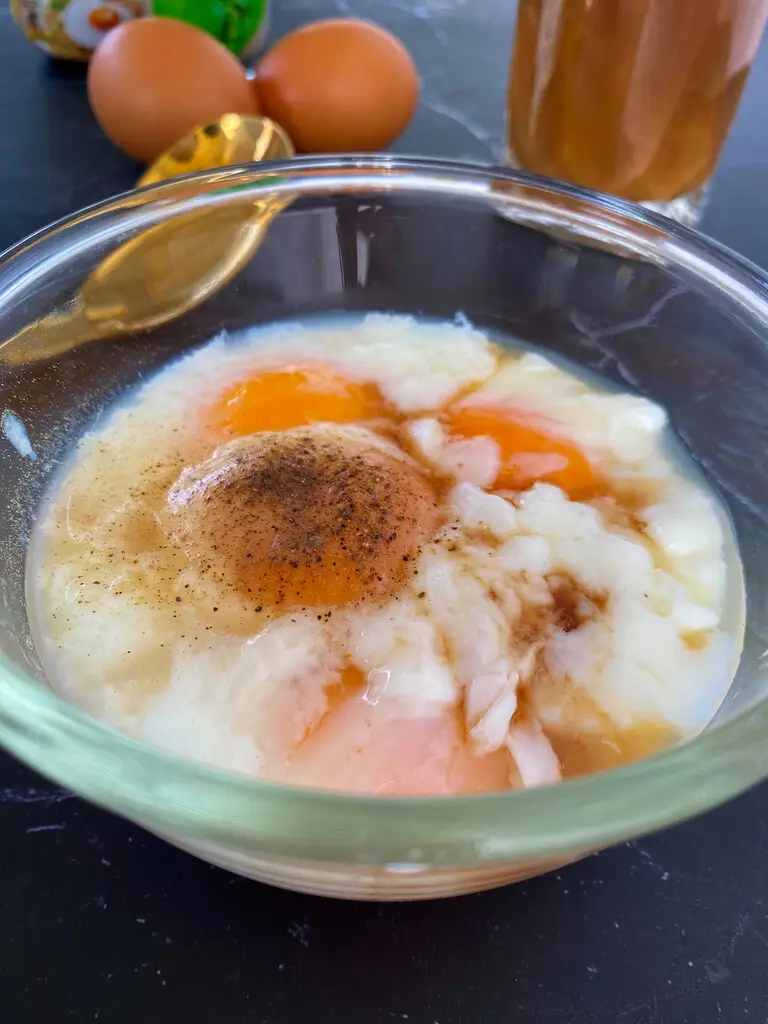
Kai luak is a popular Thai breakfast dish made with soft-boiled eggs. Instead of eating them straight from the shell, we crack the eggs into a small bowl or shot glass and season them with white pepper and a few drops of Maggi seasoning sauce.
The whites should be just set while the yolks stay silky and runny. You can eat them with a small spoon or drink them straight from the glass, just like you often see at Thai breakfast stalls.
It’s a quick and simple breakfast that doesn’t need much preparation. Serve it with a little toast or enjoy it on its own.
7. Cha-om omelette (Thai acacia leaf omelette)

Cha-om omelette is a Thai omelette made with fresh acacia leaves. Cha-om is used in all kinds of home-cooked dishes in Thailand, and its distinctive aroma gives this omelette a flavor you won’t get from ordinary herbs.
The leaves are mixed with beaten eggs and seasonings before being fried until golden, with crispy edges and a soft center.
I love serving cha-om omelette with sticky rice and a spicy chili dip. It’s also delicious alongside a Thai curry or a simple meal of rice and vegetables.
If you’ve never cooked with cha-om before, this is a good recipe to try. You only need a handful of fresh leaves to give the omelette plenty of flavor.
8. Kai kem (Thai salted eggs)
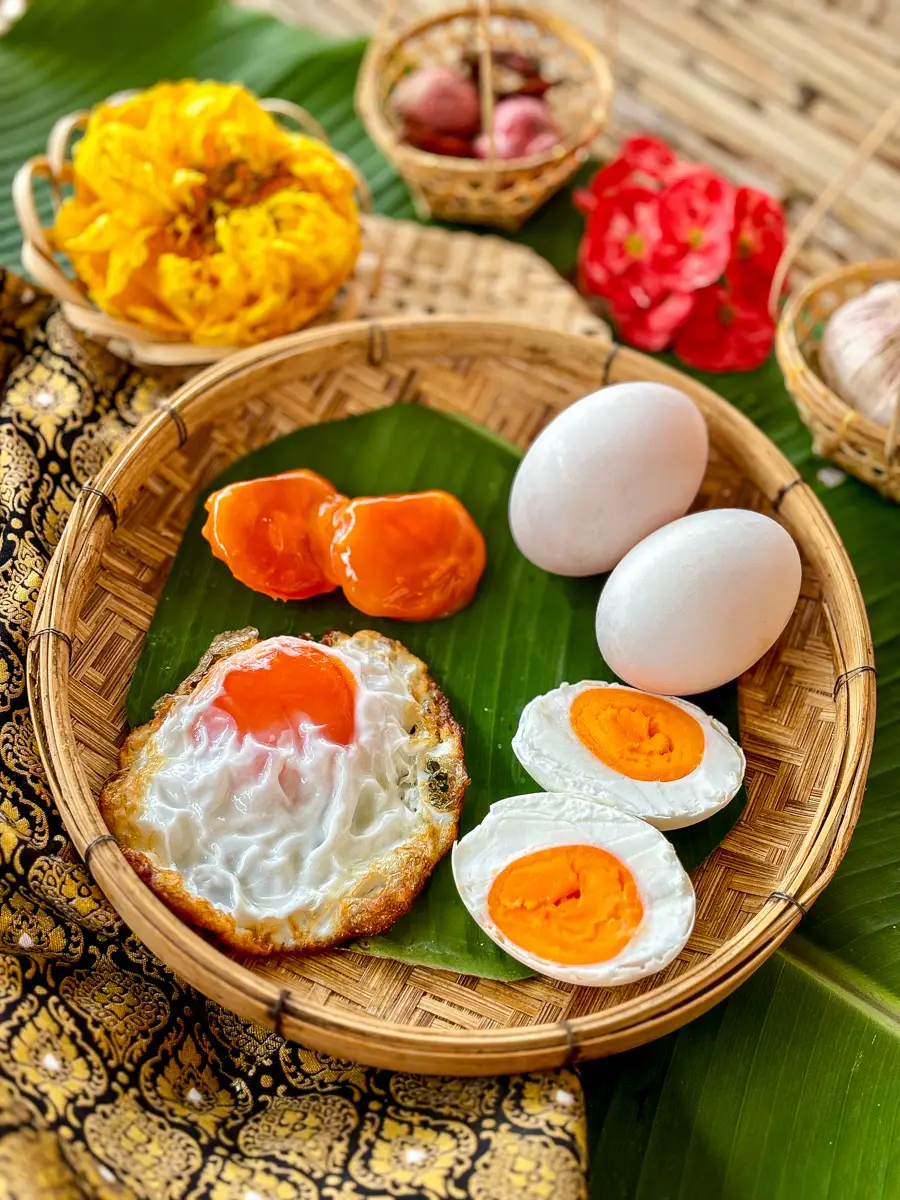
Kai kem is the Thai name for salted eggs. Unlike the other recipes in this roundup, this one is about preserving eggs so you can enjoy them later.
Salted eggs are usually made with duck eggs, although chicken eggs can also be used. During the curing process, the whites become salty while the yolks develop a rich, creamy texture.
There are several ways to make them at home. In my recipe, I show you three methods: a traditional brine solution, a vinegar-soaking technique, and a quicker method for making salted egg yolks. The brine method takes longer, but it’s worth having homemade salted eggs ready to use in the kitchen.
Tips for cooking Thai egg recipes
- Use enough oil when frying. Thai fried eggs and omelettes need more oil than a typical Western-style omelette. Make sure the oil is properly hot before adding the eggs. This helps create those crispy, bubbly edges.
- Choose the right pan. A nonstick frying pan is handy for omelettes, while a well-seasoned wok or frying pan works best for Thai-style fried eggs. Make sure you have enough room to turn or lift the eggs without breaking them.
- Experiment with chicken and duck eggs. Most of these dishes work well with chicken eggs, but duck eggs are also worth trying. They’re often larger, with richer yolks and a slightly different texture. Duck eggs are particularly popular for making Thai salted eggs.
- Use fresh ingredients. Fresh eggs, good-quality herbs, and freshly chopped chilies make a difference, especially in simple dishes where there aren’t many ingredients to hide behind.
Conclusion
There are so many ways to cook with eggs in Thai cuisine. Some dishes are quick enough for a weekday lunch, like kai jeow moo sab and kai dao, while others take a little more preparation but are worth making for the whole family.
I hope you found a few Thai egg dishes you’d like to try! Let me know in the comments which one you’d make first. I’d love to hear which dishes you enjoy cooking at home.