
This Thai steamed egg with vegetables recipe (kai toon) is one I love to make whenever I have extra eggs and a few veggies that need using up. It’s easy to make, budget-friendly, and one of my favorite comforting lunches.
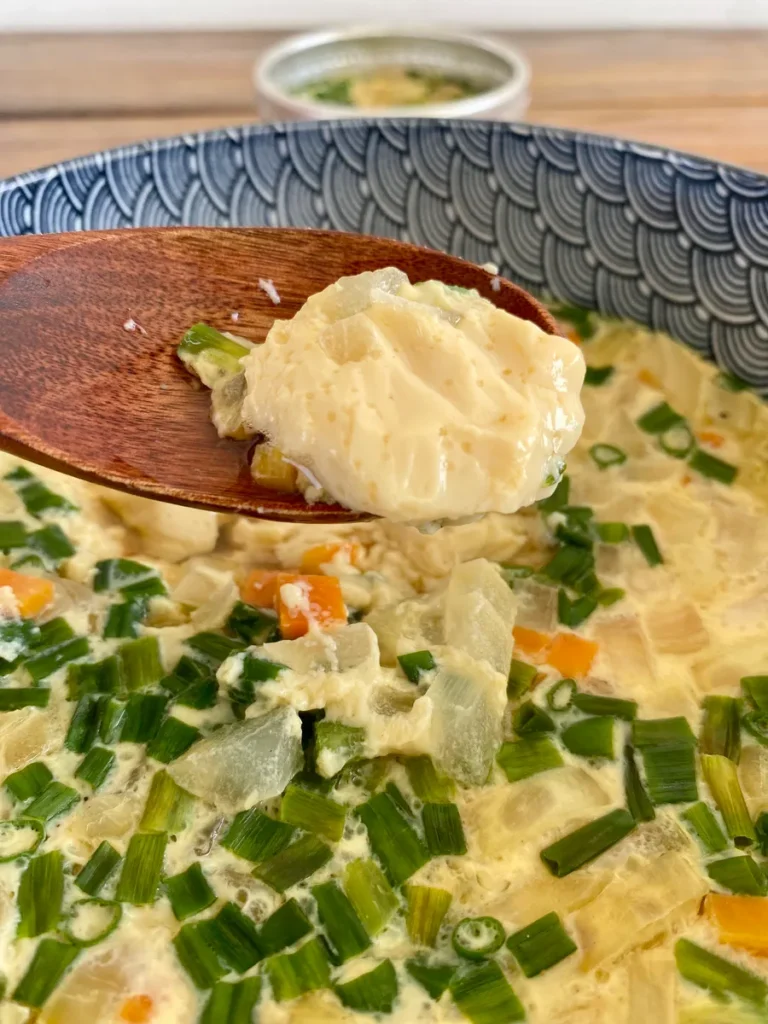
What is Thai steamed egg?
Thai steamed egg (ไข่ตุ๋น), or kai toon, is a soft, custard-like egg dish made by whisking eggs with water, light soy sauce, and white pepper before gently steaming them until just set. It’s often topped with vegetables, minced pork, or shrimp, and served with steamed jasmine rice as a light meal or side dish.
Unlike a Thai omelet or a fried egg, steamed eggs are cooked slowly over gentle heat. This gives them their signature silky, jiggly texture that’s somewhere between a savory custard and very soft tofu.


Praew’s cooking tips
Thai steamed eggs are surprisingly easy to make, but these are the little things that give them that soft, silky texture every time.
Praew ♡
Learn Thai cooking step by step
My cookbook is a combination of authentic Thai recipes and Western dishes cooked with Thai flavors and ingredients. It’s a great starting point if you’re new to Thai cooking or want to cook it more often.

Ingredient notes & substitutes
You can find the exact measurements in the recipe card at the bottom of this post.
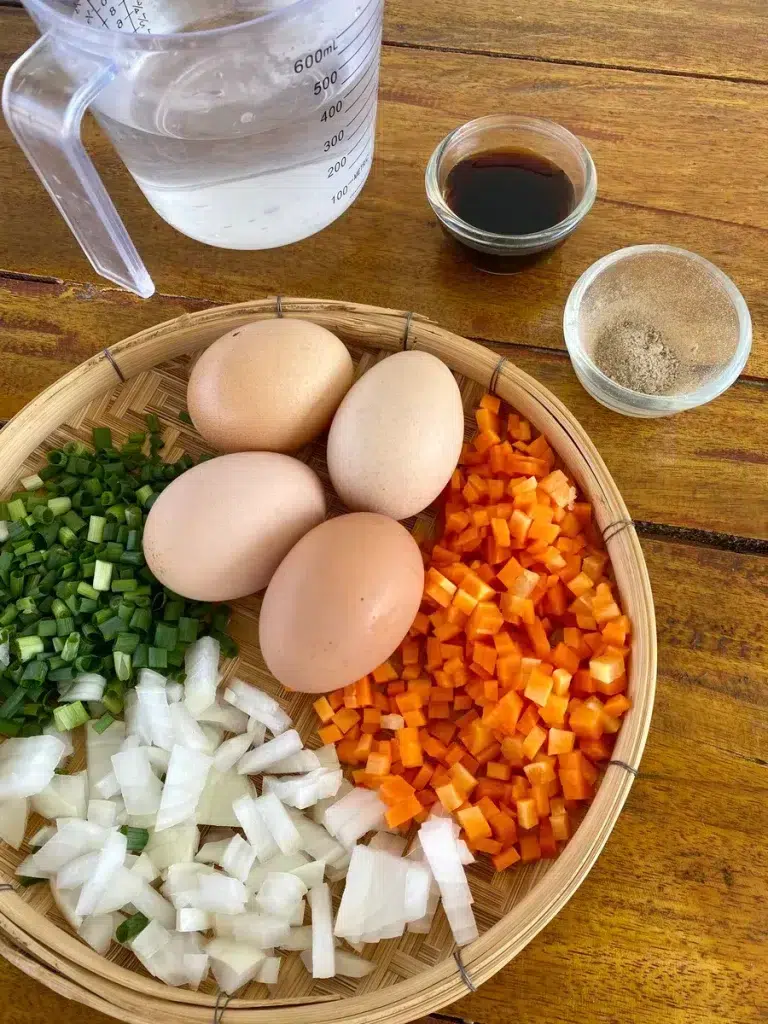
- Eggs: I always use the freshest eggs I have. Since they’re the main ingredient, you really can taste the difference.
- Water: I always use twice as much water as egg because that’s what gives steamed eggs their signature silky texture. Less water makes them much firmer.
- Light soy sauce: Just enough to season the eggs.
- White pepper: Gives the eggs a gentle warmth without making them spicy.
- Carrots: I almost always add carrots. They become tender as they steam and add a little natural sweetness that works really well with the eggs.
- Onion: As the onion cooks, it softens and becomes slightly sweet.
- Green onions: These add freshness and brighten up the eggs.
- Other vegetables: I’ve made steamed eggs with mushrooms, sweet corn, broccoli, cauliflower, zucchini, and bell peppers. Just chop everything into small pieces so they cook at the same rate as the eggs.
How to make kai toon

1: Measure the eggs. Crack the eggs into a measuring glass and note the level. I like to mark it with a rubber band so it’s easy to see. This makes it simple to add twice as much water.
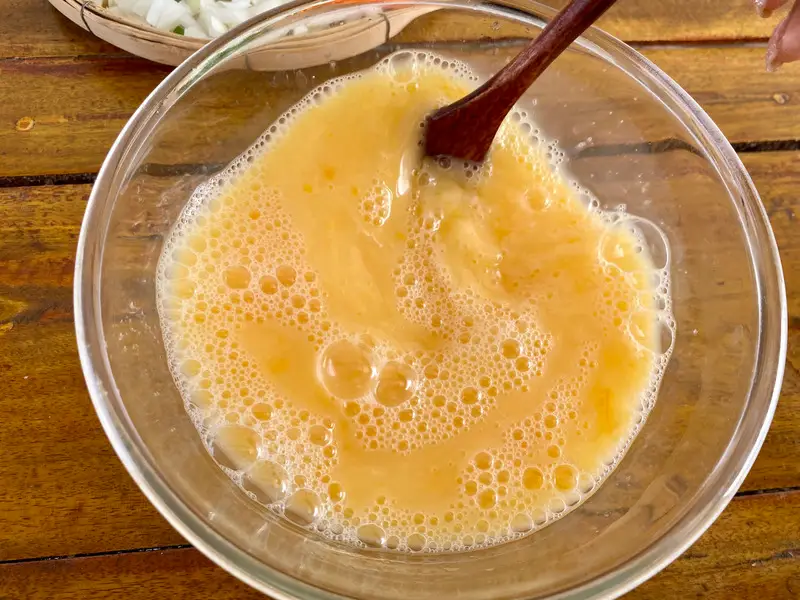
2: Mix the eggs. Pour the eggs into a mixing bowl. Add twice the amount of water, followed by the light soy sauce and white pepper. Whisk until everything is well combined.
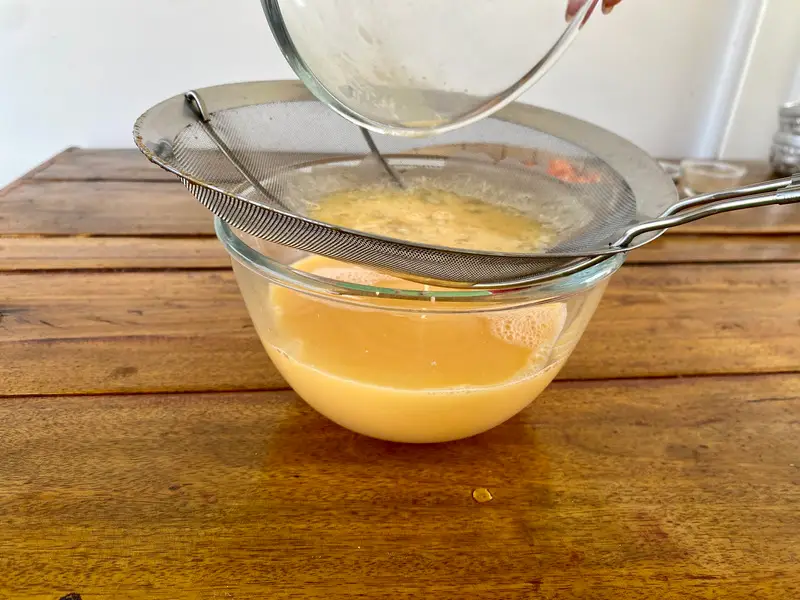
3: Strain. Pour the egg mixture through a fine-mesh sieve into a clean bowl.
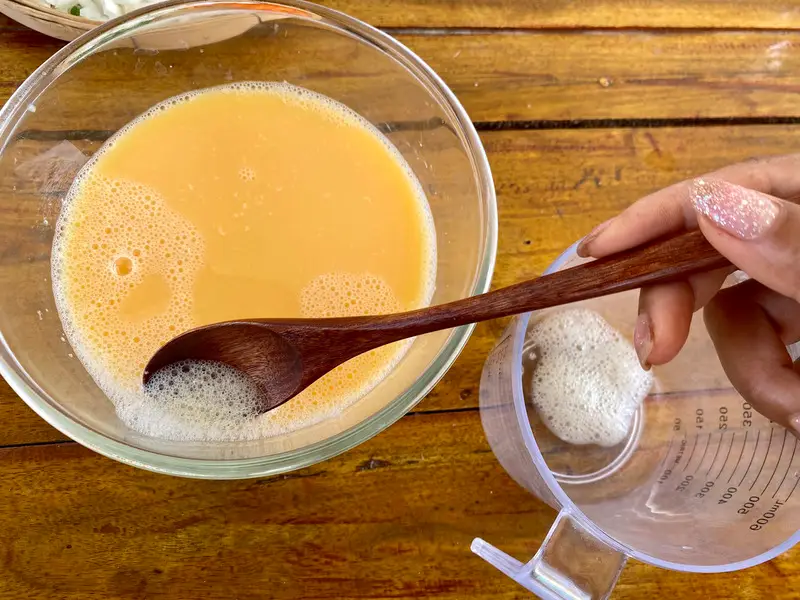
4: Prepare the bowls. Divide the diced vegetables between your heatproof bowls, then carefully pour the strained egg mixture over the top. If you see any bubbles on the surface, gently skim them off with a spoon.
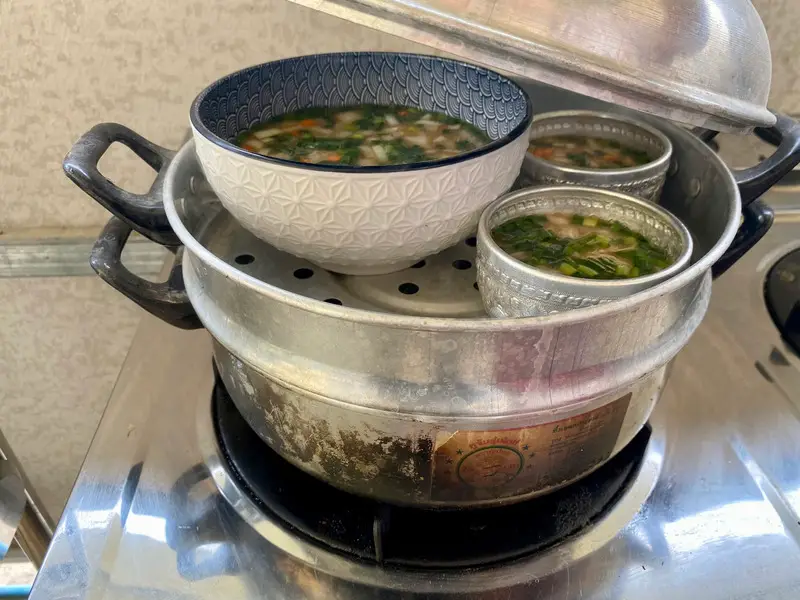
5: Steam. Bring the water in your steamer to a boil over medium heat. Place the bowls inside, cover, reduce the heat to low, and steam for about 20 minutes.
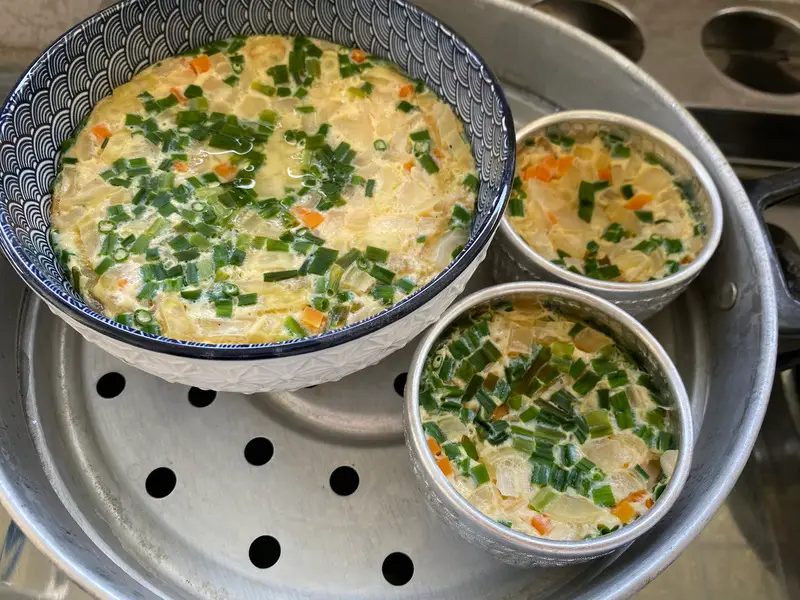
6: Check for doneness. The eggs are ready when they’re just set and jiggle like soft jelly when you gently shake the bowl. If the center is still runny, steam for another 2–3 minutes before checking again. Serve hot with steamed jasmine rice.
Steamed egg water ratio
The secret to soft, silky steamed eggs is using twice as much water as egg. I always use a 1:2 egg-to-water ratio, and it’s never let me down.
If you use less water, the eggs will set much firmer and lose their custard-like texture. Too much water, on the other hand, can make them difficult to set properly.
For the best results, measure the eggs first, then add exactly double that amount of water before whisking everything together.
How to store & reheat leftovers
- Refrigerate: Let the steamed eggs cool completely, then cover the bowls or transfer them to an airtight container. They’ll keep well in the refrigerator for up to 3 days.
- Freeze: I don’t recommend freezing this recipe. The eggs lose their smooth, silky texture once thawed.
- Reheat: Steam for 5–10 minutes until heated through, or microwave in 30-second intervals on medium power. I prefer steaming because it keeps the eggs soft and prevents them from becoming rubbery.
Thai Steamed Egg with Vegetables

Equipment
- Cutting board & knife
- 2 Mixing bowls
- Whisk or fork
- Fine mesh sieve
- Heatproof bowls or ramekins
- steamer
Ingredients
- 4 eggs
- water, as needed at a 1:2 ratio
- 1 tbsp light soy sauce
- ½ tsp white pepper
- ¼ cup green onions, chopped
- ½ cup carrot, diced
- ⅓ cup onion, diced
Instructions
- Crack the eggs into a measuring glass, then pour them into a mixing bowl. Add twice the amount of water, followed by the light soy sauce and white pepper. Whisk until well combined.
- Strain the egg mixture through a fine-mesh sieve into a clean bowl, then skim off any bubbles from the surface.
- Divide the carrots and onions between heatproof bowls and pour the egg mixture over the vegetables. Sprinkle with the green onions.
- Bring water in a steamer to a boil. Place the bowls in the steamer, cover, reduce the heat to low, and steam for about 20 minutes, or until the eggs are just set and jiggle slightly in the center.
- Serve hot with steamed jasmine rice.
Notes
- Use the nutrition card in this recipe as a guideline.
- Use a 1:2 egg-to-water ratio for the smoothest, silkiest texture.
- Feel free to swap the vegetables for mushrooms, sweet corn, broccoli, spinach, or other quick-cooking vegetables.
Hello
Your recipes are very delicious.
what is the thai name of this dishes
best wishes
Ali
I’m new to this webpage, so I might just not be seeing the response and I do realize the question was posted 6 months ago. The name is Kai Tun.