
This authentic Thai Massaman curry paste recipe shows you how to make homemade paste using a mortar and pestle or food processor. A good pot of Thai curry starts with the paste, so I’ll walk you through the ingredients and share my tips for getting the right texture.
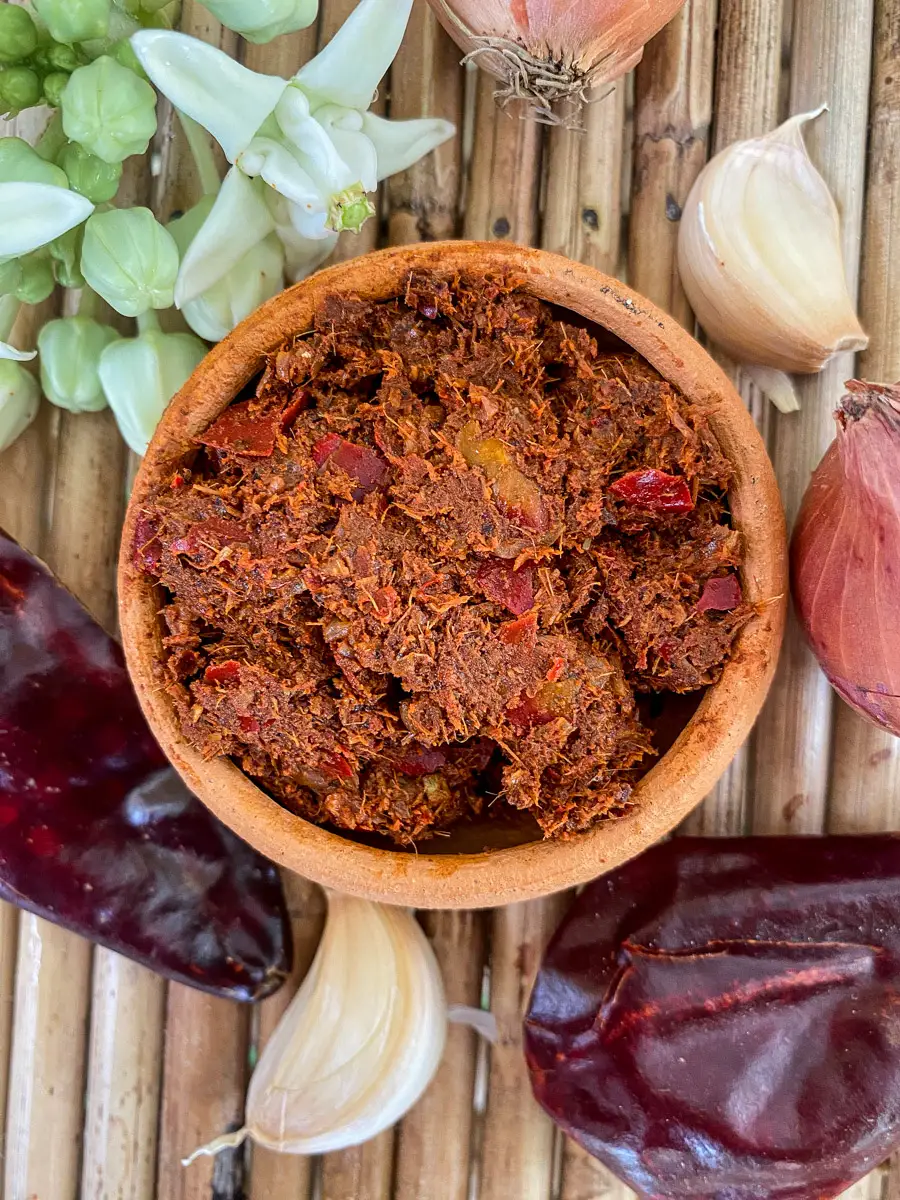
What is massaman curry paste?
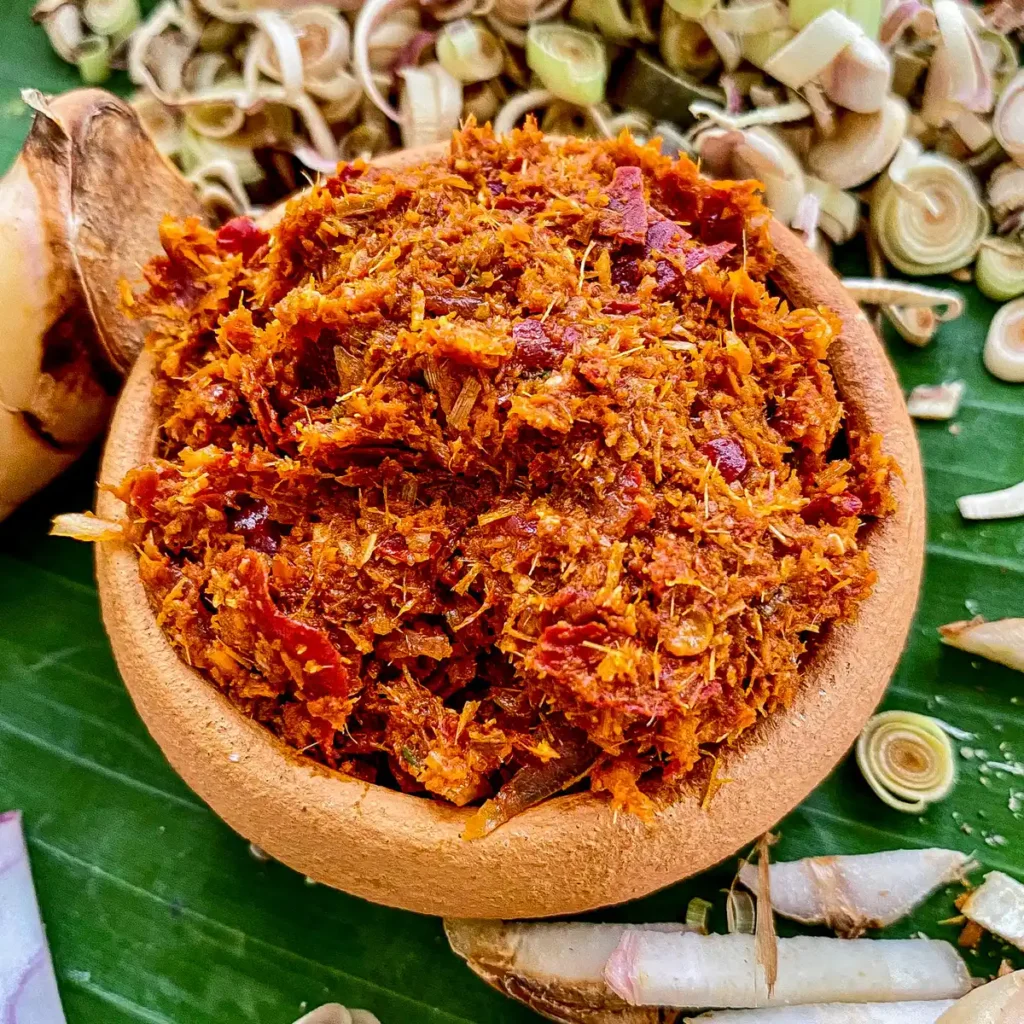
Massaman curry paste is a Thai curry paste made with dried red chilies, fresh aromatics, shrimp paste, and warm spices such as cinnamon, cardamom, cumin, coriander seeds, and star anise. It is the base used to make Thai Massaman curry, usually cooked with coconut milk, meat, potatoes, onions, and peanuts.
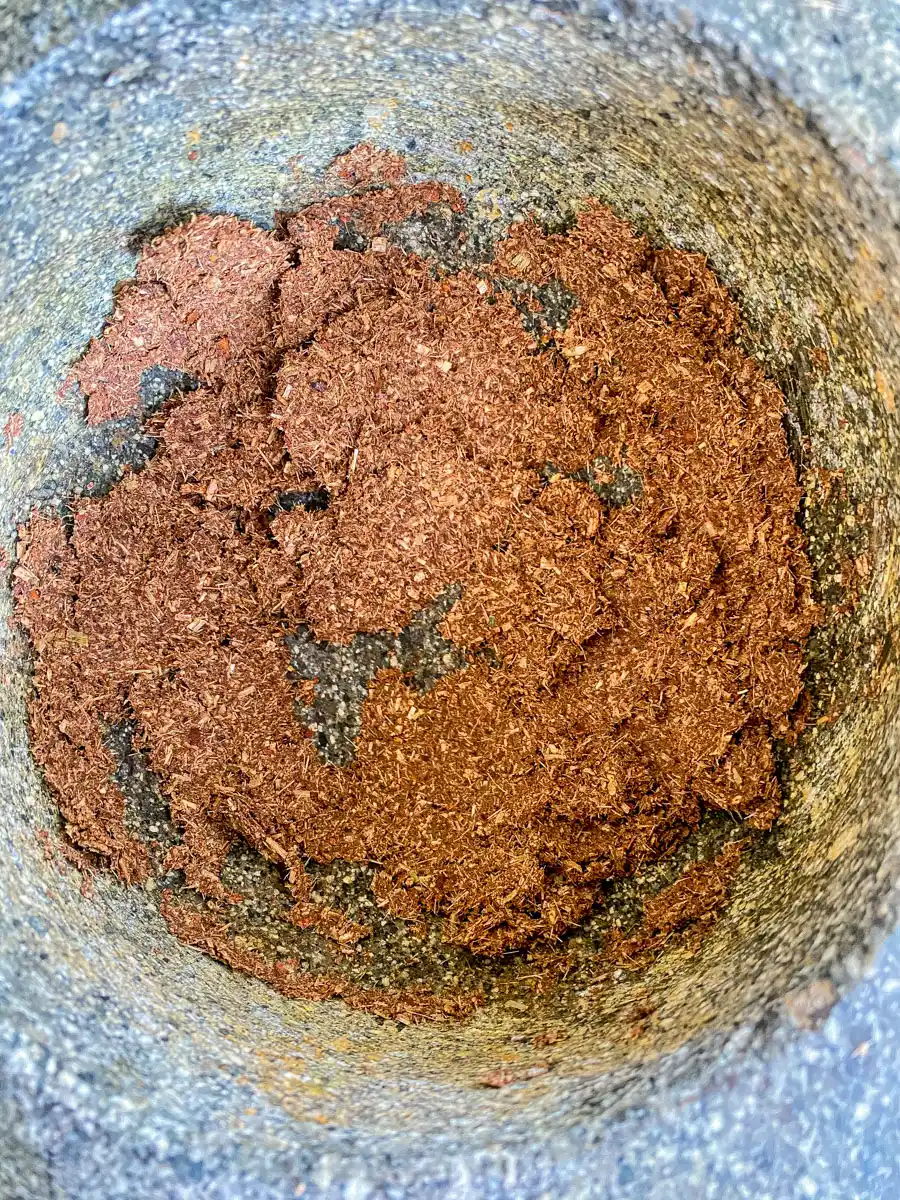
Massaman curry paste is a little different from the red curry paste and green curry paste you might already know. It has a more noticeable blend of warm, toasted spices, especially cinnamon, cardamom, and star anise, which are less common in many other Thai curry pastes.
There’s an interesting bit of history behind those spices. Massaman is often associated with Muslim cooking in Southern Thailand and the historic trade routes that connected the region with other parts of Asia. That’s why its spice blend is different from what you’ll find in many other Thai curry pastes.

Praew’s cooking tips
A few small things make a big difference when making curry paste, especially when you’re using a mortar and pestle.
Slice the fibrous ingredients thinly:
Lemongrass and galangal are the toughest ingredients to break down. Thin slices make pounding much easier and help prevent stringy pieces in the finished paste.
Don’t burn the spices:
They only need to become fragrant. Once you can smell them, take them off the heat. Burnt spices can make the whole paste bitter.
Check the texture:
The finished paste should be thick and evenly ground, without large pieces of lemongrass or galangal. Take your time with the mortar and pestle, because this is where the texture really develops.
Praew ♡
Ingredient notes & substitutes
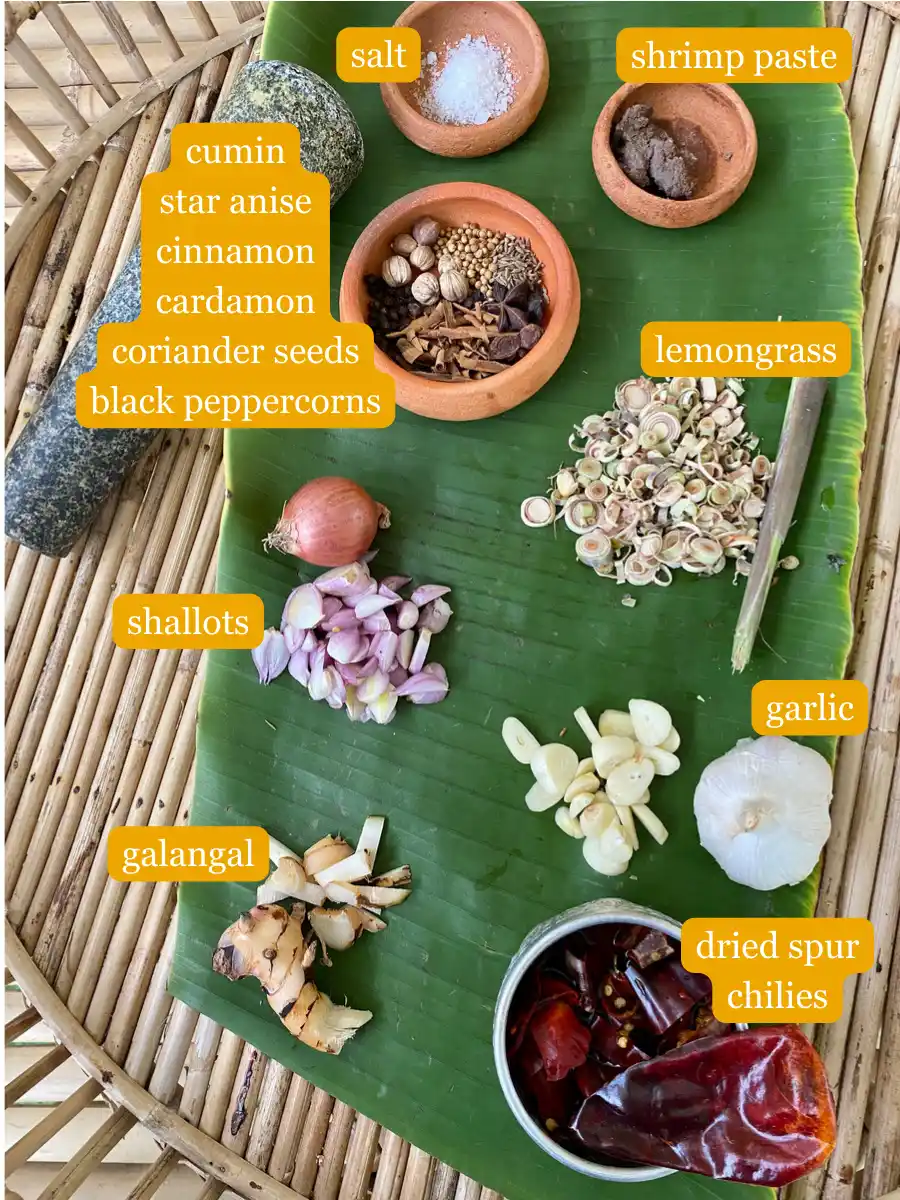
- Dried red spur chilies: These give the paste its red color and mild heat. Soak them in water first so they’re easier to pound.
- Lemongrass: Remove the tough outer layers and use the tender lower part. Slice it very thinly before pounding.
- Shallots: Peel and roughly chop them.
- Garlic: Peel the cloves before adding them.
- Galangal: Peel and slice it thinly. It’s quite firm, so smaller pieces are easier to pound.
- Shrimp paste: This adds the savory depth. Shrimp paste is made from fermented shrimp and salt.
- Salt: Helps break down the ingredients as you pound.
- Cardamom: Whole spices are best for roasting and grinding.
- Cumin: Use whole cumin seeds.
- Coriander seeds: Roast these with the other whole spices.
- Cinnamon: Break it into smaller pieces.
- Black peppercorns: Use whole peppercorns.
- Star anise: Roast the whole pieces with the other spices.
You can find these ingredients at Thai fresh markets and Asian grocery stores. I recommend buying whole spices when possible, so you can roast them just before making the paste. The exact quantities are in the recipe card below.
Can you make vegan massaman curry paste? Yes! Simply leave out the shrimp paste. The result won’t have quite the same savory depth, but you can still make a flavorful curry with the chilies, herbs, and spices.
Mortar and pestle or food processor?
You can make this recipe with either method. I prefer using a granite mortar and pestle because it gives me control over the texture and lets me work through the tough ingredients gradually.
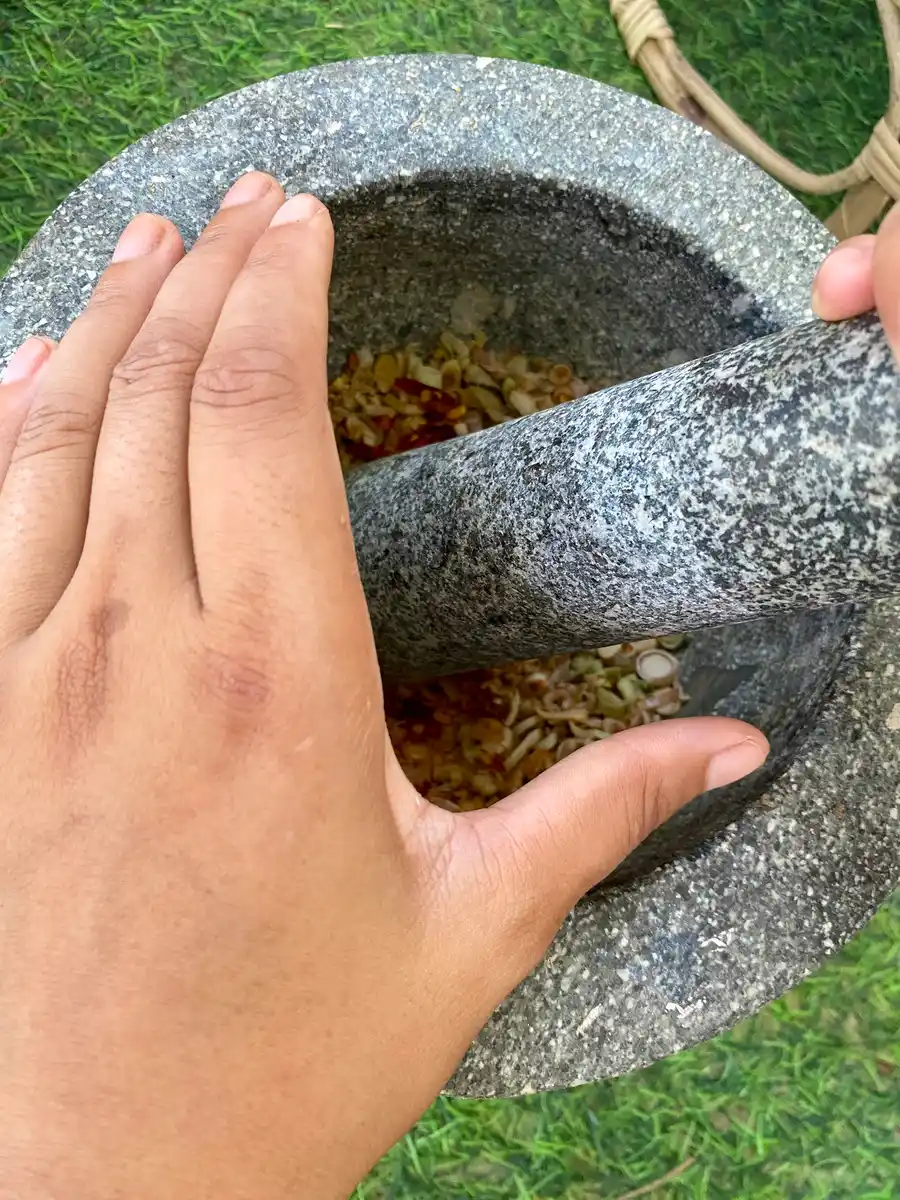
- Mortar and pestle: This is my preferred method. It takes more effort, especially when pounding fibrous ingredients like lemongrass and galangal, but you can gradually work them into a fine paste.
- Food processor: A food processor is much quicker and perfectly fine to use. You may need to stop and scrape down the sides a few times to make sure everything gets processed evenly. Depending on the machine, you might also need to work in batches.
There is no shame in using a food processor. The curry paste vendor at the local street food market in our village uses one herself because she makes large batches.
How to make massaman curry paste
With a mortar and pestle

1. Soak the chilies. Slice the dried red spur chilies and soak them in water for 10 minutes. Drain them well before using. Softened chilies are much easier to pound than dry ones.

2. Roast the spices. Add the black peppercorns, coriander seeds, cinnamon, star anise, cumin, and cardamom to a dry pan. Roast over medium heat for about 30 seconds, moving them around so they don’t burn. Once you can smell their fragrance, take the pan off the heat and let the spices cool.
3. Grind the spices. Pound the cooled spices into a fine powder using your mortar and pestle. I like doing this first because the dry spices are much easier to grind before adding the fresh ingredients.
4. Pound the chilies and salt. Add the soaked chilies and salt to the mortar. Pound until the chilies break down into a thick mixture.

5. Add the galangal and lemongrass. Add the thinly sliced galangal and lemongrass. Keep pounding until the fibrous pieces are broken down. These are the toughest ingredients, so take your time here.

6. Add the remaining ingredients. Add the shallots and garlic and continue pounding. Finally, add the shrimp paste and pound everything into a fine, evenly blended paste.
With a food processor
1. Roast the spices. Place the black peppercorns, coriander seeds, cinnamon, star anise, cumin, and cardamom in a dry pan over medium heat. Roast for about 30 seconds, moving them around so they toast evenly. Once fragrant, remove them from the pan and let them cool.
2. Add all the ingredients. Add the cooled spices, soaked and drained chilies, salt, thinly sliced galangal and lemongrass, shallots, garlic, and shrimp paste to your food processor.
3. Process into a paste. Blend until everything is finely ground and you have a thick, evenly combined curry paste. Stop a few times to scrape down the sides of the bowl so all the ingredients get processed.

How to use it
Massaman curry paste is the starting point for a good pot of massaman curry. Cook it with coconut milk, then add your meat, potatoes, onions, and other curry ingredients. The paste gives the curry its main aroma and flavor, while the other ingredients come together as it slowly cooks.
Here are two recipes to try:

How to store
You can keep homemade massaman curry paste in the fridge or freezer. I recommend freezing any extra paste so you have some ready for your next curry.
Refrigerate
Freeze
Thaw and use
If you won’t be using the paste within a few days, divide it into portions and freeze it straight away.
More Thai curry paste recipes to try


Tried this authentic massaman curry paste recipe?
Did you make it with a mortar and pestle or use a food processor? Leave a comment below and share how it went! Follow me on Facebook, Instagram, and Pinterest for more Thai recipes!
Leave a ReviewMassaman Curry Paste Recipe

Equipment
- Mortar and pestle or food processor
- Small skillet for roasting spices
- Sharp knife and cutting board
Ingredients
- 30 g dry red spur chilies
- 50 g lemongrass
- 50 g shallots
- 30 g garlic
- 10 g galangal
- 10 g shrimp paste
- 5 g salt
- 5 g cardamom
- 4 g cumin
- 4 g coriander seeds
- 10 g cinnamon
- 2 g black peppercorns
- 10 g star anise
Instructions
- Slice the dried red chilies and soak them in water for 10 minutes. Drain well. Peel and thinly slice the galangal and lemongrass.
- Place the black peppercorns, coriander seeds, cinnamon, star anise, cumin, and cardamom in a dry skillet. Roast over medium heat for about 30 seconds, stirring until fragrant. Remove from the heat and let cool.
- Mortar and pestle method: Pound the roasted spices into a fine powder. Add the soaked chilies and salt, and pound until broken down. Add the galangal and lemongrass and continue pounding until finely ground. Add the shallots and garlic, then pound until combined. Add the shrimp paste last and continue pounding until you have a fine, thick curry paste.
- Food processor method: Add the cooled roasted spices and all the remaining ingredients to a food processor. Blend until you have a thick, evenly combined paste.
Notes
- Use the nutrition card in this recipe as a guideline.
- This recipe yields 8.5 oz of curry paste, you can store the leftovers for later use.