
If you’ve ever eaten noodle soup in Thailand, you’ve probably noticed a tray of condiments sitting on every table. That’s because most Thai noodle soups aren’t meant to be perfectly seasoned in the kitchen. Instead, everyone adjusts the broth to their own taste.
I know that can feel a little intimidating the first time. Which sauce do you add? How much sugar? Are you supposed to use everything?
There’s really no secret formula. The truth is, everyone’s flavor buds are a little different. In this post, I’ll show you what each condiment does, how and why we use them, and how to season your bowl without overwhelming the broth.
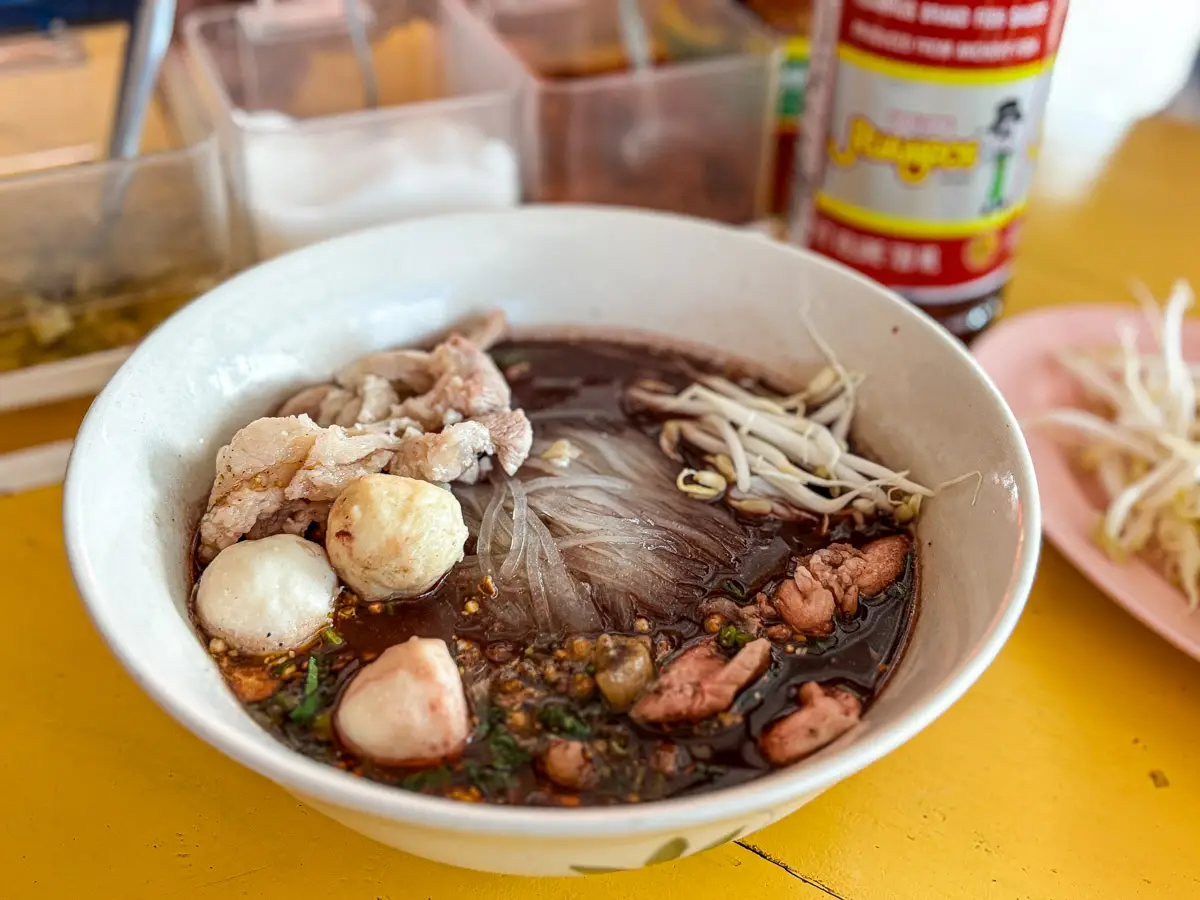
Why are condiments served on the table?
Unlike many Western soups, Thai noodle soup is meant to be personalized at your table.
Every noodle soup stall has its own broth recipe, but everyone enjoys different levels of sweetness, saltiness, sourness, and spice. Rather than making every bowl exactly the same, noodle shops let customers adjust the flavor themselves.
That’s why you’ll almost always see a condiment tray sitting on the table.
Don’t feel like you need to use everything. In fact, many locals only add one or two condiments after tasting the broth first.
The four classic Thai noodle soup condiments
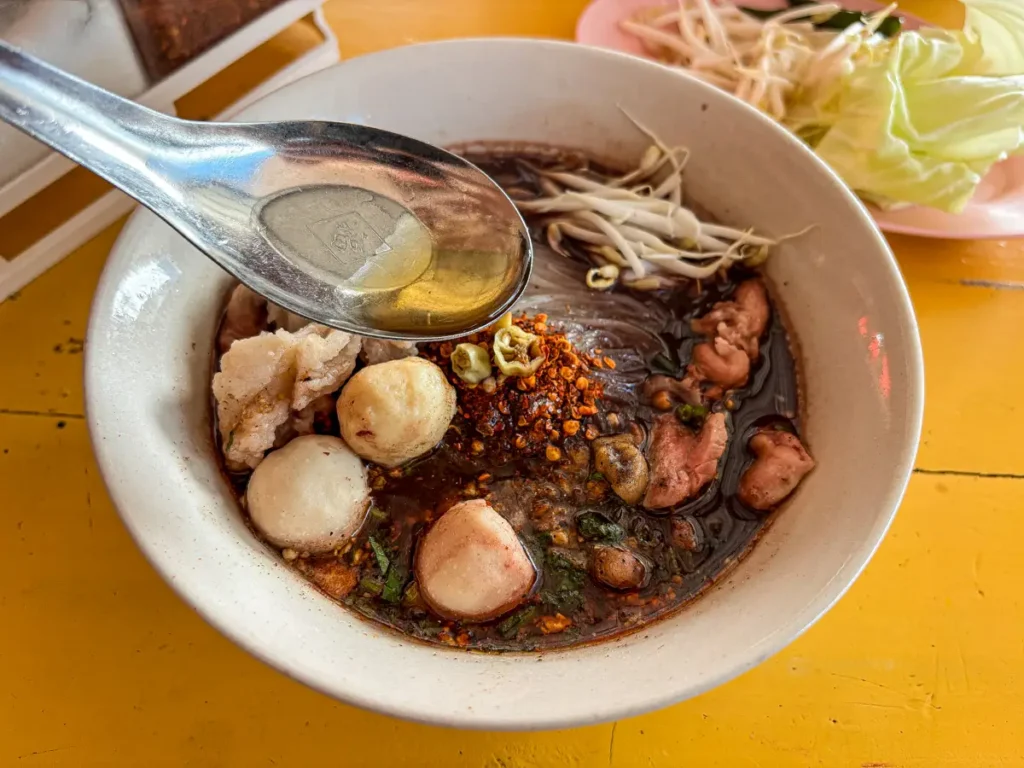
1. Fish sauce
Fish sauce adds saltiness and umami.
If your broth tastes a little flat, a small splash of fish sauce is often all it needs. Start with a few drops, stir, and taste before adding more.
2. Sugar
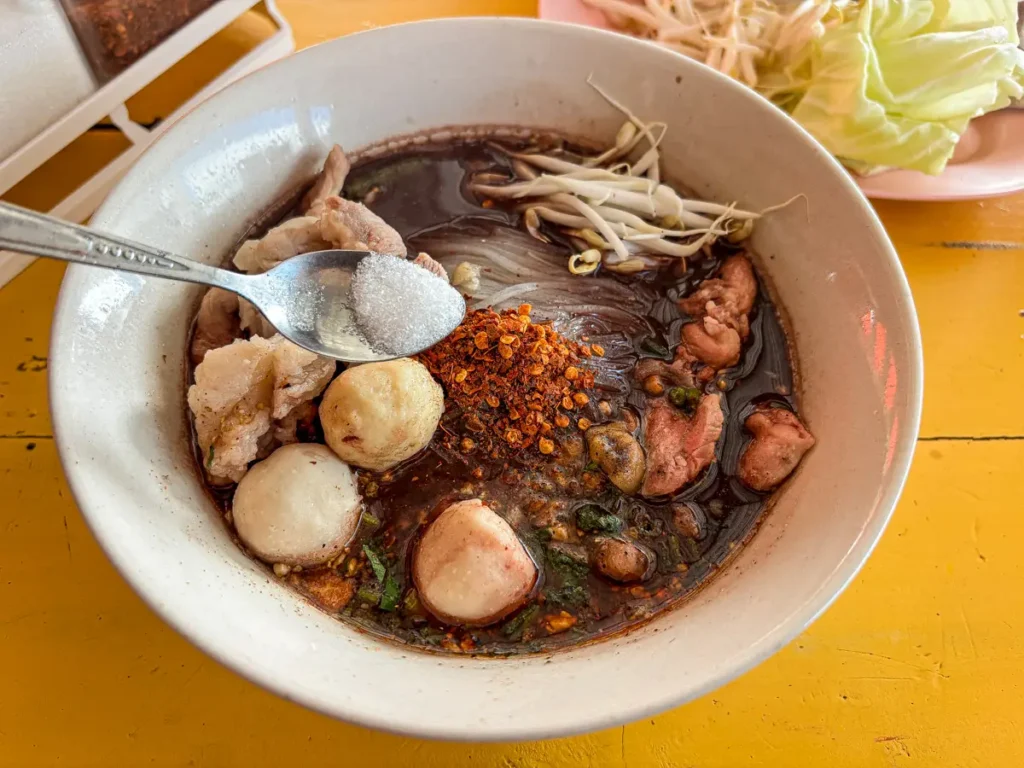
This surprises a lot of tourists.
Sugar isn’t added to make the soup sweet. Instead, it balances salty, sour, and spicy flavors.
Most Thai cooks only add a small pinch. When used properly, you shouldn’t really notice the sugar at all.
3. Prik nam som (chilies in vinegar)
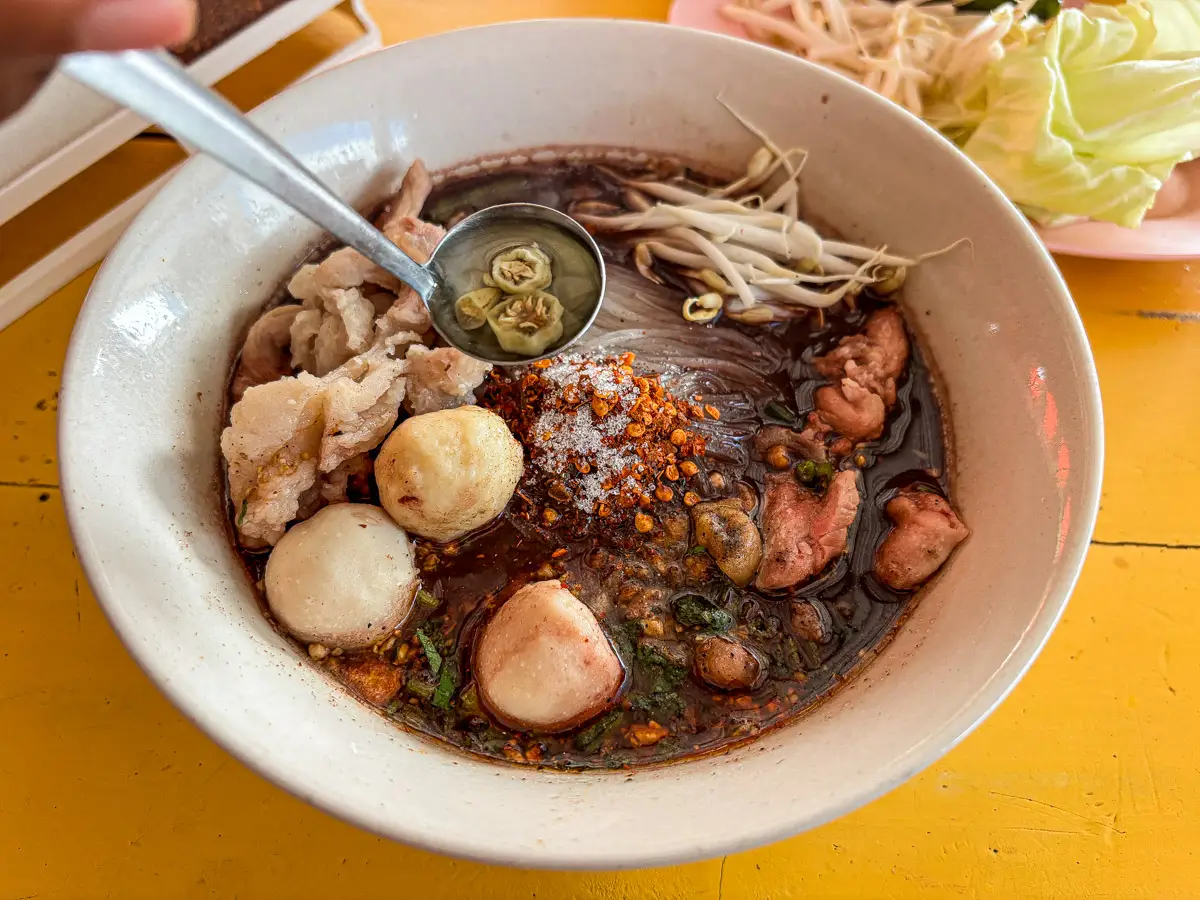
Prik nam som is one of my favorite noodle soup condiments.
Fresh Thai chilies are steeped in white vinegar, creating a bright, tangy condiment that cuts through rich broths.
If your noodle soup tastes heavy or needs a little freshness, this is usually the best choice.
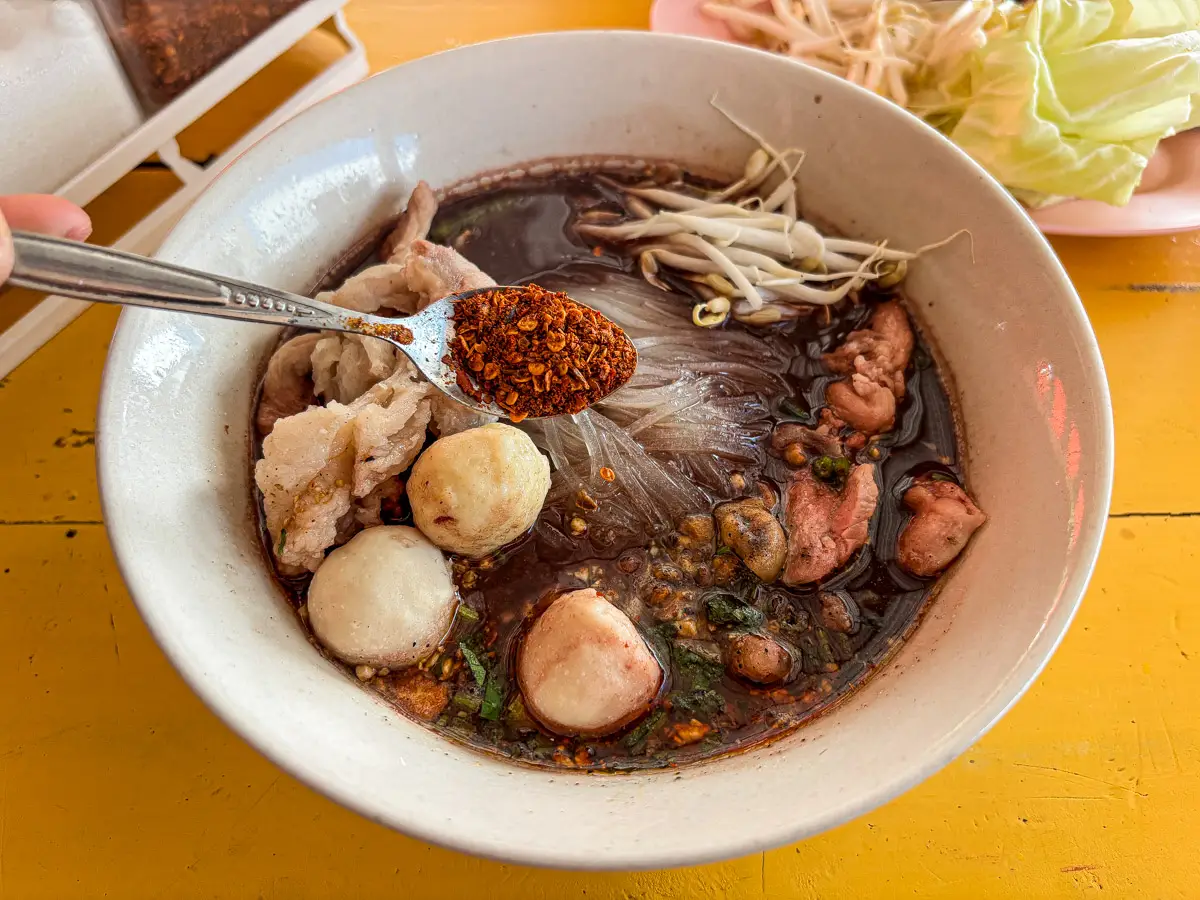
4. Dried chili flakes
I always add extra chili flakes. These add heat without changing the flavor of the broth too much.
Because they’re dry, the heat builds gradually as they soften in the soup. If you’re not sure how spicy you like it, start with a small pinch.
How to season noodle soup
- Taste the broth first: There’s no reason to add condiments before you actually know what the soup already tastes like.
- Adjust one flavor at a time: Start with the one flavor you think the soup needs most.
- Stir and taste again: Give the broth a good stir after each addition, then taste again. It’s much easier to add more than to fix a bowl that’s been over-seasoned.
Popular noodle soup toppings
Once your broth is seasoned to your liking, it’s time to finish the bowl. These toppings add crunch, freshness, and extra flavor, and many are served alongside the soup so you can add as much or as little as you like.
- Bean sprouts
- Cilantro
- Green onions
- Thai basil
- Fried garlic
- Crispy pork rinds
- Fried wonton strips
- Lime wedges
Thai noodle soup recipes to try
- Tom yum noodle soup
- Ba mee moo dang
- Boat noodles
- Yellow curry noodle soup
- Green curry noodle soup
- Red curry noodle soup
Conclusion
There’s no single right way to season Thai noodle soup. Everyone has their own preference, and that’s exactly the point. Once you understand what each condiment does, you’ll be able to adjust every bowl to your own taste with confidence.