
This homemade Thai yellow curry paste recipe is for anyone who wants real flavor made from scratch. It’s mellow, fragrant, and written step by step, so it feels easy to follow, even if you’ve never made curry paste before.
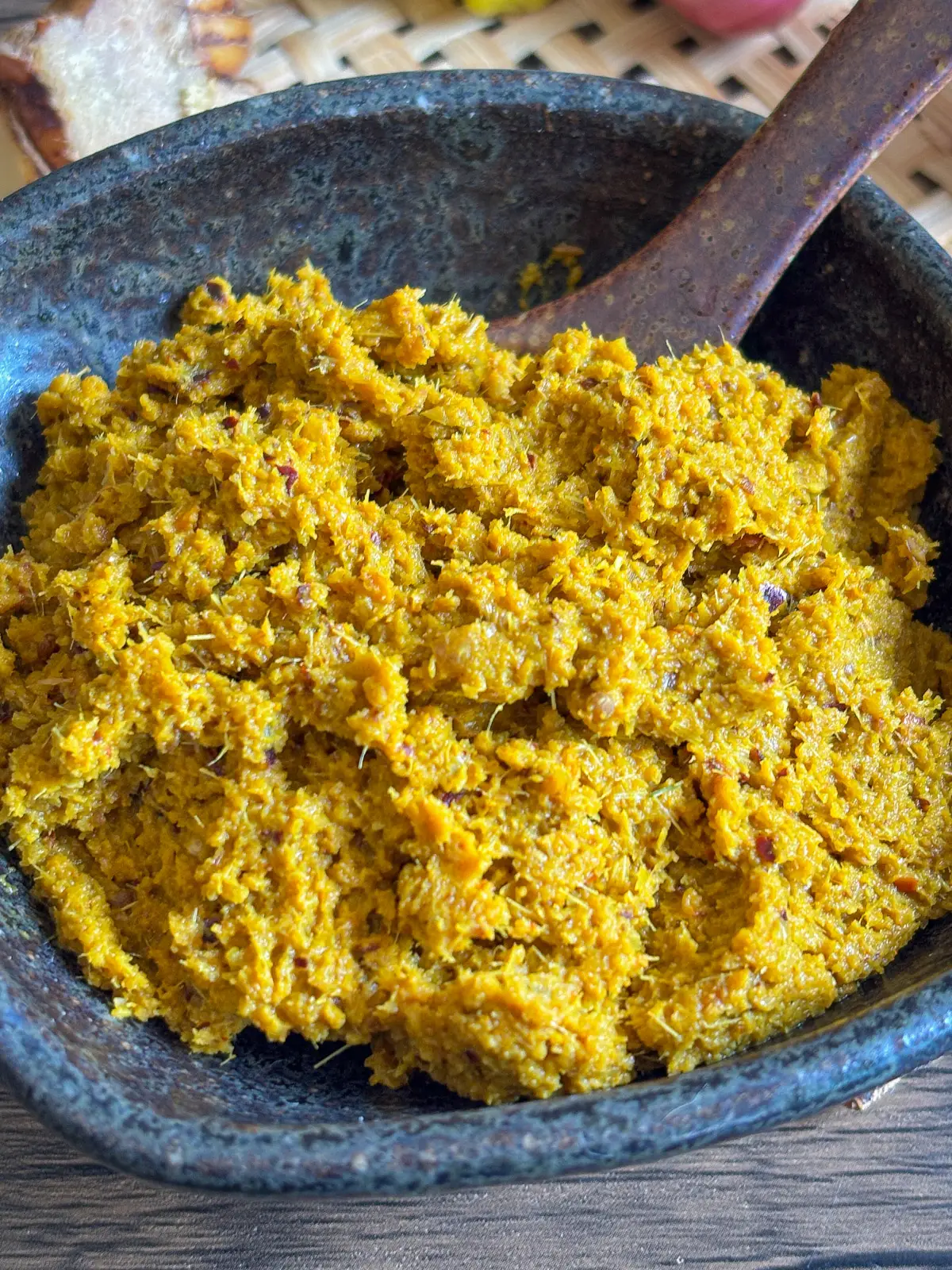
What is yellow curry paste
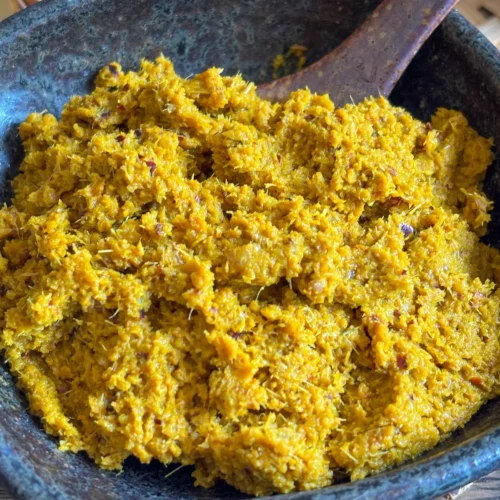
Yellow curry paste is a mild Thai curry base made from dried chilies, turmeric, aromatics like garlic and shallots, and warm spices. It has a fragrant, slightly sweet flavor and is not very spicy, making it gentler than red or green curry paste and suitable for most palates.
It gets its yellow color mainly from turmeric, not from fresh chilies, unlike red curry paste. Yellow curry paste uses far fewer chilies, which is why yellow curry is considered the mildest of all Thai curries.
Food processor vs mortar and pestle
There are two common ways to make curry paste: using a mortar and pestle or a food processor.
The mortar and pestle is the traditional tool used in Thailand. Pounding the ingredients by hand releases their natural oils and gives the paste a deeper, more rounded aroma.
That said, a food processor is a perfectly good shortcut. In my village in Thailand, the curry paste seller at the local market uses a food processor, and plenty of people buy from her every day. The flavor is still excellent!
I’ve written instructions for both methods, so you can simply choose the one you’re most comfortable with.
Praew ♡
Learn Thai cooking step by step
My cookbook is a combination of authentic Thai recipes and Western dishes cooked with Thai flavors and ingredients. It’s a great starting point if you’re new to Thai cooking or want to cook it more often.
Ingredient notes & substitutes
✱ You can find everything you need at Asian grocery stores or markets. Head to the recipe card at the bottom of this post for the exact measurements.

- Dried chilies – Provide mild heat and deep color; soak until soft if pounding.
- Lemongrass – Adds a fresh citrus aroma; use only the tender inner stalk.
- Kaffir lime zest (makrut lime zest) – Outer peel only, avoid the white pith.
- Galangal – Peppery and sharp, more fragrant than ginger.
- Garlic – Adds savory depth and warmth to the paste.
- Shallots – Slightly sweet and aromatic when ground into the paste.
- Turmeric powder – Gives yellow curry its signature golden color and earthy flavor.
- Coriander seeds – Warm, nutty, and slightly citrusy once toasted.
- Cumin seeds – Earthy and smoky; use sparingly so it doesn’t overpower.
- Salt – Enhances and balances all the flavors.
- Shrimp paste – Adds umami and depth; I always use this Thai shrimp paste.
- Oil – Helps the paste blend smoothly and bloom when cooked.
How to make yellow Thai curry paste
Before you start, make sure all your ingredients are chopped small. This makes both pounding and blending much easier and gives a smoother paste.
With a food processor
- Add everything to the processor. Add the dried chilies, lemongrass, kaffir lime zest, galangal, garlic, shallots, turmeric powder, coriander seeds, cumin seeds, salt, shrimp paste, and oil to a food processor.
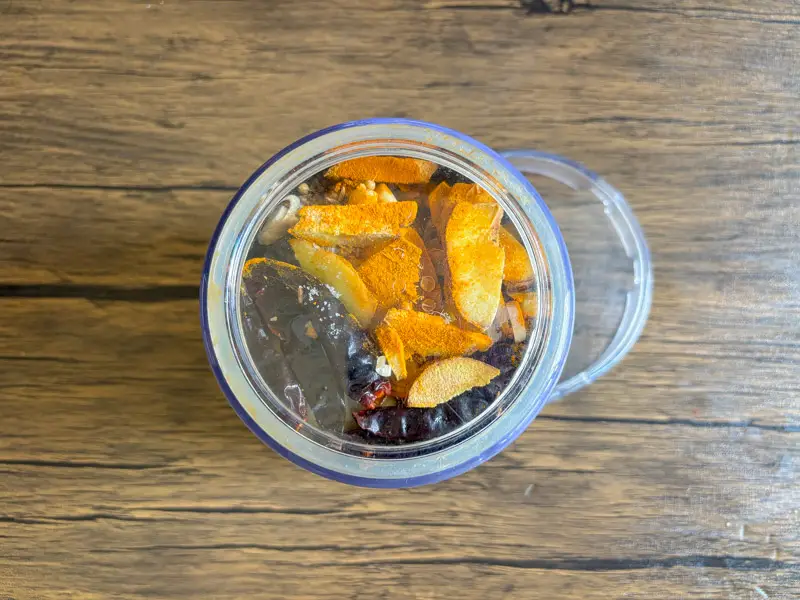
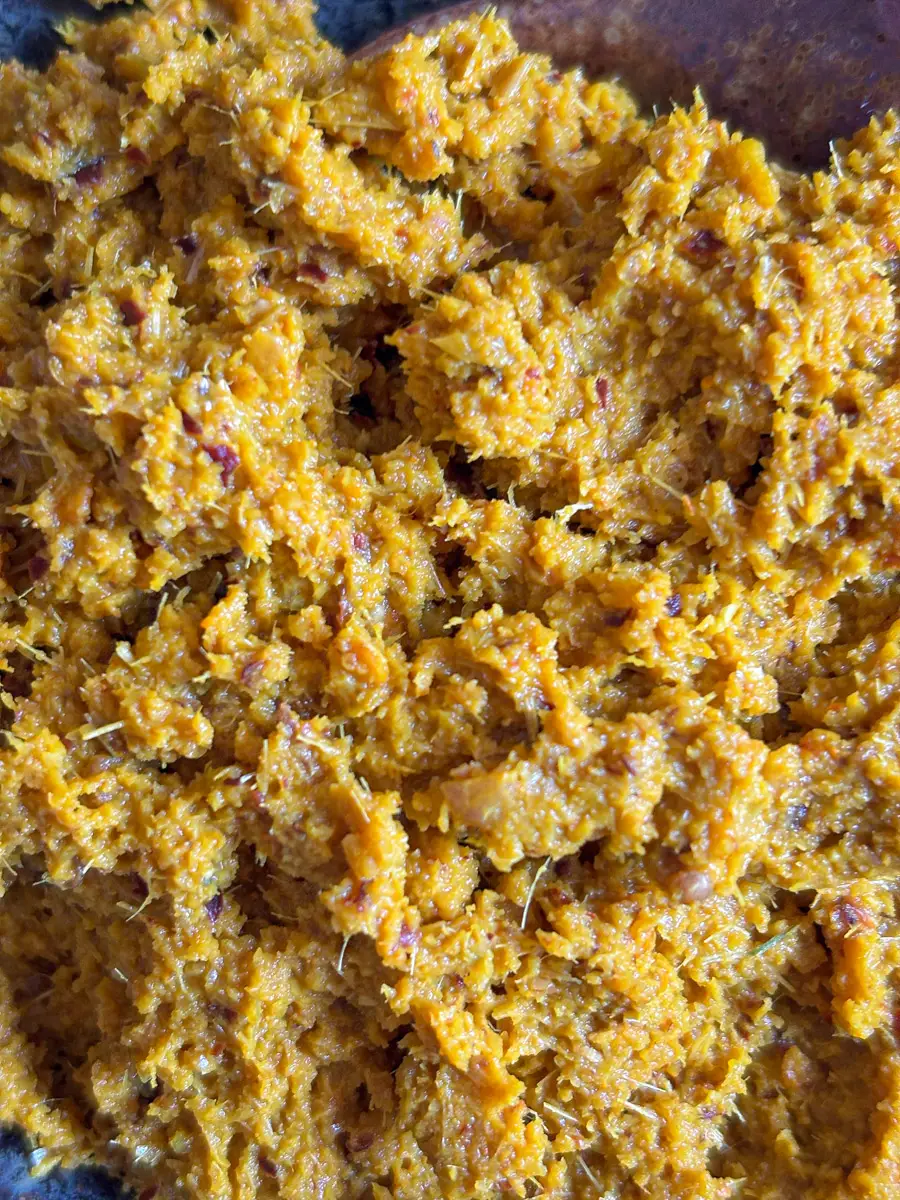
- Blend until smooth. Process until a thick paste forms. If it looks a bit coarse at first, keep going. It should be thick, smooth, and spreadable, with no large fibrous pieces.
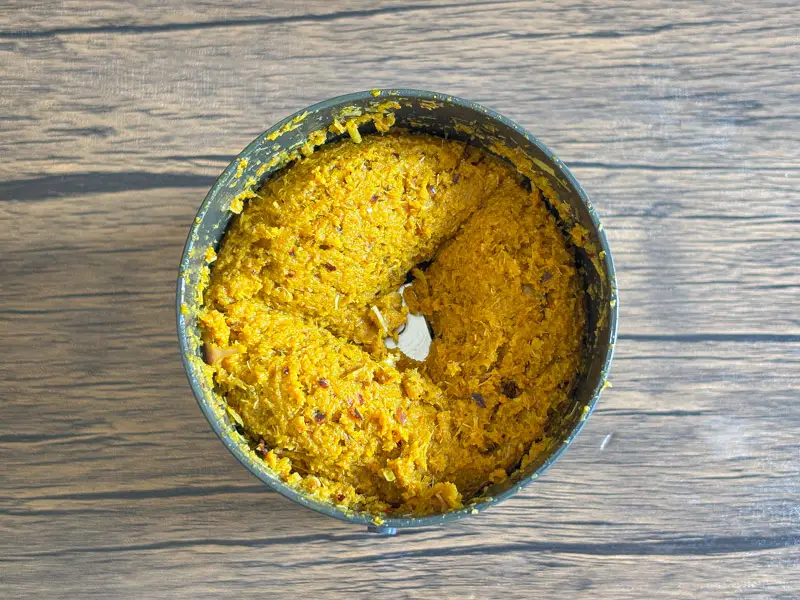
With a mortar and pestle
Start with the dry ingredients and pound them first. Working in stages makes it much easier to get a smooth paste.
- Pound the dry ingredients. Pound the dried chilies, lemongrass, galangal, coriander seeds, cumin seeds, salt, and turmeric powder until they break down into a coarse paste.
- Pound the remaining ingredients. Add the garlic, kaffir lime zest, shallots, and shrimp paste. Continue pounding until the mixture becomes smooth, thick, and fragrant, with no visible chunks.
What to make with yellow curry paste
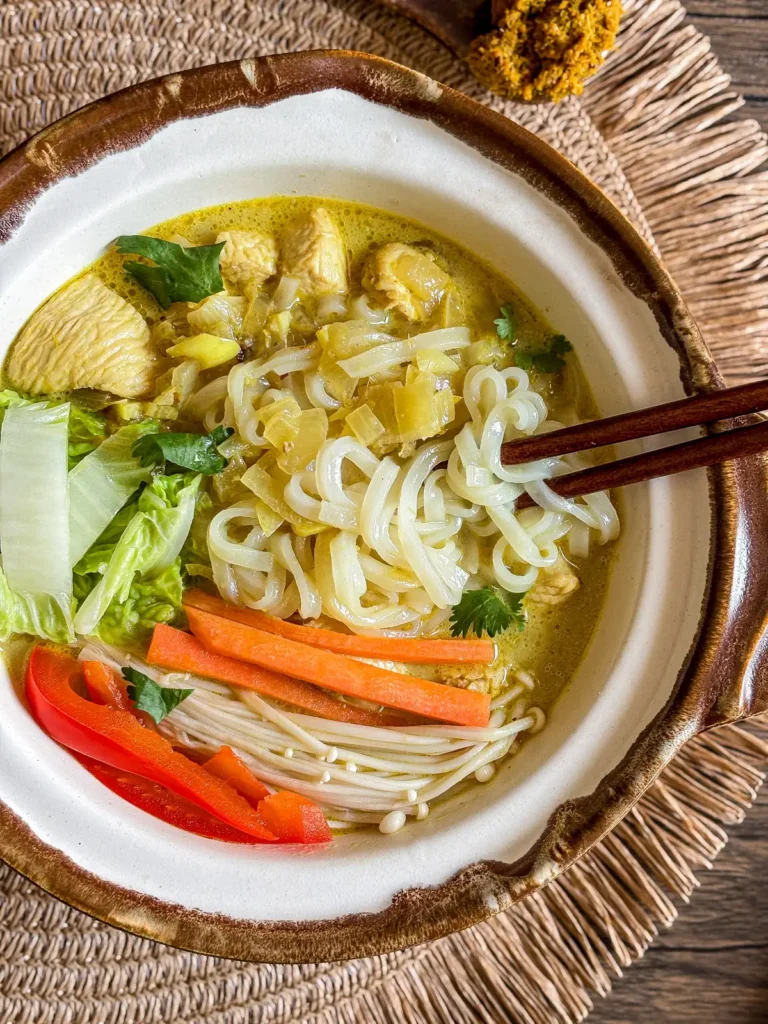
- Yellow curry noodle soup: Use the paste to build a mild coconut broth, then pour it over cooked noodles just before serving.
- Fried rice: Stir a small spoonful of the paste into oil before adding rice, eggs, and vegetables.
- Thai yellow curry: This paste works best in coconut-based curries with chicken, vegetables, or potatoes, where its mild flavor can really come through.
- Yellow curry stir-fry: A gentle curry that works well with shrimp, squid, or firm fish.
- Use it as a marinade: Mix the paste with coconut milk and use it to marinate chicken before grilling or baking.
Tips for making curry paste
❥ Slice fibrous ingredients finely. Lemongrass and galangal should be thinly sliced to make mixing easier and prevent stringy bits in the paste.
❥ Pound in stages. Start with the dry ingredients first, then add the wet ones so the paste turns smooth.
❥ Toast whole spices lightly. A quick dry toast of coriander and cumin wakes up their aroma before grinding.
❥ Don’t rush it. Pounding a curry paste takes time; the smoother it is, the better it fries later.
❥ Use a stone mortar and pestle. The rough surface helps break down tough ingredients like lemongrass and galangal, giving you a smoother, more fragrant curry paste than a smooth or wooden mortar.
Storage & reheating
- Refrigerator: Store the curry paste in an airtight container in the fridge for up to 2 weeks.
- Freezer: For longer storage, freeze the paste in small portions for up to 3 months. Thaw only what you need.
Tip: Always use a clean spoon to avoid introducing moisture, which can shorten shelf life.
Frequently asked questions
How much yellow curry paste to use?
Start with 1–2 tablespoons per 400 ml (about 1½ cups) coconut milk. Add more to taste, depending on how bold you want your curry.
Can I make this without shrimp paste?
Yes. You can leave it out for a vegan version, though the flavor will be a bit lighter.

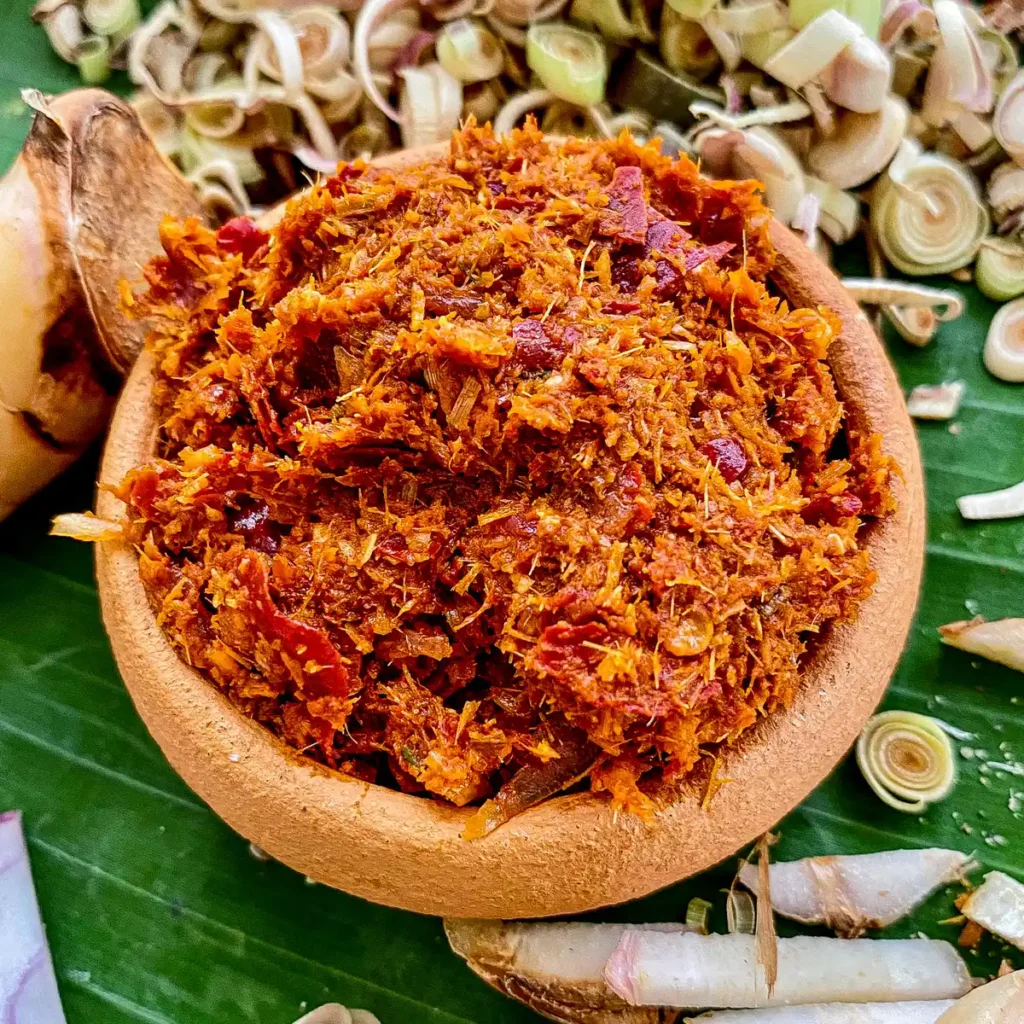

Thai Yellow Curry Paste Recipe
Equipment
- Measuring spoons
- Cutting board & knife
- Food processor or mortar and pestle
Ingredients
- 5 dried chilies, mild → remove seeds; spicier → keep some seeds
- 20 g lemongrass, finely sliced, use the tender inner part
- 10 g kaffir lime zest
- 15 g galangal, sliced thin
- 4 cloves garlic
- 50 g shallots, sliced
- ½ tsp turmeric powder
- ½ tsp coriander seeds
- ¼ tsp cumin seeds
- ⅛ tsp salt
- 1 tsp shrimp paste
- ½ tbsp oil
Instructions
- Before you start, make sure all your ingredients are chopped small. This makes both pounding and blending much easier and gives a smoother paste.
With a food processor
- Add dried chilies, lemongrass, kaffir lime zest, galangal, garlic, shallots, turmeric powder, coriander seeds, cumin seeds, salt, shrimp paste, and oil to a food processor.
- Blend until thick, smooth, and spreadable, stopping to scrape down the sides as needed.
With a mortar and pestle
- Pound dried chilies, lemongrass, galangal, coriander seeds, cumin seeds, salt, and turmeric powder until coarse.
- Add garlic, kaffir lime zest, shallots, and shrimp paste. Pound until the paste is smooth, thick, and fragrant, with no visible chunks.
Notes
- Use the nutrition card in this recipe as a guideline.
I want to make a nice yellow curry with rice and chicken for my partner. Do you have a recipe for that? I see the one for making the curry from scratch but wondered if you have one for the entire dish.
Hey Arlene, I think you will like this one: Gang Garee Curry Recipe (Thai Yellow Chicken Curry) Just copy that in the search bar. It’s an old recipe image so it doesn’t look great but the flavor is really good!