
This authentic Thai pandan custard recipe makes a perfectly smooth pandan cream with coconut milk and fresh pandan leaves. Perfect with bread as a custardy dip!
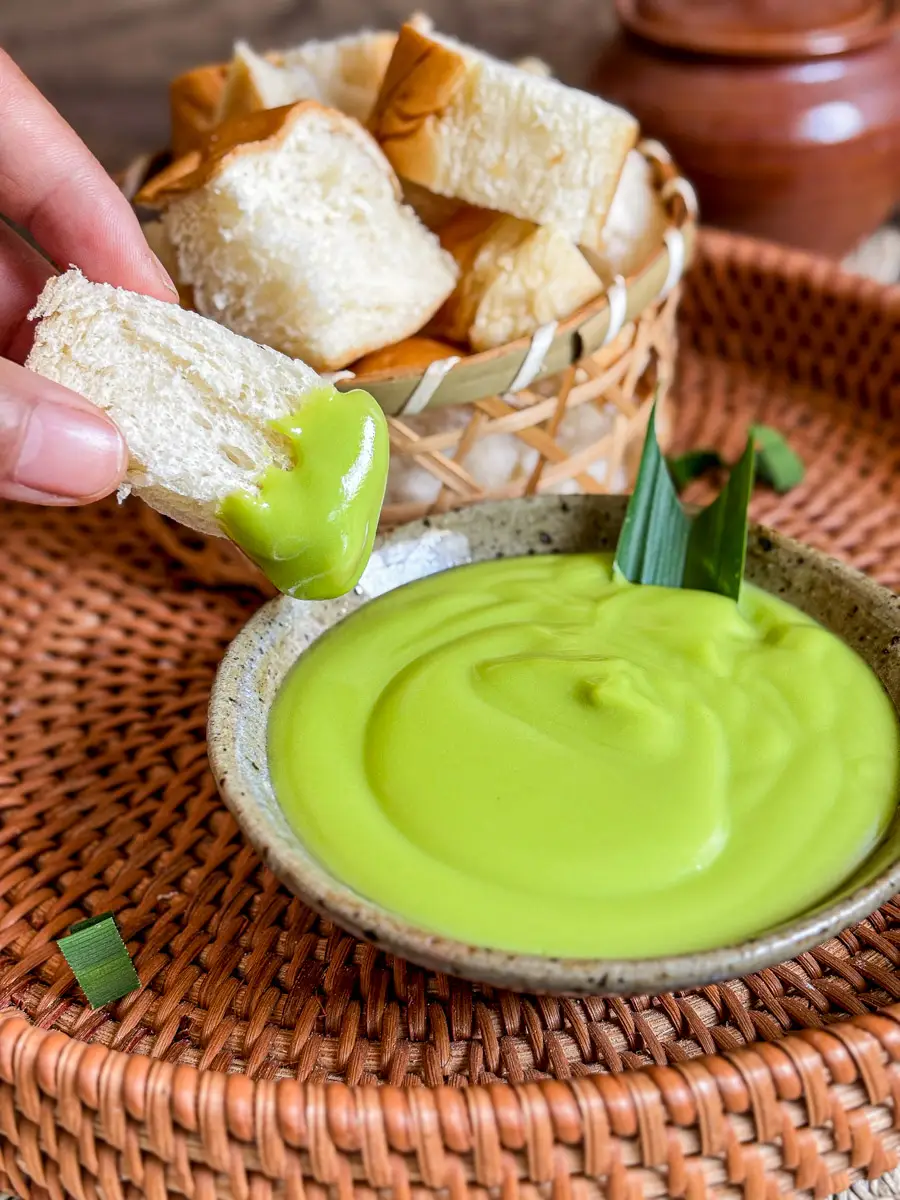
What is pandan custard
Pandan custard is a sweet custard made with coconut milk, eggs, sugar, and pandan leaves. The pandan gives the custard its natural green color and a fragrant flavor people often compare to vanilla with a hint of coconut.
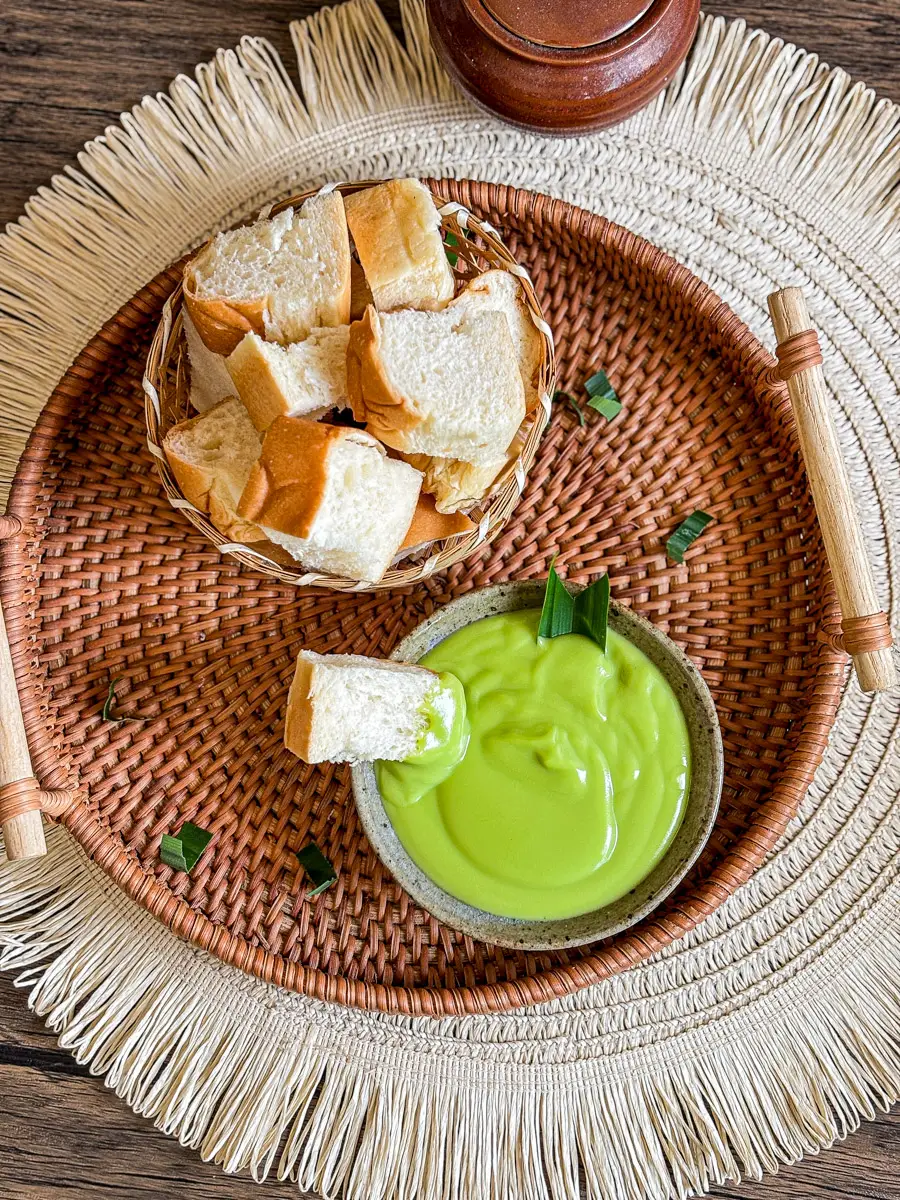
In Thailand, this custard is called sangkhaya, and one of the most common ways to eat it is as a dip for soft white bread. We enjoy it for breakfast or as a snack, even though it’s technically still considered a dessert.
Some versions are steamed until firm and sliceable, while others, like this recipe, are cooked into a smooth pandan custard cream that’s perfect for dipping bread or spreading on toast.
Why this recipe works so well
There are a lot of ways to make sangkhaya, but small changes can affect the flavor and texture more than you’d expect.
Here’s what makes my version stand out:
- Instead of bottled extract, we use real pandan leaves. Blending and straining fresh leaves gives the custard an authentic aroma and flavor.
- Instead of light coconut milk, we use full-fat coconut milk. It’s what gives sangkhaya that rich, velvety texture.
- To keep the custard soft and spoonable, we add a small amount of cornstarch. It helps the custard cling to bread instead of running off.
- And finally, the water bath. It might feel like an extra step, but the gentle heat keeps the custard smooth and glossy instead of turning grainy.
Tip: Leftover pandan leaves can be used to make delicious coconut pandan waffles and pandan drink.
Praew ♡
Learn Thai cooking step by step
My cookbook is a combination of authentic Thai recipes and Western dishes cooked with Thai flavors and ingredients. It’s a great starting point if you’re new to Thai cooking or want to cook it more often.

Ingredient notes & substitutes
✱ You can find everything you need at Asian grocery stores or markets. Head to the recipe card at the bottom of this post for the exact measurements.
- Pandan leaves – Fresh pandan gives the custard its natural green color and fragrant aroma; blend well and strain well to avoid grassy bits in the final custard dip.
- Water – Used to help extract pandan juice during blending.
- Coconut milk – Full-fat coconut milk makes sangkhaya rich and creamy; avoid light versions, as they will taste thin and flat. I highly recommend using Aroy-D.
- Egg yolk – Creates a soft, silky custard base and adds richness.
- Cornstarch – Lightly thickens the custard so it’s spoonable and perfect for dipping.
- Salt – Balances the sweetness and brings out the pandan fragrance.
- White sugar – For sweetening; feel free to add more or less to taste.
- Green food coloring (optional) – Only needed if your pandan leaves are pale.
How to make pandan custard
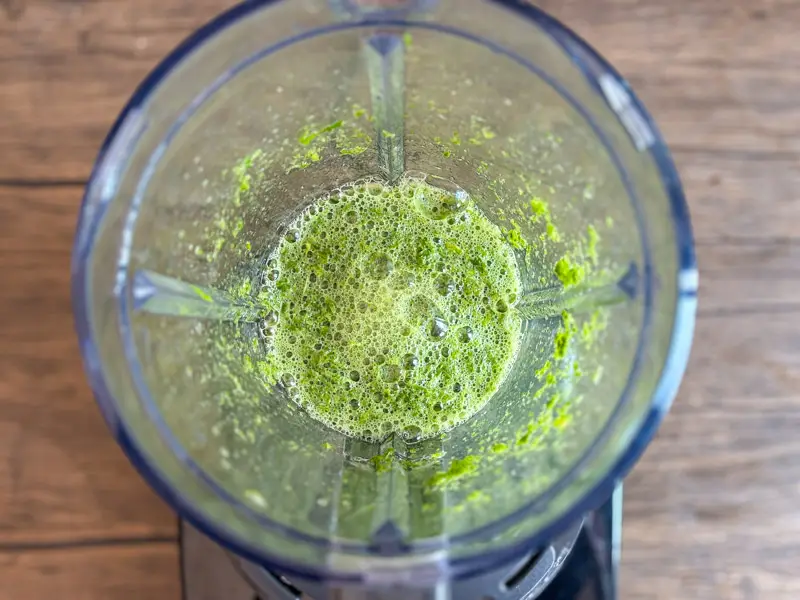
- Extract pandan juice. Add the pandan leaves and ½ cup (or 150 ml) water to a blender. Blend until the leaves are finely broken down and the liquid turns deep green.
Pour the mixture through a fine mesh strainer or clean cloth into a bowl, pressing firmly to extract as much fragrant pandan juice as possible. Discard the pulp.
- Mix the custard base. Transfer the pandan juice to a heatproof mixing bowl. Whisk in the coconut milk, egg yolks, salt, and sugar. Whisk until the sugar is fully dissolved and the mixture looks smooth and evenly green.
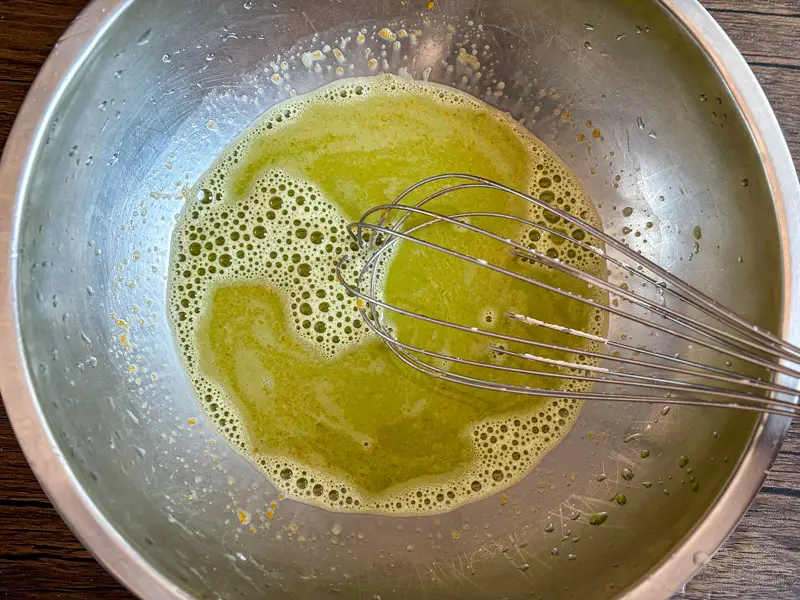
- Dissolve the cornstarch. In a small separate bowl, stir the cornstarch with the remaining water until completely smooth. There should be no lumps.
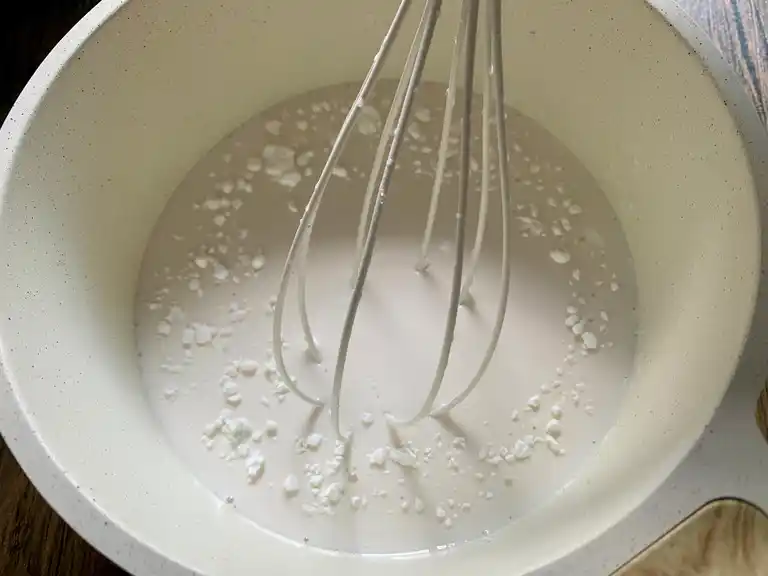
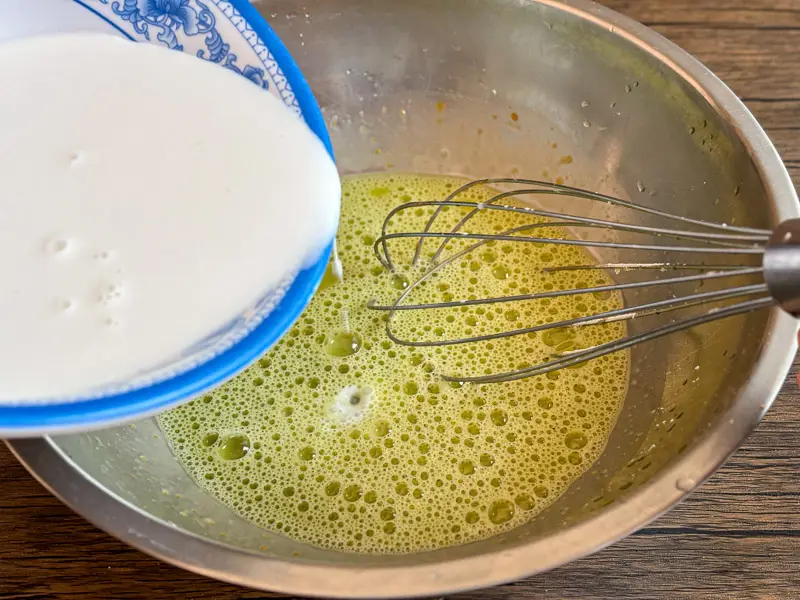
- Add the cornstarch mixture. Gradually whisk the cornstarch mixture into the pandan custard base until fully combined.
- Set up the water bath (bain-marie). Fill a pot with water and bring it to a gentle simmer (small bubbles, not boiling). Place the heatproof bowl directly into the water, making sure the water comes up the sides of the bowl but does not splash into the custard. Keep the heat low so the water stays gently simmering, not boiling.
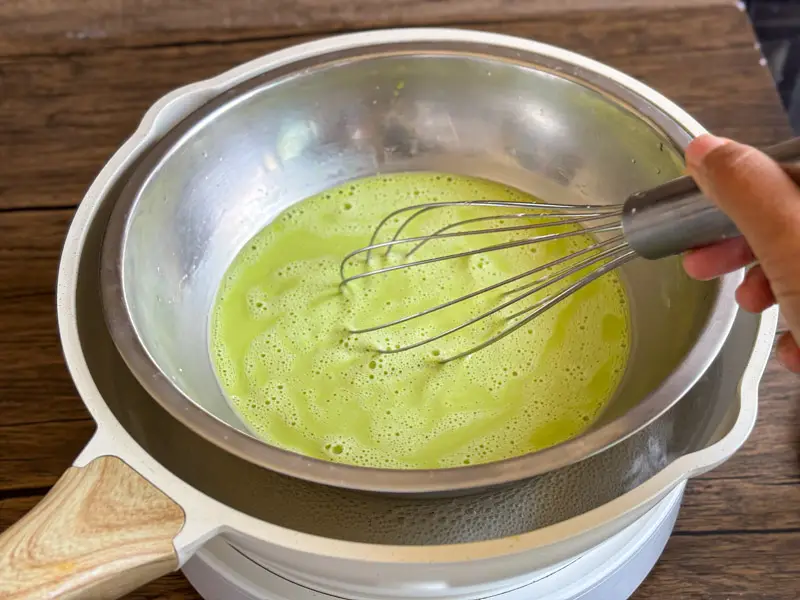
- Cook until thick and silky. Cook over low heat, whisking constantly. Continue whisking until the custard thickens, turns glossy, and becomes smooth and creamy.
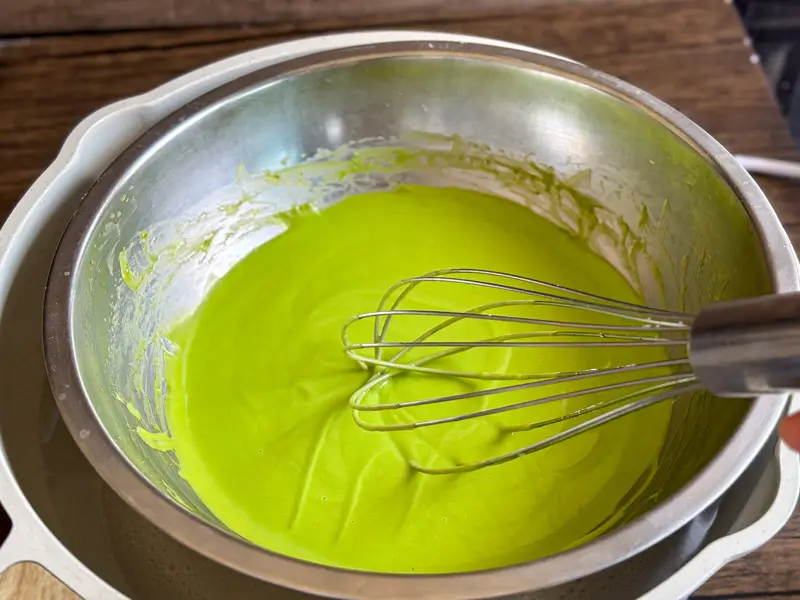
- Adjust the color (optional). If you want a brighter green, whisk in a drop or two of green food coloring.
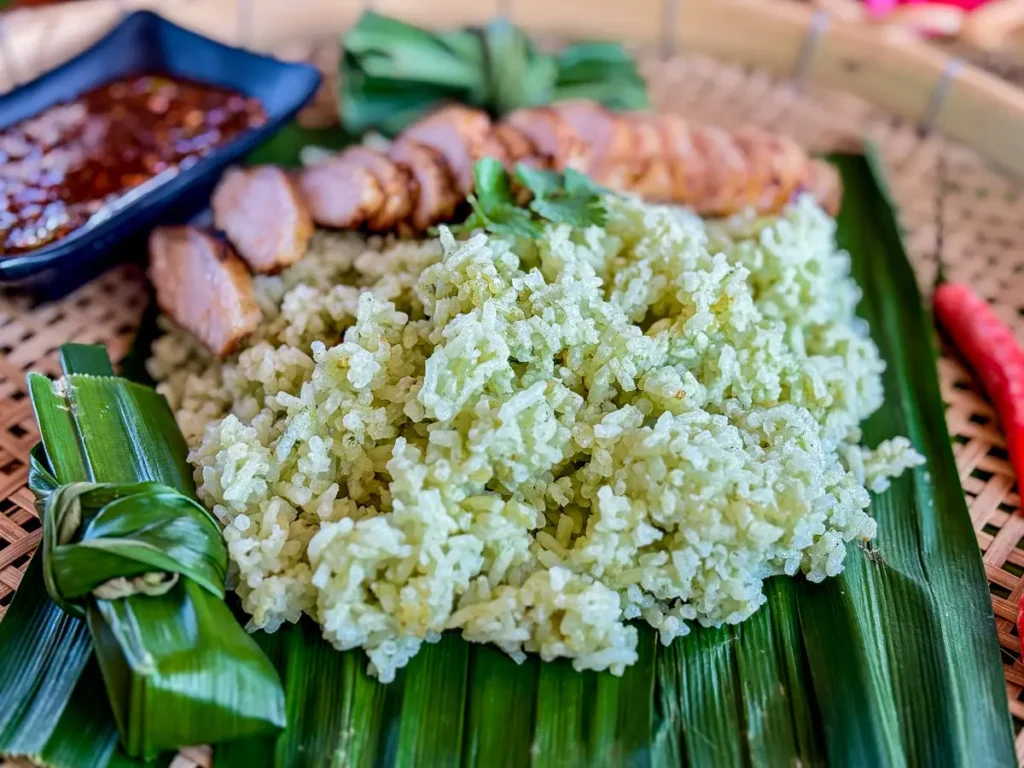
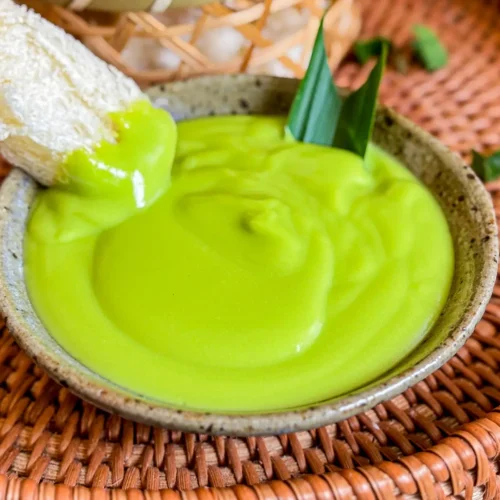
- Cool slightly before serving. Remove the bowl from the heat and let the custard cool slightly. Serve with soft white bread, toasted bread, or warm sticky rice. Use it as a spread, or make it dippable as I did, and have it as a sweet fondue!
Tips for making this recipe
❥ Use low, steady heat. Sangkhaya cooks slowly. High heat will curdle the eggs and give you a bad texture.
❥ Keep it pourable, not sliceable. Stop cooking as soon as it coats the back of a spoon. It will thicken more as it cools.
❥ Stir slowly and constantly. Think steady figure-eights, not fast whisking. You want glossy, not airy.
❥ If it thickens too much, try fixing it. Stir in 1–2 tablespoons of warm coconut milk to loosen it back up.
Storage & reheating
- Refrigerate promptly. Transfer the pandan custard to an airtight container and chill within 2 hours of cooking.
- Keeps for 3 days. The flavor stays fresh, but the color is brightest on day one.
- Expect thickening. Sangkhaya firms up in the fridge. Let it sit at room temperature 10–15 minutes, or stir in a splash of warm coconut milk to loosen.
Frequently asked questions
Why is my custard lumpy or grainy?
The heat was too high or the custard wasn’t whisked constantly. Sangkhaya needs gentle, steady heat to stay smooth.
Can I steam this instead of using a water bath?
For this dip version, a water bath gives more control. Steaming works best for firm, sliceable sangkhaya.
How thick should it be?
It should be soft, glossy, and spoonable. If it can be poured slowly and coats the back of a spoon, it’s ready.
Is food coloring necessary?
No. It’s purely optional and only for color.



Thai Pandan Custard Recipe (Sangkhaya)
Equipment
- Blender (for extracting pandan juice)
- Fine mesh strainer or cheesecloth
- Mixing bowl (heatproof)
- Whisk
- Pot
Ingredients
- 50 g pandan leaves
- 200 ml water, (divided 150ml / 50ml or ½ cup / ¼ cup)
- 2 tbsp cornstarch
- 250 ml coconut milk
- 2 egg yolks
- ⅛ tsp salt
- 5 tbsp white sugar
- green food coloring, optional, as needed
Instructions
- Extract pandan juice. Blend pandan leaves with 150 ml (½ cup) water until finely broken down and deep green. Strain through a fine mesh strainer or cloth, pressing firmly. Discard the pulp.
- Mix the custard base. Transfer the pandan juice to a heatproof bowl. Whisk in coconut milk, egg yolks, sugar, and salt until smooth and fully dissolved.
- Dissolve the cornstarch. In a small bowl, stir the cornstarch with the remaining water until completely smooth.
- Combine. Gradually whisk the cornstarch mixture into the pandan custard base until fully incorporated.
- Set up a bain-marie. Bring a pot of water to a gentle simmer. Place the bowl over the water, keeping the heat low so the water does not boil.
- Cook until silky. Whisk constantly over low heat until thick, glossy, and creamy, about 8–10 minutes. The custard should coat the back of a spoon.
- Adjust color (optional). Whisk in 1–2 drops green food coloring, if desired.
- Cool slightly and serve. Remove from heat and let cool slightly before serving, or transfer to a container to cool completely.
Notes
- Use the nutrition card in this recipe as a guideline.