
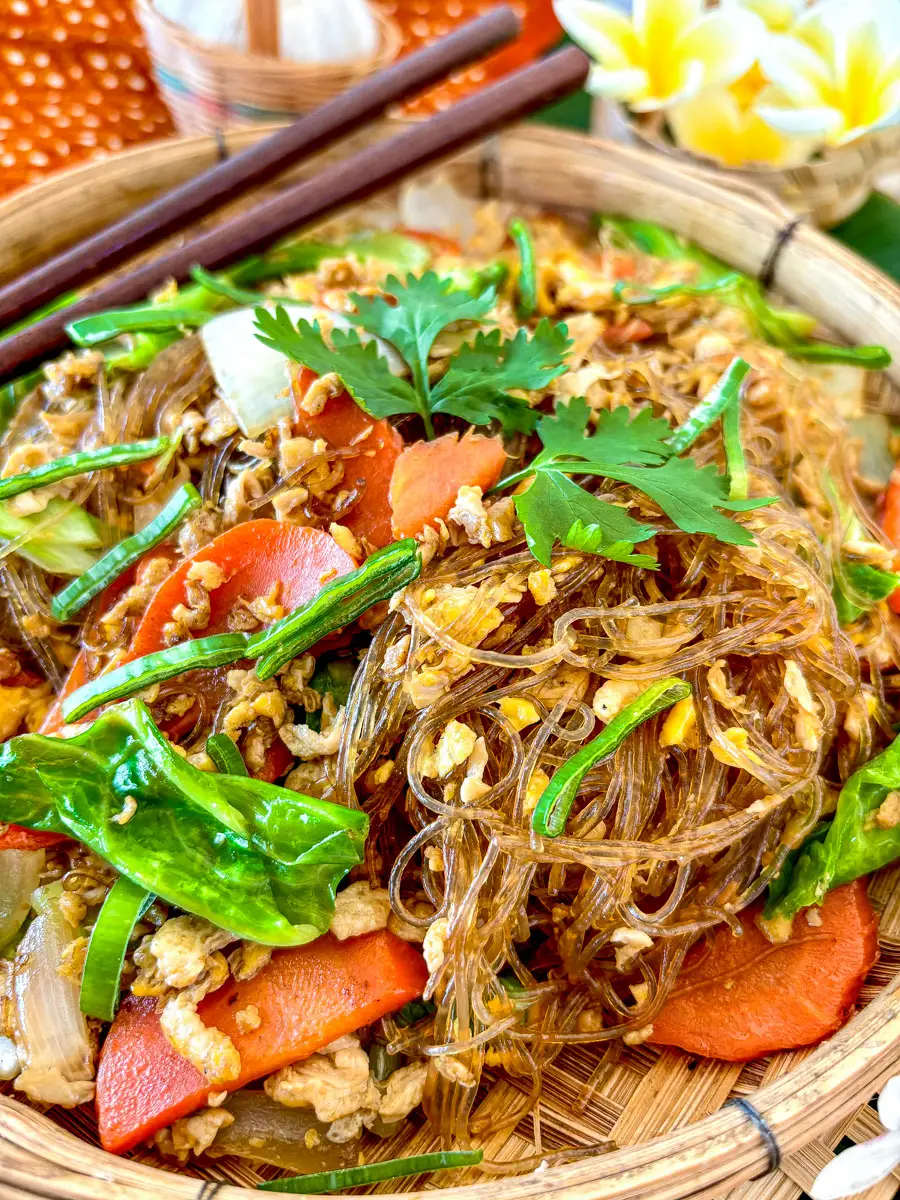
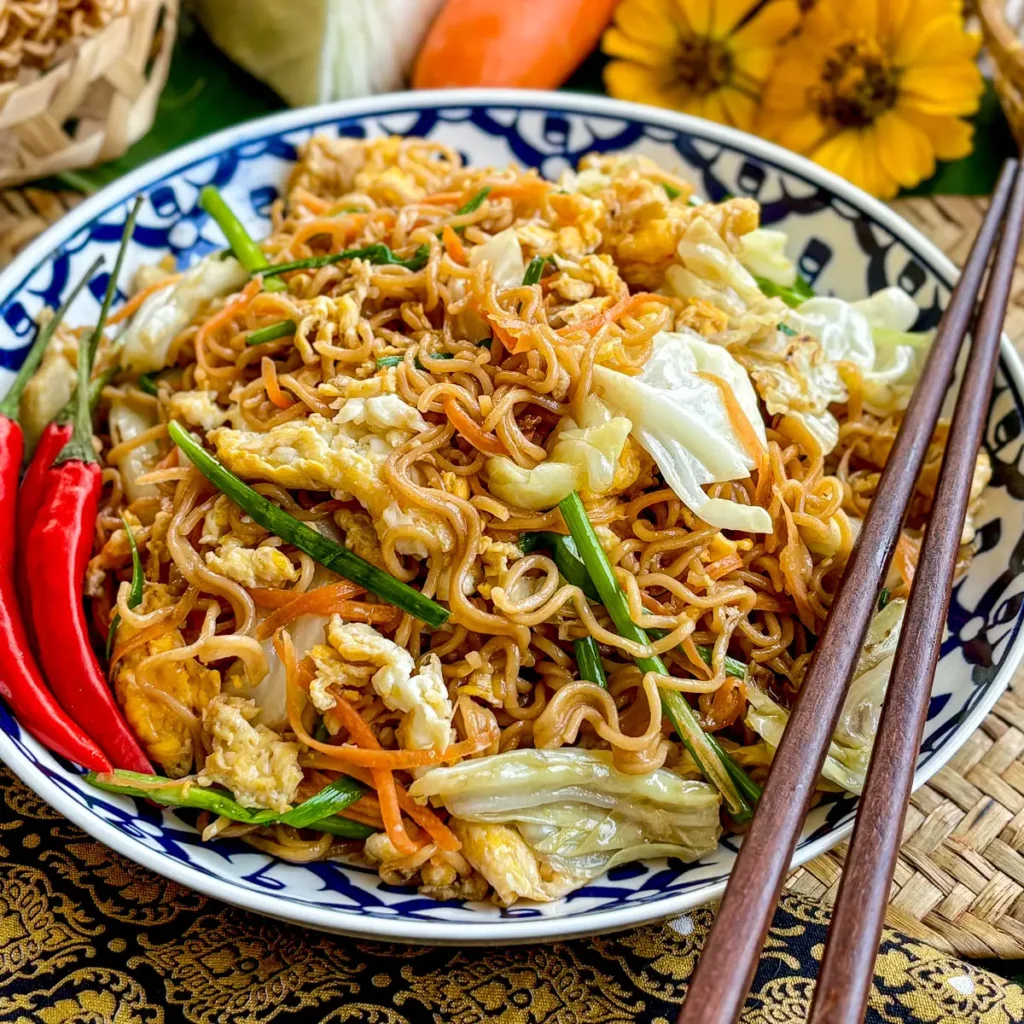
This traditional pad woon sen recipe is a quick Thai glass noodle stir-fry that’s perfect if you want something on the table quickly. It comes together in one pan in about 20 minutes, and if you’ve never cooked with glass noodles before, this is honestly one of the easiest Thai noodle dishes to start with.
What is pad woon sen?
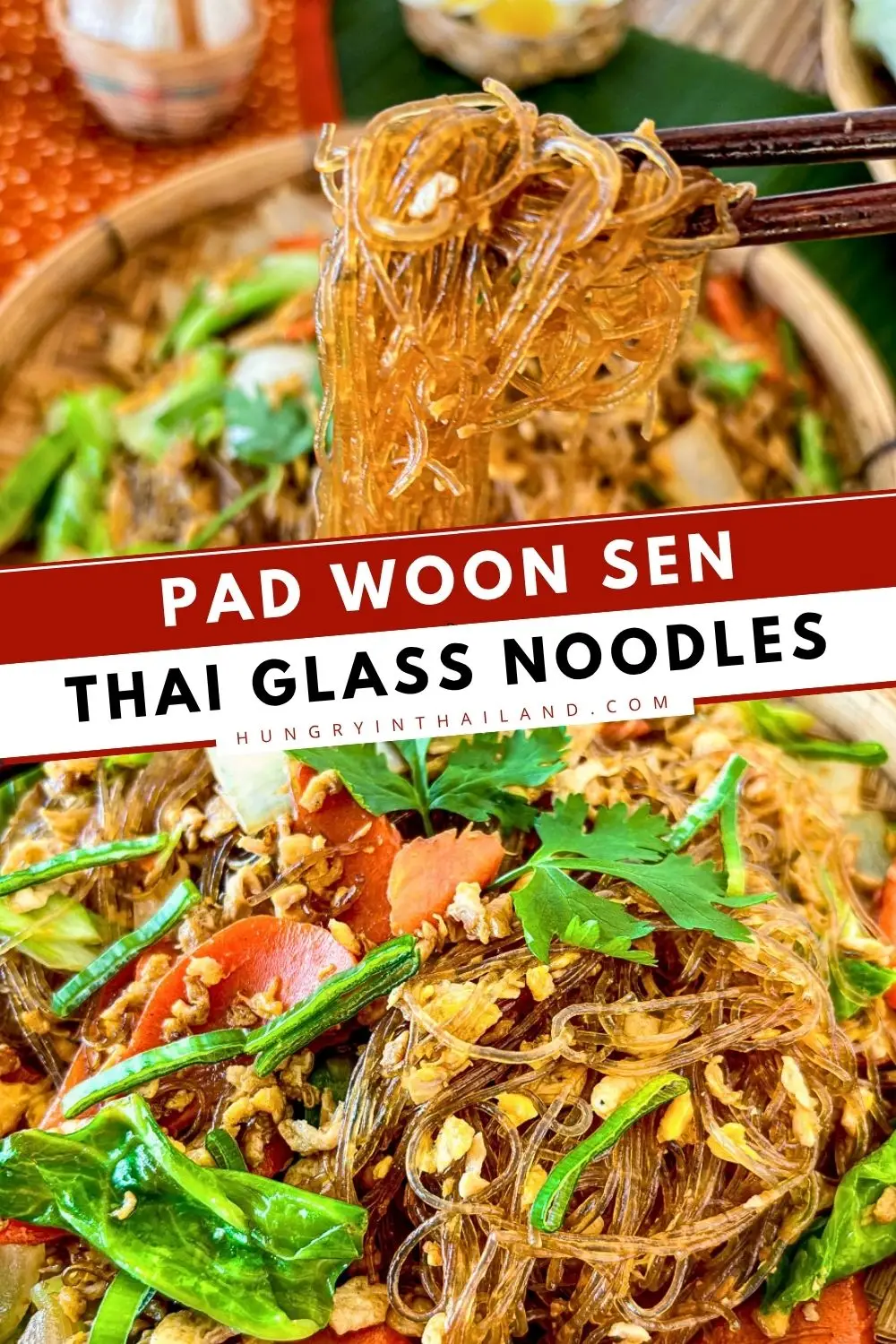
Pad woon sen is a Thai stir-fried glass noodle dish made with glass noodles, vegetables, egg, and a savory sauce. The name comes from pad (stir-fried) and woon sen (glass noodles).
The flavor is savory, slightly sweet, and garlicky, and it’s easy to customize with your favorite protein or vegetables. Unlike heavier noodle dishes like pad Thai and pad see ew, pad woon sen stays relatively light while still being filling.
In Thailand, it’s commonly served as a quick lunch or dinner and sometimes as part of a larger shared meal with other dishes on the table.
Thai glass noodles
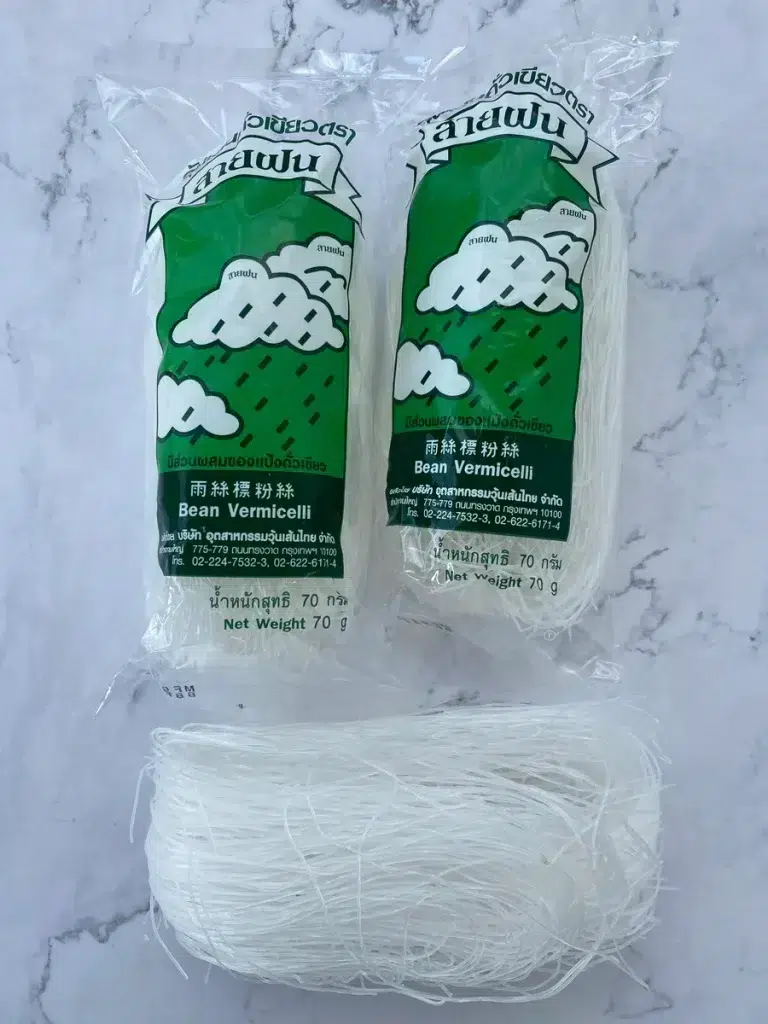
Glass noodles, also called bean thread noodles or cellophane noodles, are thin transparent noodles usually made from mung bean starch. In stir-fries, they soak up the savory sauce while staying chewy and slightly slippery.
Compared to rice noodles, glass noodles are chewier and lighter while absorbing sauces really well, which is one reason they’re also popular in Thai salads like yum woon sen.
If you’ve never cooked with glass noodles before, don’t worry, they’re actually easier to work with than rice noodles once you know the soaking trick. The biggest thing is not over-soaking them before they hit the wok.
Learn Thai cooking step by step
My cookbook is a combination of authentic Thai recipes and Western dishes cooked with Thai flavors and ingredients. It’s a great starting point if you’re new to Thai cooking or want to cook it more often.
Ingredient notes & substitutes
You can find everything at Asian grocery stores or markets. Head to the recipe card at the bottom of this post for the exact measurements.

- Glass noodles: Cutting the noodles slightly shorter after soaking makes them much easier to toss in the wok and eat.
- Eggs: Add richness and extra texture to the noodles.
- Vegetables: I usually use cabbage, carrot, onion, garlic, green onions, and coriander, but this recipe is flexible.
- Golden mountain sauce: Commonly used in Thai stir-fries for extra savory flavor.
- Dark soy sauce: Mostly used for color rather than saltiness.
- Oyster sauce: This is what gives the dish its classic savory takeout-style flavor.
- White sugar: Helps balance the salty sauces without making the dish sweet.
This is also the kind of recipe that works really well for cleaning out the fridge. I’ve made it with leftover cabbage, mushrooms, tofu, shrimp, and whatever vegetables needed using up.
How to make pad woon sen
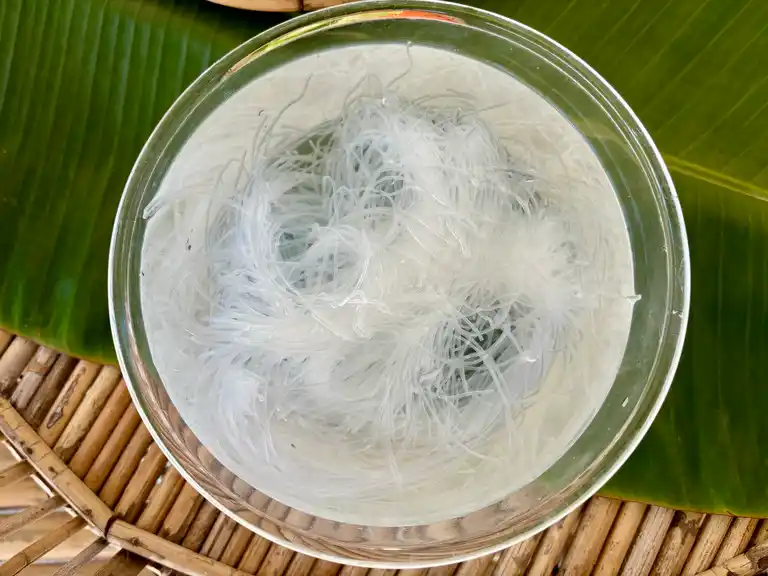
1: Soak the noodles. Soak the glass noodles in room temperature water until softened. Drain well and cut them slightly shorter if needed. The noodles should feel flexible but not completely soft.

2: Sauté garlic. Heat oil in a wok or large skillet over medium-high heat. Stir-fry the garlic until fragrant.

3: Scramble eggs. Add the eggs and scramble until almost cooked.

4: Adds greens. Add the vegetables and stir-fry until slightly softened but still crisp.
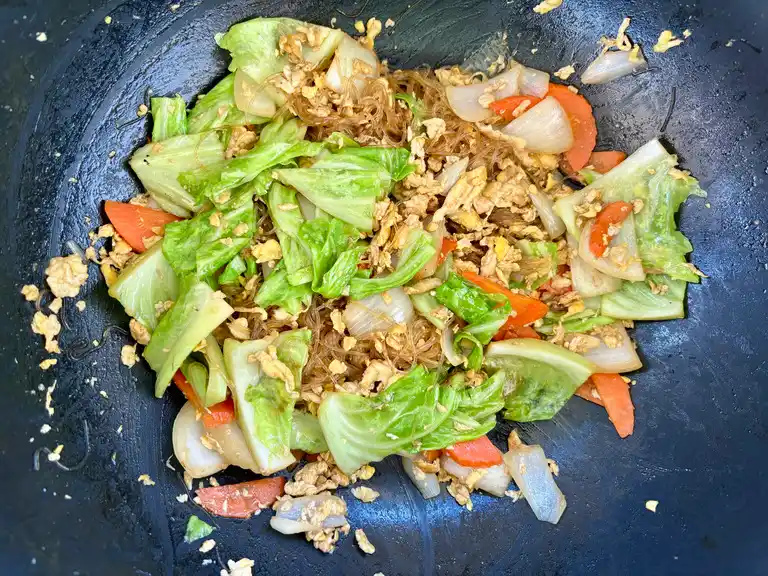
5: Add noodles and season. Add the soaked noodles, oyster sauce, dark soy sauce, golden mountain sauce, and sugar. Toss everything together until the noodles absorb the sauce and turn glossy.
6: Garnish. Stir in green onions and garnish with coriander before serving.
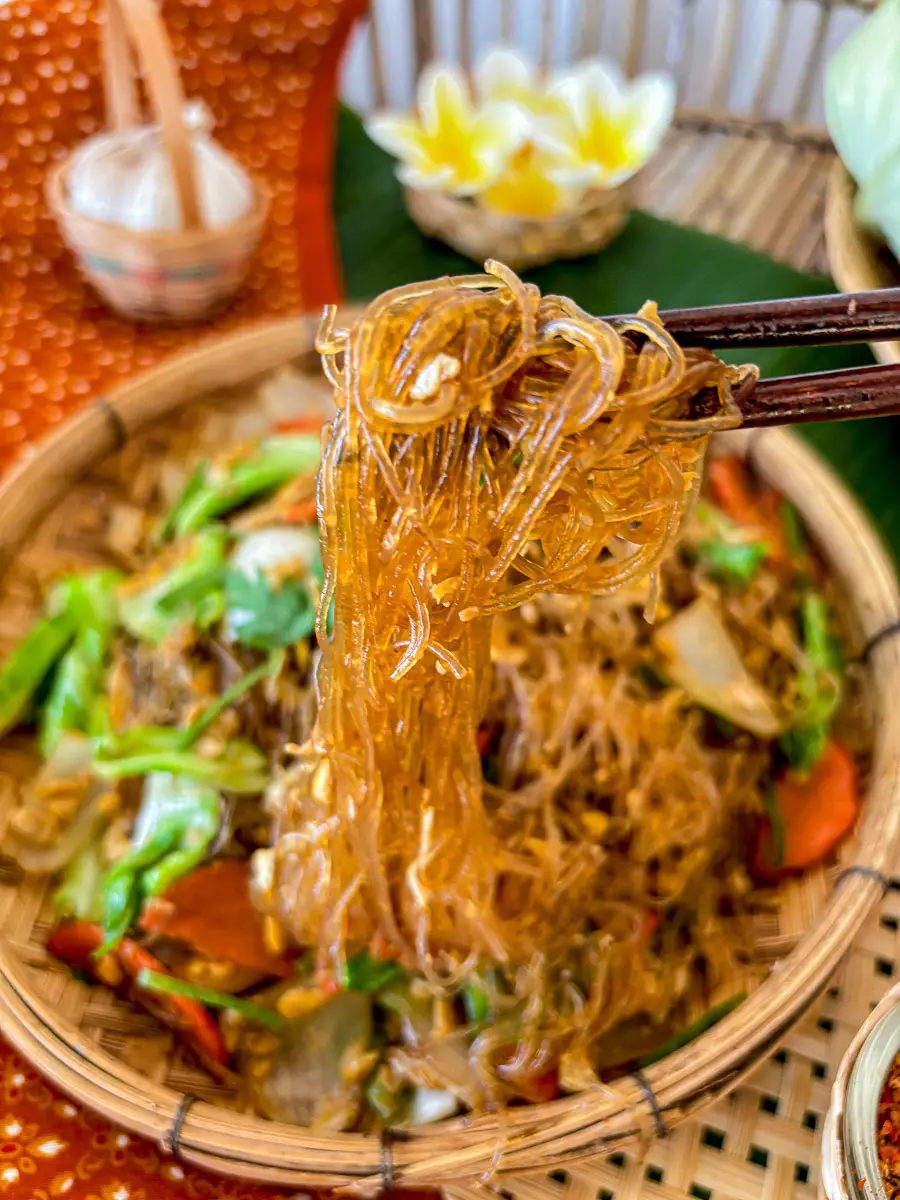
Insider tip: In Thailand, pad woon sen is often served with chili flakes, sugar, and lime on the side so everyone can adjust the flavor to their taste.
How to store & reheat
Store leftovers in an airtight container in the fridge for up to 3 days.
Reheat in a skillet over medium heat with a small splash of water or oil to loosen the noodles.


Pad Woon Sen Recipe (Thai Glass Noodle Stir-Fry)

Equipment
- Knife & cutting board
- Mixing bowl
- Colander
- Wok or large skillet
- spatula
Ingredients
- 3 tbsp oil
- 2 cloves garlic, minced
- 2 large eggs
- 1 tbsp golden mountain sauce
- 1 tsp dark soy sauce
- 1 tbsp oyster sauce
- ½ tbsp white sugar
- 70 g dried glass noodles
- 70 g onion, chopped
- 90 g cabbage, roughly chopped
- 50 g carrots, finely chopped
- 3 green onions, chopped
- coriander, for garnishing, add to taste
Instructions
- Soak the glass noodles in room temperature water until softened according to the package instructions. Drain well and cut them slightly shorter if needed.
- Heat oil in a wok or large skillet over medium-high heat. Stir-fry the garlic until fragrant.
- Add the eggs and scramble until almost cooked.
- Add the vegetables and stir-fry until slightly softened but still crisp.
- Add the soaked noodles, oyster sauce, dark soy sauce, golden mountain sauce, and sugar. Toss everything together until the noodles absorb the sauce and turn glossy.
- Stir in the green onions and garnish with coriander before serving.
Notes
- Use the nutrition card in this recipe as a guideline.