
You bought holy basil for one of my recipes… and now the rest is just sitting there.
It’s one of those ingredients that feels a bit too specific to just throw into anything. You know it has a strong flavor, but you’re not exactly sure where else it works, so it ends up in the fridge a little longer than it should.
This post is for anyone trying to figure out what else to make with it.
What is holy basil?
Holy basil (krapow) is a fragrant herb widely used in Thai cooking, especially in stir-fries and spicy dishes. It has a bold, peppery flavor with slightly spicy, clove-like notes. When added to hot food, it releases a strong, aromatic scent that gives many Thai dishes their signature flavor.

It’s the basil used in a lot of Thai stir-fries, but it often gets confused with Thai basil on Western food blogs, mostly because it’s harder to find outside Thailand. Learn more about holy basil vs Thai basil here.
When I was living in Belgium, I had to go to Asian grocery stores in bigger cities to find it. At some point, I found someone growing it locally, and I ended up buying from them every week for my Thai restaurant.
How to use holy basil
1. Make pad kra pao
Pad kra pao pork is the most popular dish you can make with holy basil. It’s the reason most people buy it in the first place.
It’s a quick stir-fry with garlic, chilies, and minced meat, cooked in a savory-sweet sauce and finished with a handful of holy basil right at the end. The basil wilts into the dish and gives it that strong, peppery flavor that you don’t really get from anything else.
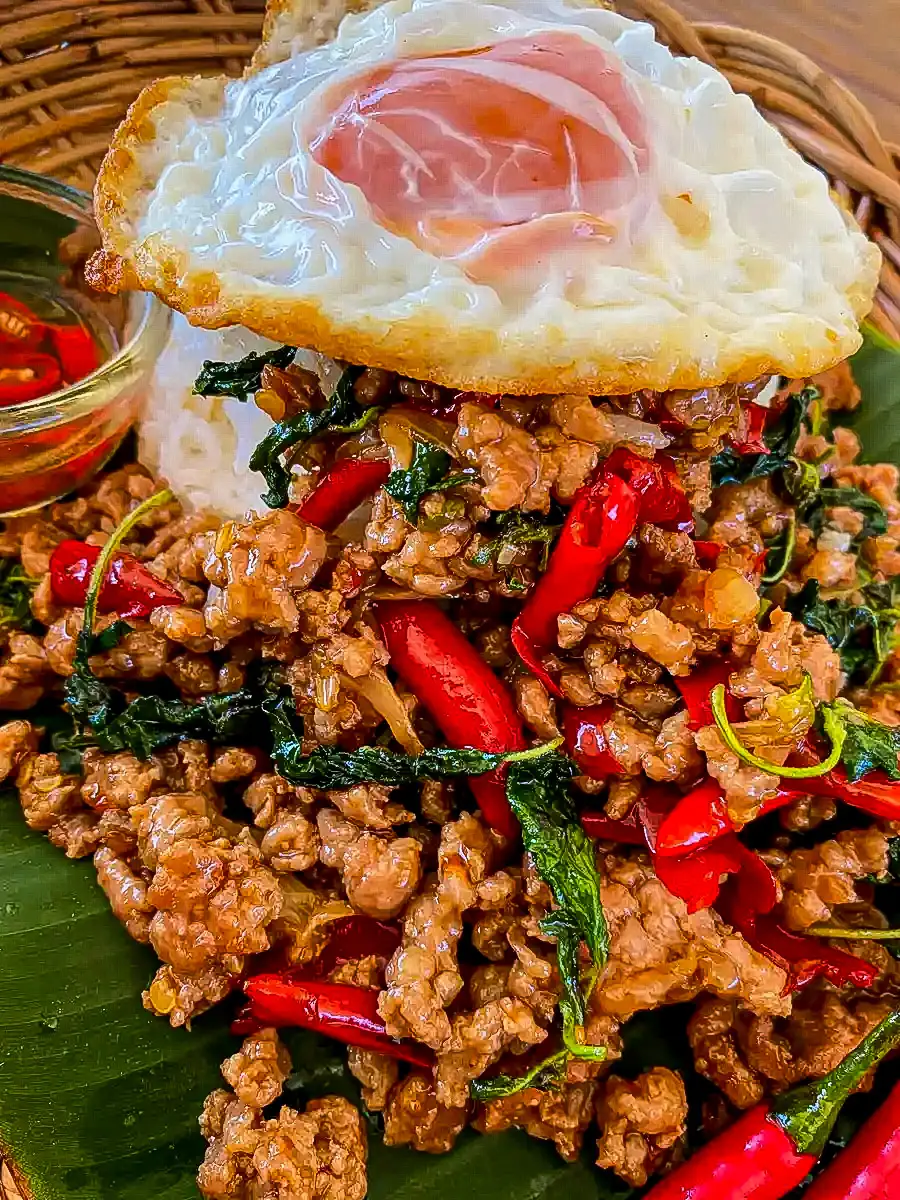
What I like about this one is how fast it comes together. Everything cooks in one pan, and in about 20 minutes you’ve got something that tastes amazing.
It’s usually served with jasmine rice and a crispy fried egg on top, and once you’ve had it like that, it’s hard to go back.
It’s also one of the most popular street foods in Thailand, especially among Thai people, so that already says a lot.
I’ve got a recipe for pad kra pao chicken and one for basil beef if you want to try it.
2. Make holy basil tea
If you’ve got extra leaves and don’t feel like cooking, this is usually the easiest thing to do.
Holy basil tea (tulsi tea) is made by steeping fresh leaves in hot water for a few minutes. The flavor is warm and herbal, with slightly peppery, clove-like notes, which is why a bit of honey or lime works really well with it.
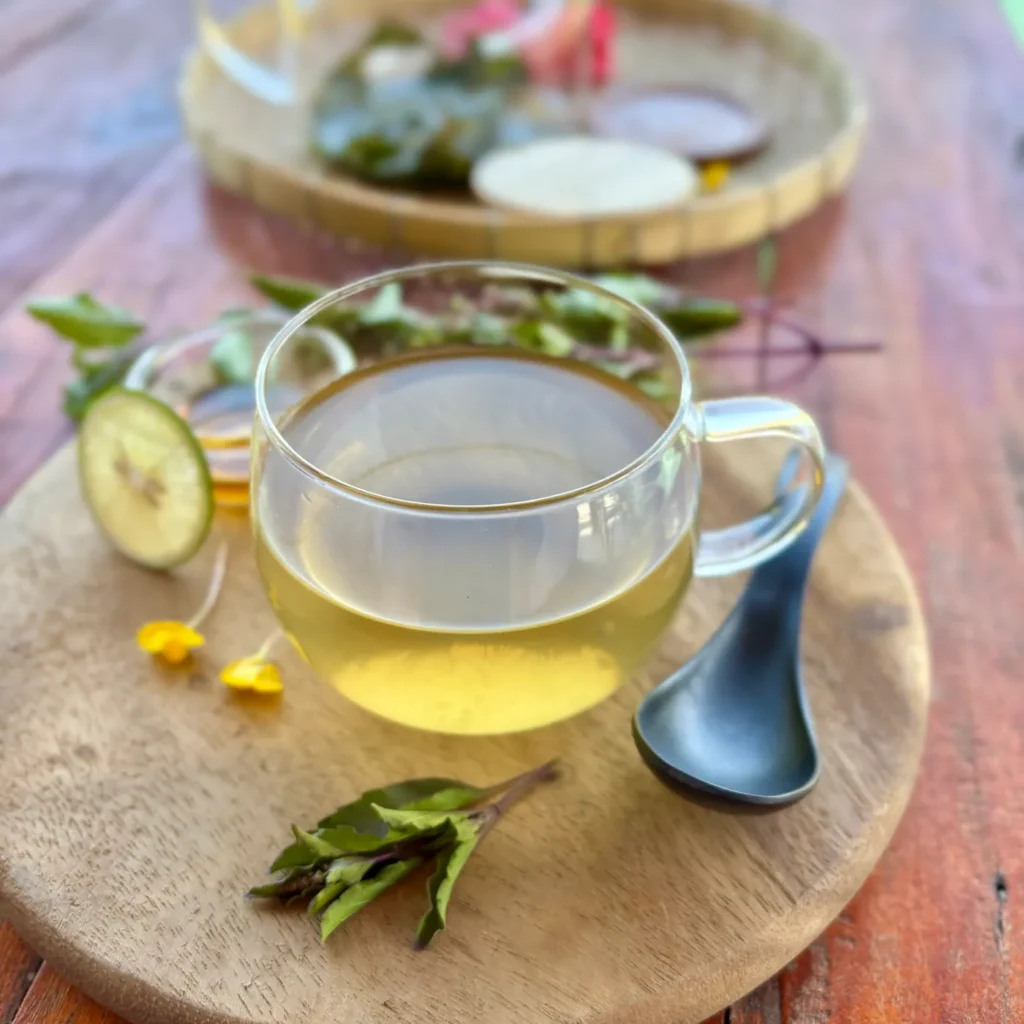
People here also drink it for the health benefits. It’s known to help with things like digestion, reducing inflammation, and even stress or sore throat relief.
You can drink it hot or let it cool and have it iced, depending on the weather.
3. Pad kee mao
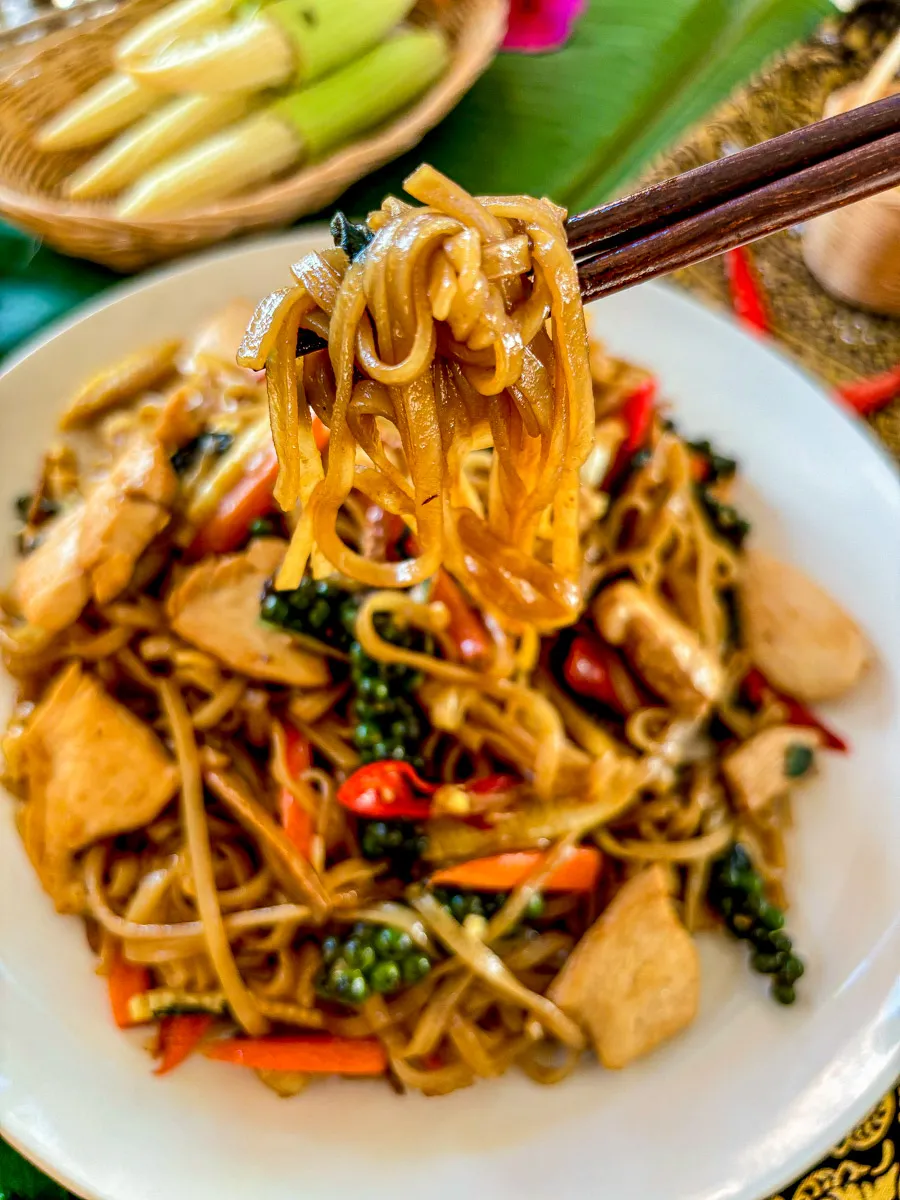
Pad kee mao is made with rice noodles stir-fried on high heat with garlic, chilies, sauce, and holy basil. The heat is important here; everything cooks fast and you get that slightly smoky flavor that makes it taste like street food.
The noodles stay a bit chewy, the sauce is salty and spicy, and the basil at the end gives it that strong, peppery finish that ties everything together.
4. Make holy basil juice
If you’ve got a lot of holy basil, you can also turn it into a simple drink.
Blend the leaves with water and a bit of sugar, then strain it. The flavor is quite strong and herbal, a bit spicy even, so it’s not for everyone, but it’s refreshing once you get used to it.
5. Try basil pork belly
If you’ve got pork belly, this is one you should try at least once.
It’s made with crispy pork belly stir-fried with garlic, chilies, and holy basil, and the combination just works. You’ve got that crispy, fatty pork, then the sharp, peppery basil that cuts through it.
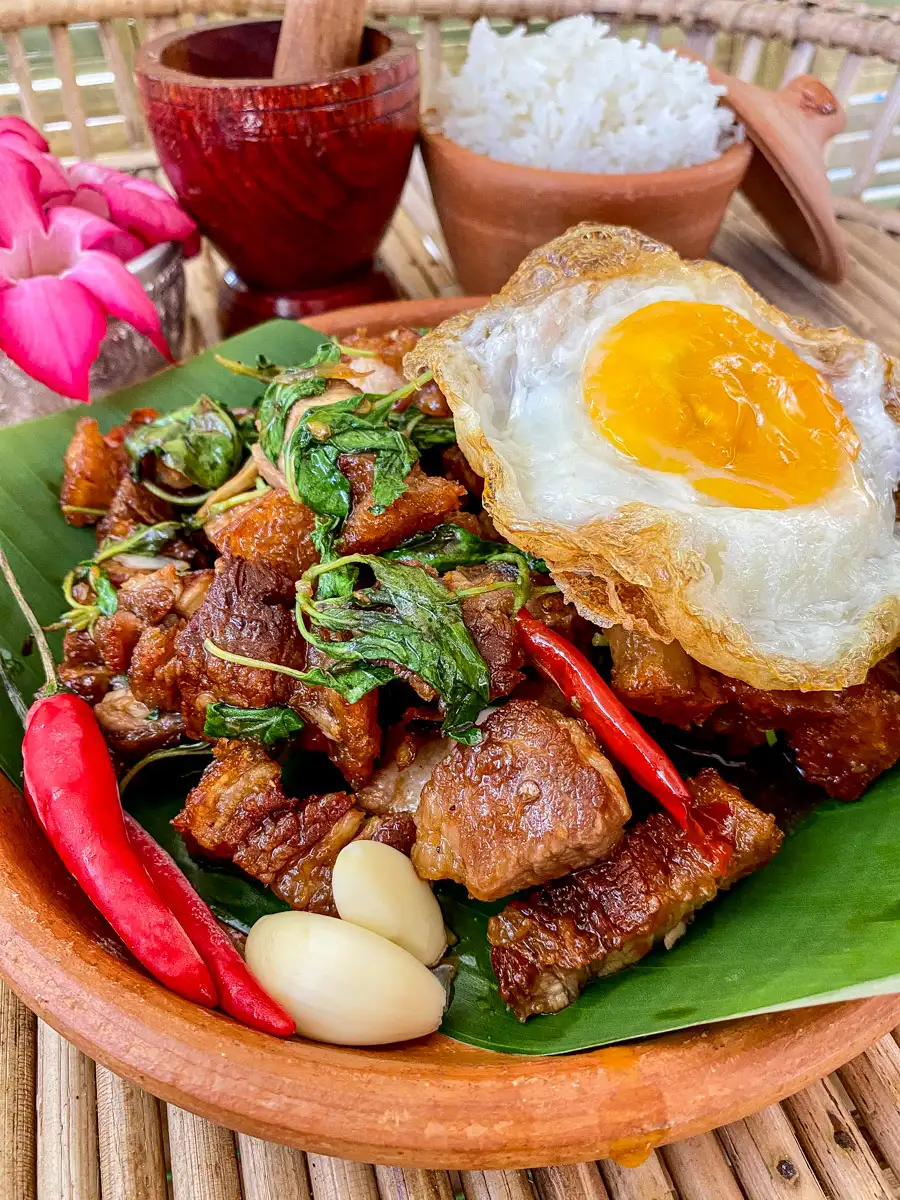
What I like about this one is the texture as well. The pork is crispy on the outside but still soft inside, and once it’s tossed in the sauce, it picks up all that flavor without losing the crunch.
It’s definitely a bit richer than the chicken or beef versions, so not something I make all the time, but when you’re in the mood for something like this, it really hits.
6. Eat the fresh leaves
You can serve them on the side with other meals, especially spicy ones. The flavor is quite strong, a bit peppery and slightly spicy, so you really only need a few leaves at a time.
7. Add it to soups
If you’ve got a bit left over, you can also add holy basil to soups.
Just throw in a few leaves right at the end, while the soup is still hot. The heat softens them slightly, but you still get that strong, aromatic flavor coming through.
It works especially well with clear broths or noodle soups, where the basil can stand out a bit more.
8. Use it in fried rice
If you’ve got leftover holy basil and rice, this is one of the best ways to use it.
It’s basically fried rice, but with the same flavors as a basil stir-fry: garlic, chilies, sauce, and holy basil all mixed through instead of served on top. Everything gets stir-fried together so the rice absorbs the flavor properly.
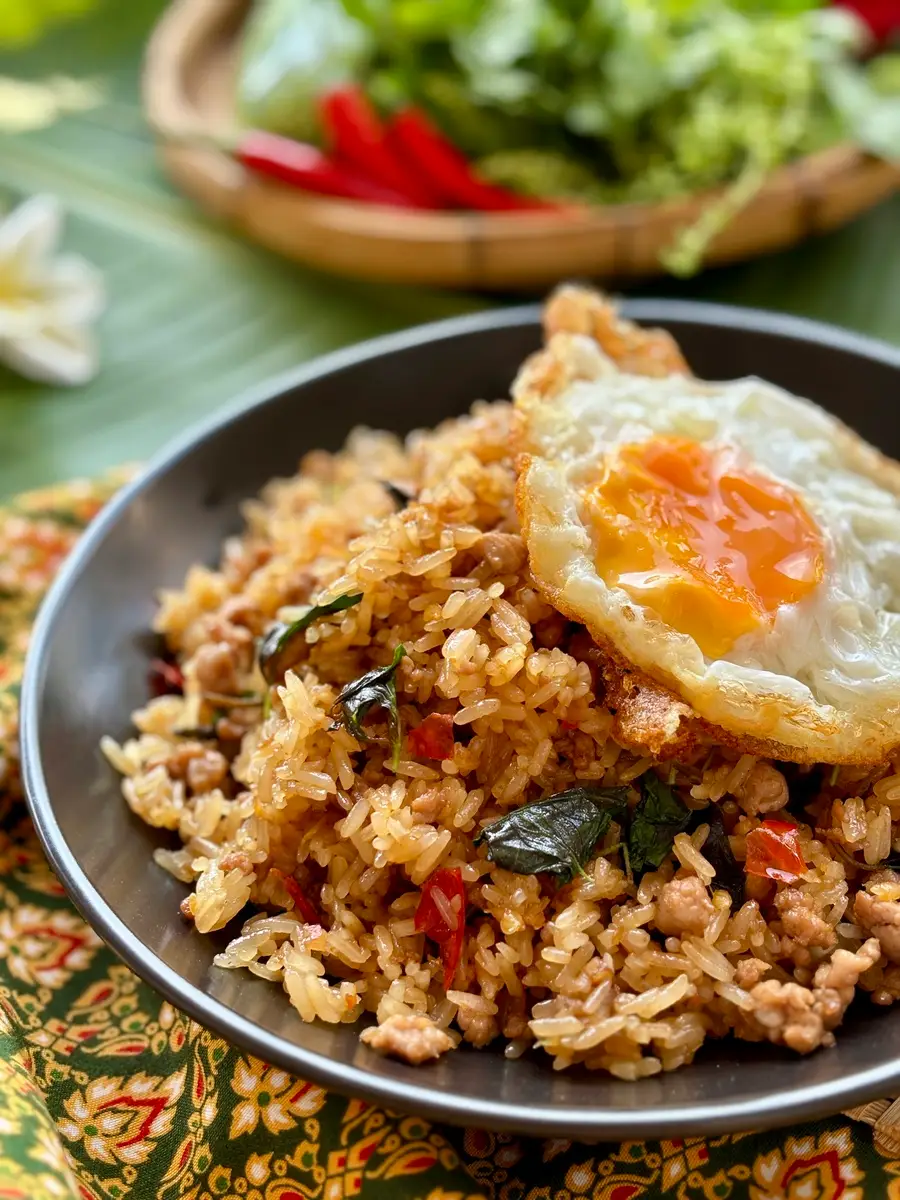
You can use chicken, pork, beef, or whatever you have on hand, and just toss in the basil at the end so it keeps its aroma.
9. Add it to omelets
This is one people don’t really think about, but it works.
Just chop a few leaves and add them to your eggs right at the end, or mix them in before cooking. The heat softens the basil slightly, but you still get that peppery flavor coming through.
It’s a simple way to use up leftover basil without having to cook a full dish.
More posts like this
If you end up trying one of these ideas, I’d love to hear how you liked it. And if you’ve got your own go-to way of using Thai holy basil, feel free to share it in the comments!