
Bought a bunch of Thai basil for one recipe… and now the rest is just sitting in your fridge?
Happens to me more often than I’d like to admit. At the markets here in Thailand, basil usually comes in big bunches, and if I don’t use it quickly, it starts to wilt before I even realize it.
But once I learned how many different ways you can use it (and even grow it myself), it never goes to waste anymore.
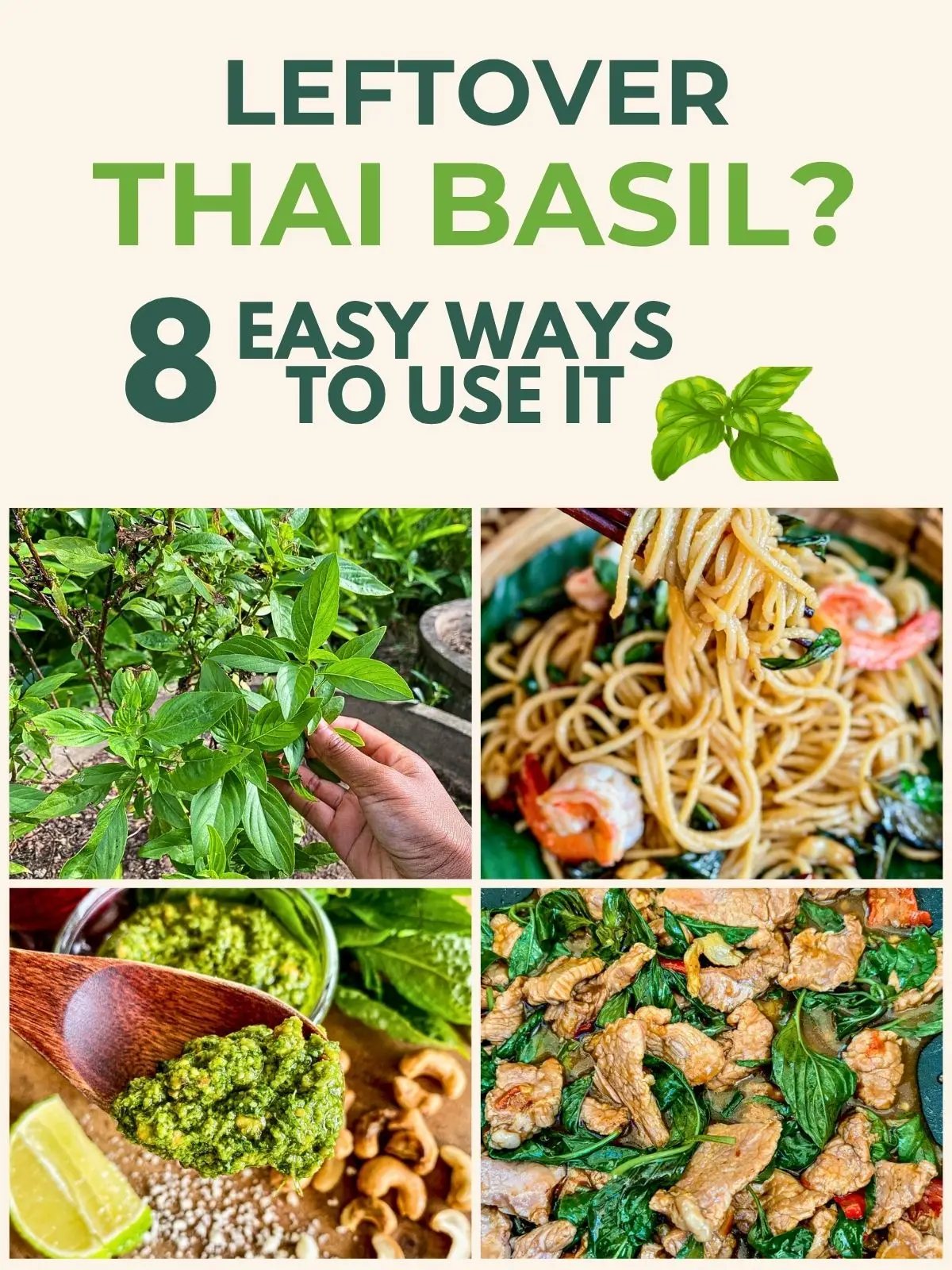
Note: This post is about Thai sweet basil, not holy basil (the kind used in pad kra pao), which has a very different flavor. For a full comparison, see my Thai basil vs holy basil post.
What is Thai basil?
Thai basil (horapa) is a fragrant herb widely used in Thai cooking, especially in curries, stir-fries, and noodle dishes. It has a slightly sweet flavor with a gentle licorice (anise) note and a light peppery finish. When added to hot food, it releases a warm, aromatic scent that’s instantly recognizable in many Thai dishes.
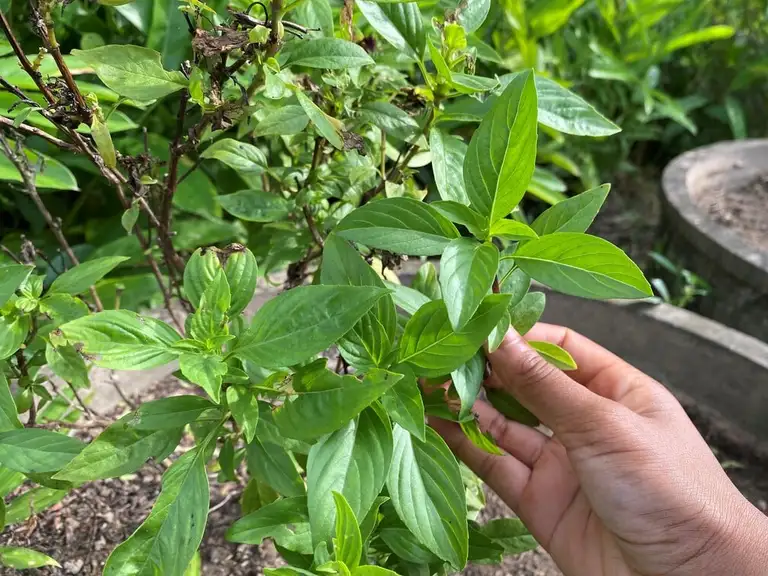
Unlike regular Italian basil, Thai basil has firmer leaves and a stronger, more defined flavor. The stems are often purple, and the leaves hold their shape well when cooked. Regular basil is softer and more delicate, while Thai basil stays slightly crisp and adds a deeper, more aromatic flavor to savory dishes.
You can purchase Thai basil at Asian grocery stores, local markets, and sometimes larger supermarkets with a good selection of fresh herbs. It’s usually sold in bunches and often comes with purple stems and slightly pointed leaves.
If you don’t see it right away, check near other fresh herbs like mint and cilantro. And if it’s not available, regular basil can work as a substitute in a pinch, but the flavor will be milder and less aromatic.
How to use Thai basil
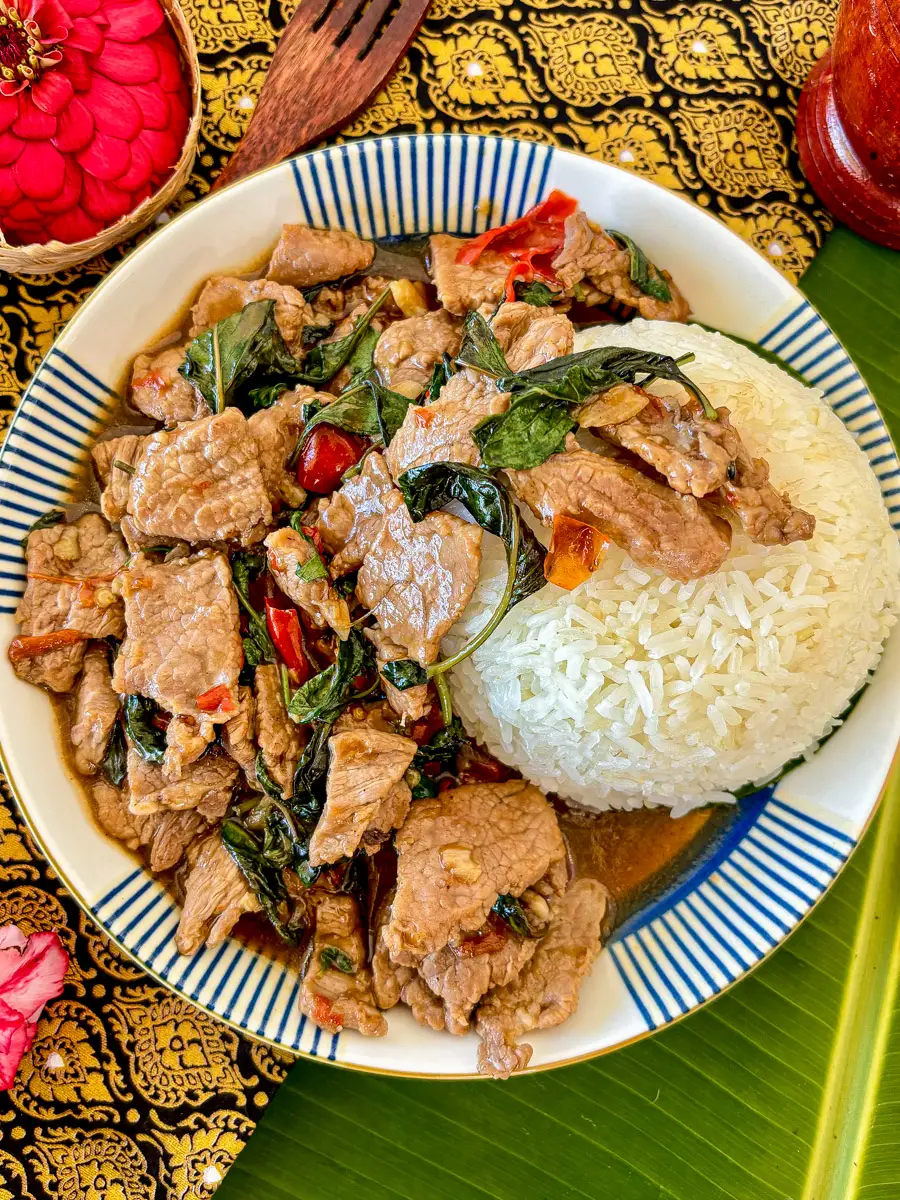
1. Make Thai basil stir-fry (pad horapa)
This is one of the best things you can make if you have leftover Thai basil.
Pad horapa is a popular Thai stir-fry with garlic, chilies, and whatever protein you have. It takes about 20 minutes and is perfect with jasmine rice for a quick weeknight dinner.
Add the leaves right before turning off the heat so they don’t overcook. Toss a few more times, but make sure the leaves don’t wilt too much.
2. Toss it into soups
If you’ve ever had noodle soup in Thailand, you’ve probably seen a pile of basil, fresh vegetables, and condiments on the table.
You can add it right at the end of cooking or just toss it into your bowl. The hot broth softens the leaves slightly, but it still keeps that fresh flavor.
3. Make Thai basil pesto
This is one of my favorite ways to use up a bigger bunch.
I like making a Thai basil pesto. It’s stronger than regular pesto, more punchy, but in a really nice way.
You can use it with pasta, but also with rice or even on grilled meats.

4. Add it to drinks
This one sounds a bit unexpected, but stay with me.
If you’ve got lemon or lime, just add a few Thai basil leaves to your drink. Press them slightly first so they release some flavor.
You can do this with:
- sparkling water with ice
- iced lemonade
- lime soda
- cocktails
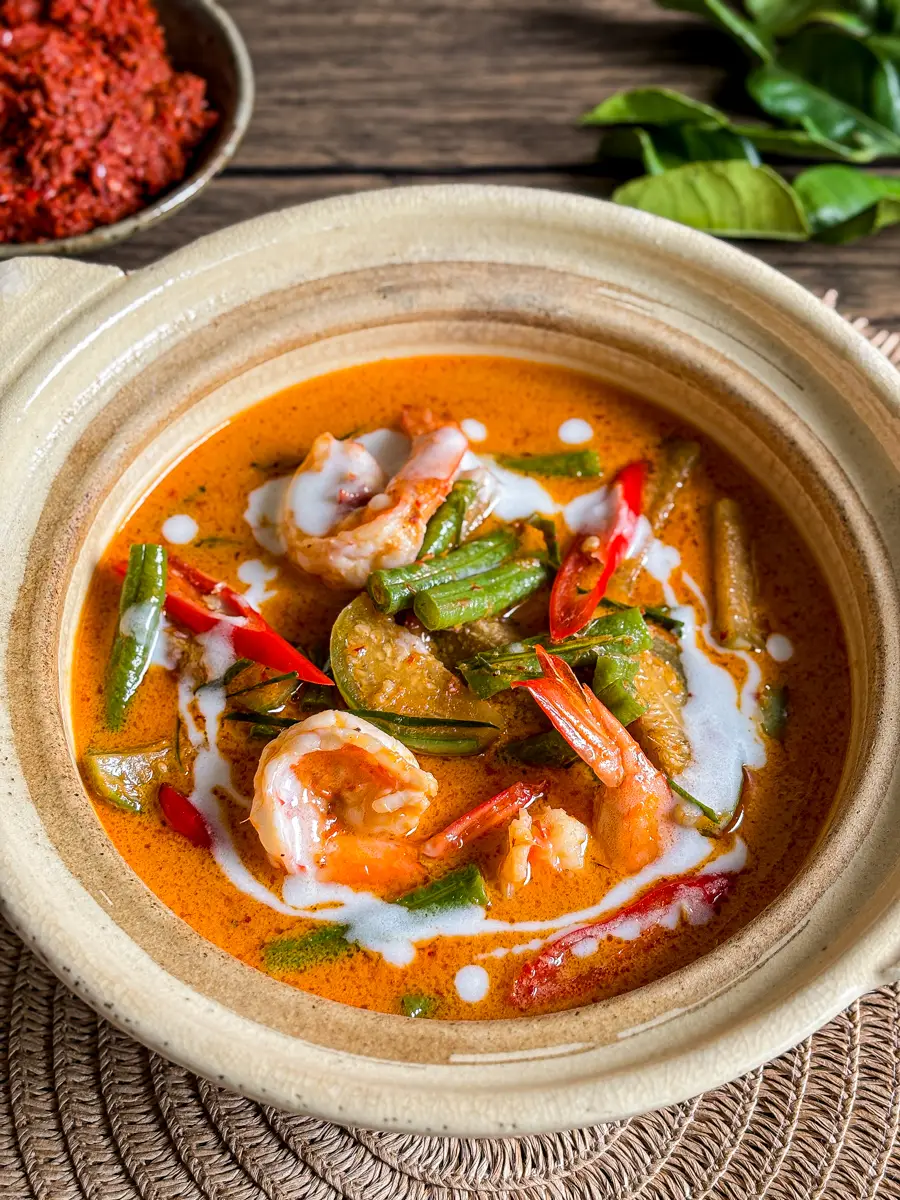
5. Add it to Thai curries
Whenever I make red curry or green curry, I always finish it with Thai basil. Just a handful at the end, let it soften slightly, and that’s it.
6. Add it to scrambled eggs
This is a really easy trick that’ll upgrade your scrambled eggs inbstantly.
Make your eggs as usual, then add a few leaves at the end. They soften slightly and give a nice, fresh flavor.
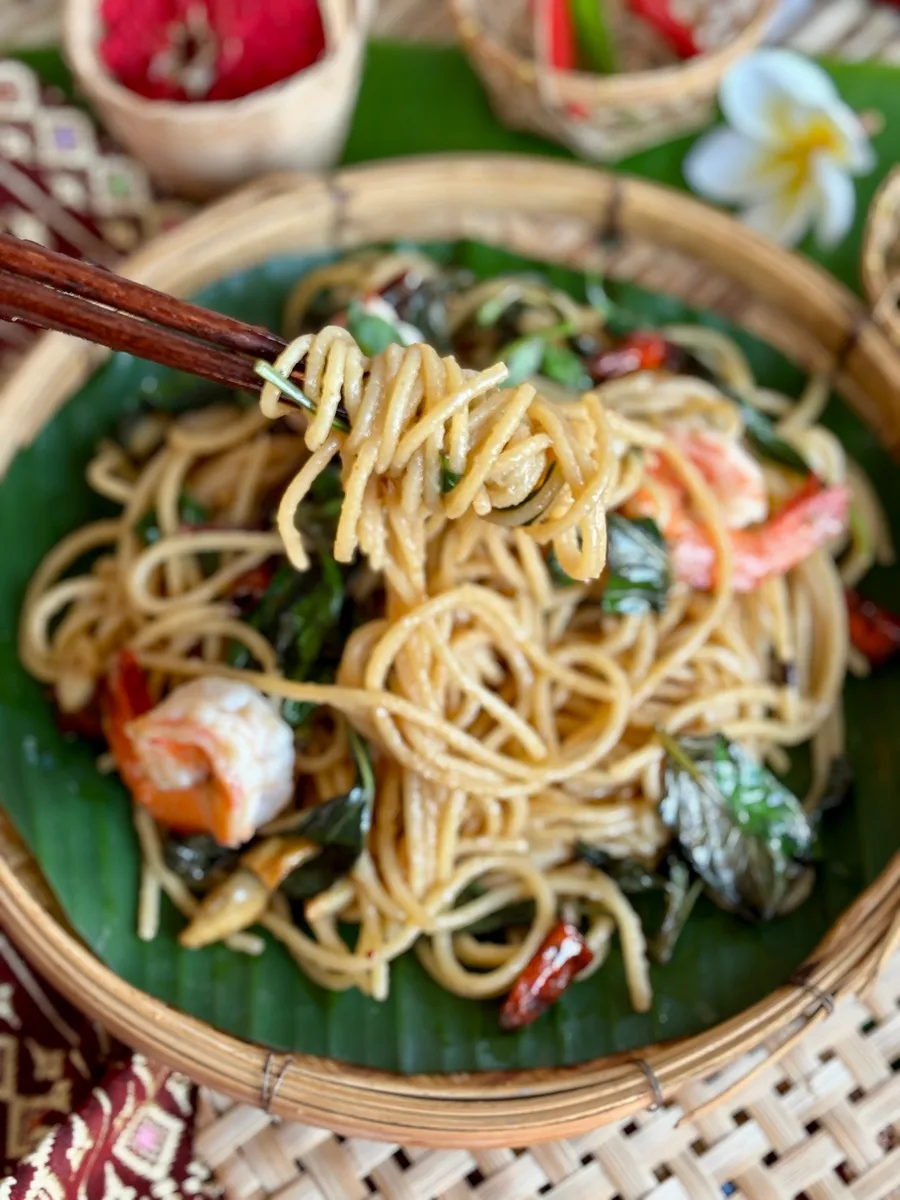
7. Make basil noodles or pasta
Thai basil works really well with noodles. Just toss it in at the end, same as a stir-fry. It gives everything a bit more flavor without needing extra sauce.
I also use it in pasta sometimes, you can check my basil pasta if you want an easy idea.
8. Use it in fresh rice paper rolls
If your basil is starting to wilt and you just want to use it up, this is perfect. It’s also one of the easiest ways to use a lot at once.
Just layer it with veggies, some chicken or shrimp, and wrap everything in rice paper. It adds a fresh flavor that ties everything together.
I’ve got a full rice paper rolls recipe if you want to see how I do it.
Growing tips
I grow Thai basil in my garden here in Thailand, and I think it’s one of the easiest herbs to keep going once you get started.
If you’ve got leftover stems, don’t throw them away. Just place them in a glass of water, and after a few days, you’ll start to see roots forming. Once the roots are a bit longer, you can plant them in soil, and they’ll keep growing.
If you plant it outside, Thai basil loves warm weather and sunlight. Even just a few hours of sun a day makes a big difference. I usually keep mine in a spot where it gets morning sun and a bit of shade later in the day.
Water it regularly, but don’t overdo it. The soil should stay slightly moist, not soaking wet. If the leaves start turning yellow, that’s usually a sign it’s getting too much water.
One small thing that helps a lot: keep picking the leaves. The more you harvest, the more the plant keeps growing. If you leave it too long, it starts to flower, and the leaves can get a bit more bitter.
If you do see flowers, just pinch them off. That way, the plant puts its energy back into growing leaves instead.
How to store
Thai basil is best stored like fresh flowers; trim the stems and place them in a glass of water at room temperature to keep the leaves fresh for several days. You can also store it in the fridge wrapped loosely in a damp paper towel. Thai basil can be frozen, but the leaves will lose their texture, so it’s best used later in cooked dishes rather than as a garnish.
If you end up trying one of these ideas, I’d love to hear how you used it. And if you’ve got your own go-to way of using fresh basil, feel free to share it in the comments!