
This khao man gai recipe makes Thai chicken and rice just like you’ll find it in Thailand. The chicken comes out so juicy, the rice cooks in chicken broth until fragrant, and the dipping sauce is savory and spicy. I’ll show you how to make all three at home, with the cooking tips and little details that make all the difference.

What is khao man gai?
Khao man gai (ข้าวมันไก่) is Thai chicken rice made with tender poached chicken, fragrant rice cooked in chicken broth, and a savory, spicy dipping sauce.
The name literally refers to chicken-fat rice: khao means rice, man refers to fat, and gai means chicken. The rice isn’t simply steamed and served beside the chicken. It’s fried with garlic, ginger, and chicken fat before being cooked in broth, which gives it its characteristic savory flavor.
Khao man gai has roots in Hainanese chicken rice, with regional versions found throughout Southeast Asia. In Thailand, you’ll find it at street stalls, fresh markets, and dedicated chicken-rice shops.
A typical plate comes with sliced poached chicken, seasoned rice, cucumber, dipping sauce made with fermented soybean paste, and a small bowl of broth. Some vendors also offer crispy fried chicken, known as khao man gai tod, or a combination of poached and fried chicken.


Whenever I see those street-food carts with whole cooked chickens hanging behind the glass, I’m tempted to order a plate. The smell of the broth alone is enough to make me hungry.
Making it at home has one advantage, especially for my husband: I can serve a generous portion of chicken instead of wishing there were a few more slices on the plate! I like making my cashew chicken at home for the same reason.
Making it at home takes a little time, but you can prepare everything in one cooking session.
The chicken and rice are deliberately mild, so the sauce brings the salty, tangy, spicy punch that ties the whole plate together.
Praew ♡
my COOKBOOK
My cookbook brings together authentic Thai recipes and Western favorites made with Thai flavors. It’s a lovely place to start if you want to cook more Thai food at home.
Ingredient notes & substitutes
The recipe has three parts: chicken soup, rice, and dipping sauce. Prepare them separately, then bring everything together when you’re ready to serve. The exact quantities are in the recipe card at the end of this post.
For the chicken and broth
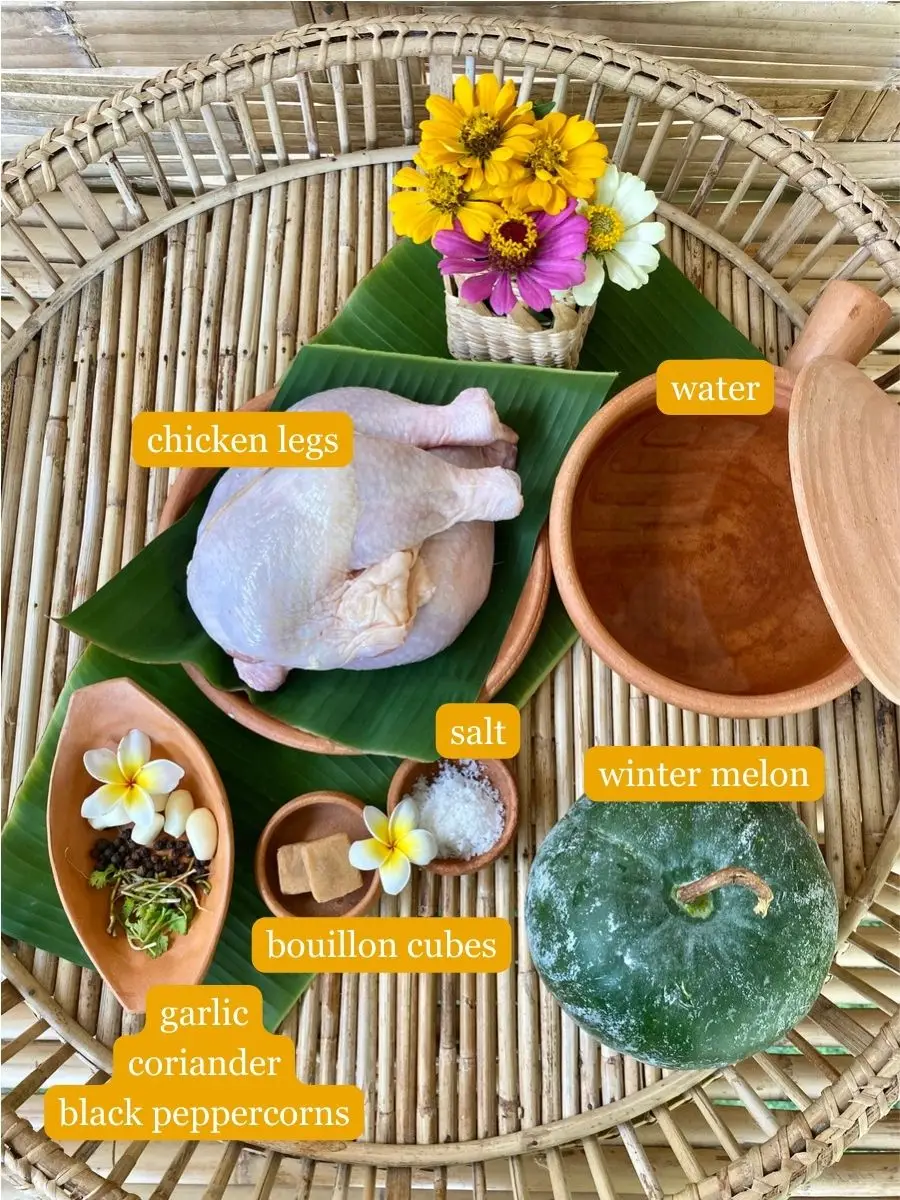
- Chicken legs: I use chicken legs because they provide juicy meat and are easy to portion. You can use a whole chicken instead, although the cooking time will depend on its size.
- Winter melon: This pale green melon has a mild flavor and becomes soft and tender as it simmers. It adds a gentle sweetness to the broth.
- Garlic, coriander, and black peppercorns: These give the broth its aromatic base. If you can find coriander roots, use them rather than just the leaves.
- Bouillon and salt: These help season the broth.
- Water: You’ll use the broth for both the rice and the soup served alongside the chicken.
For the rice
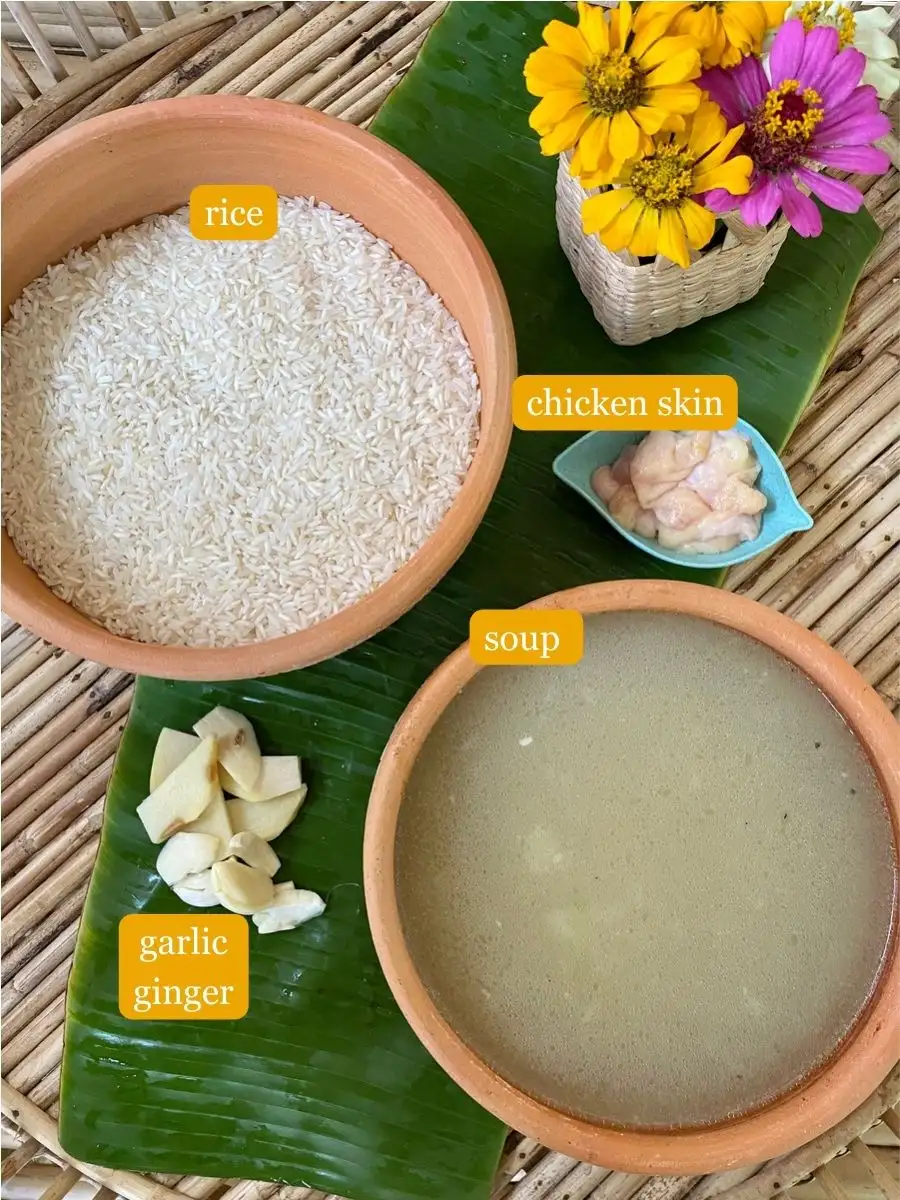
- White rice: This is my choice for Thai chicken rice. Rinse it thoroughly and let it drain before frying, so excess water doesn’t throw off the cooking liquid.
- Chicken skin: This is the secret to the richness of khao mun gai. As the skin cooks, its fat renders into the pan, giving you flavorful chicken oil.
- Garlic and ginger: Frying these aromatics in the chicken fat perfumes the oil before the rice goes in.
- Chicken broth: Use the broth from cooking the chicken. It seasons the rice as it cooks, giving it much more flavor than plain water.
For the khao man gai sauce
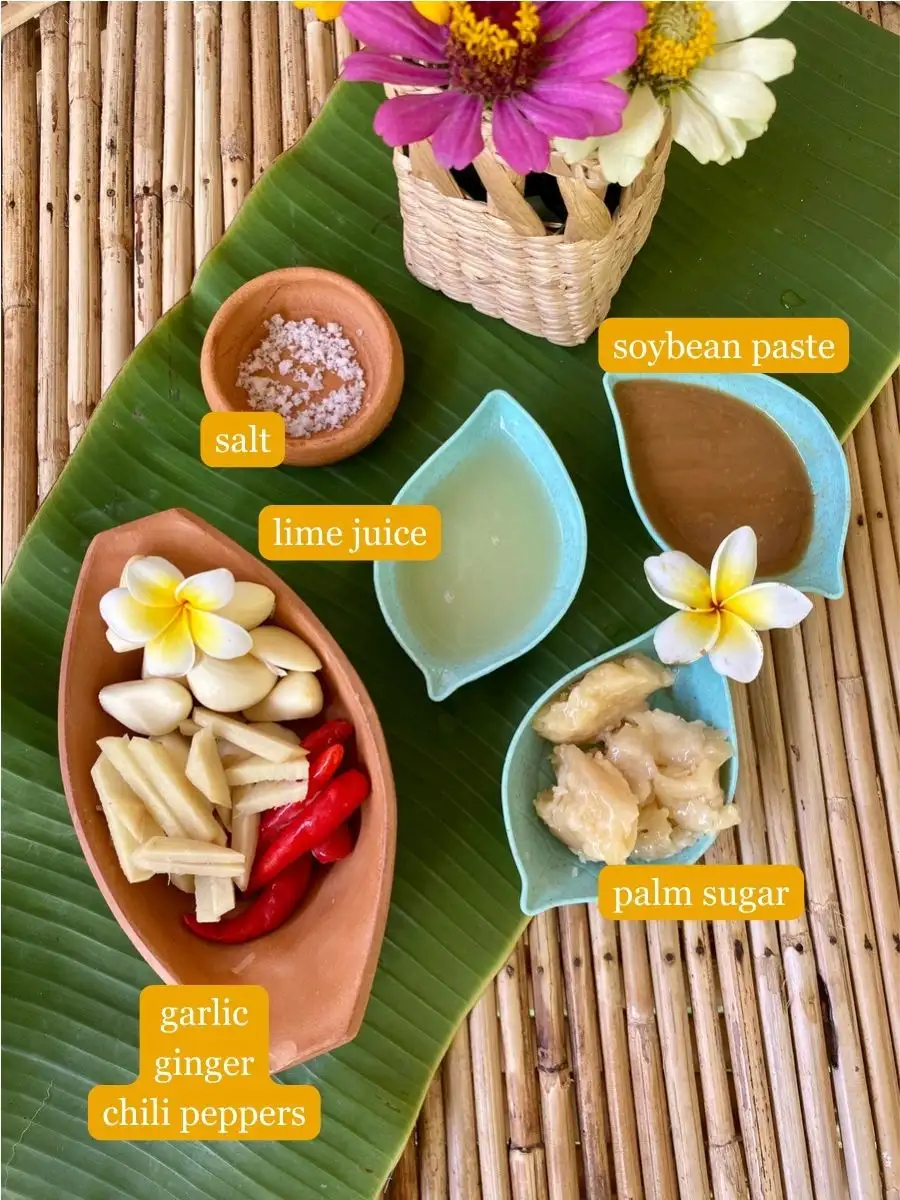
- Thai chilies: I use Thai Jinda chilies, which are pretty spicy. Use fewer chilies if you prefer a milder sauce.
- Fresh ginger and garlic: These give the sauce its pungent, aromatic flavor. Crush them with the chilies rather than simply stirring everything together.
- Fermented soybean paste: Often sold as tao jiao (เต้าเจี้ยว), this is a key ingredient in Thai-style chicken rice sauce.
- Palm sugar: I prefer palm sugar for its rounded sweetness. It balances the acidity and chili heat without making the sauce taste like a sweet dressing.
- Fresh lime juice: Adds brightness and helps balance the saltiness of the soybean paste.
- Salt

Note: The rice and chicken aren’t supposed to be aggressively seasoned. The sauce supplies the spice and flavor intensity, so you can adjust each bite to your liking.
How to make khao man gai
We’ll make the broth first, then use some of it for cooking the rice. You can prepare the dipping sauce while the rice cooks, which makes the whole process feel much more manageable.
Make the chicken broth

1: Prepare the winter melon. Cut the winter melon into medium to large chunks. Peel it if needed and remove any seeds or tough central parts.

2: Crush the aromatics. Crush the garlic, coriander root, and black peppercorns together in a mortar and pestle. A rough crush is enough to release their aromas into the broth.

3: Remove some chicken skin. Cut away a portion of the chicken skin and set it aside for the rice.

4: Simmer the chicken. Bring the water to a boil in a large pot. Add the chicken, crushed aromatics, winter melon, and bouillon cubes. Once the liquid returns to a simmer, lower the heat and cook gently for about 40 minutes.
You want a gentle simmer, not a rolling boil. Vigorous boiling can damage the chicken skin and make the broth cloudy. Check that the thickest part of the chicken reaches 74°C (165°F) and that the meat is tender before removing it.
5: Reserve the broth. Carefully remove the cooked chicken. Keep the broth for the rice and serving soup, and set the chicken aside while you prepare the other components.
Make the rice

1: Rinse and drain the rice. Rinse the rice several times until the water runs noticeably clearer, then let it drain thoroughly.

2: Render the chicken fat. Place the reserved chicken skin in a non-stick wok or skillet over moderate heat. Cook, turning as needed, until the skin releases its fat and becomes golden.
You should see the oil collecting in the pan. Don’t rush this step over high heat, or the skin may brown before enough fat has rendered.

3: Fry the garlic and ginger. Add the garlic and ginger to the chicken fat. Fry briefly, stirring, until fragrant and lightly golden.

4: Coat the rice in oil. Add the drained rice and stir until the grains are evenly coated with the garlic, ginger, and chicken fat.

5: Cook the rice in chicken broth. Transfer the rice mixture to your rice cooker or cooking pot. Add 5 cups (1.2l) of the reserved chicken broth and cook until the rice is tender and the liquid has been absorbed.
If you’re using a rice cooker, follow its normal cooking cycle. For stovetop cooking, keep the pot covered and use the heat and cooking time appropriate for your pot and rice.
Make the dipping sauce

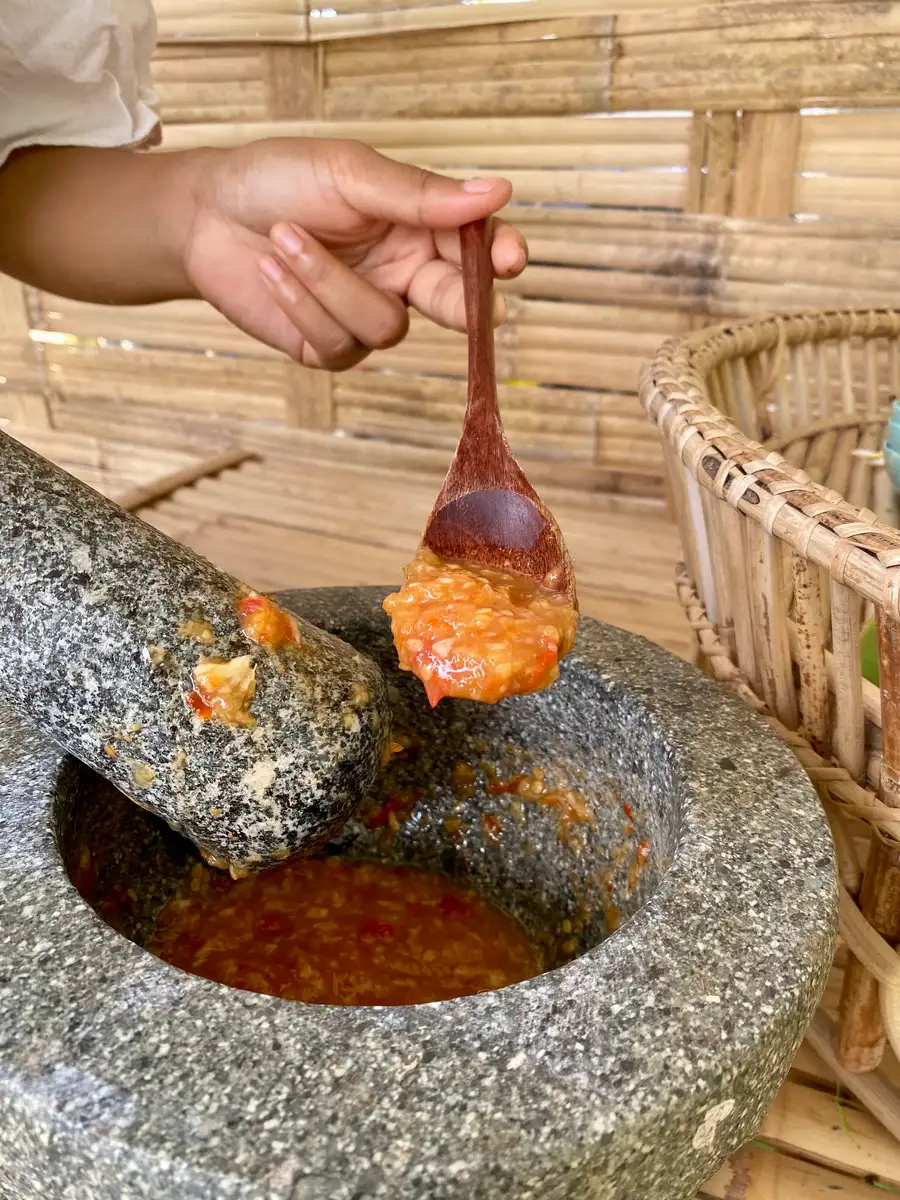
1: Crush the spices. While the rice finishes cooking, crush the chilies, garlic, and ginger in a mortar and pestle.

2: Add the remaining ingredients. Add the palm sugar, lime juice, fermented soybean paste, and salt. Mix until the sugar dissolves and the ingredients are evenly combined.
How to serve
Slice the cooked chicken into manageable pieces. If the skin is intact, use a sharp knife and a gentle slicing motion to avoid tearing it.
Scoop the rice onto serving plates, arrange the chicken alongside it, and serve with the dipping sauce, cucumber slices, and a small bowl of the remaining broth.
Taste the rice and chicken together with the sauce. That’s the combination you’re aiming for: fragrant rice, tender chicken, a bright and savory sauce, and warm broth on the side.
How to store
Store the chicken, rice, broth, and dipping sauce separately in airtight containers.
Chicken and rice
Broth
Dipping sauce
To reheat the rice, sprinkle on a little water, cover, and microwave until steaming hot, stirring if needed. You can also steam it gently. Reheat the chicken and broth separately until hot throughout, and add a splash of broth to the chicken if it needs moisture.


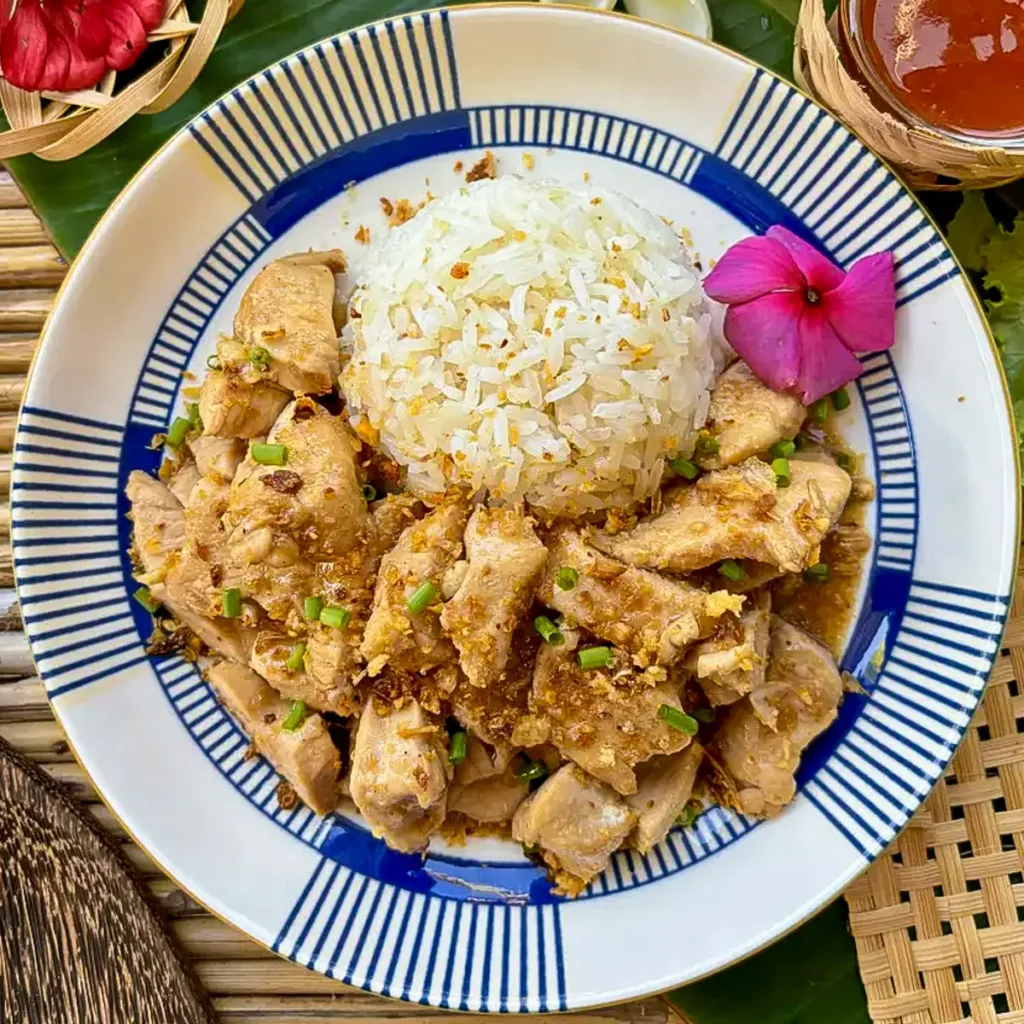
Tried this khao man gai recipe?
If you make it, please leave a star rating or comment below and tell me how your rice turned out.
Khao Man Gai Recipe (Thai Chicken and Rice)

Equipment
- Cutting board & sharp knife
- large pot
- Frying pan
Ingredients
For the broth
- 12½ cups water
- 1½ cups winter melon, peeled and sliced
- 3 small bunches coriander, stems and roots
- 1 teaspoon black peppercorns
- 4 cloves garlic
- 2 chicken bouillon cubes
- 1 teaspoon salt
- 2.2 lb chicken legs, skin-on
For the rice
- 3½ cups jasmine rice, uncooked
- 3 cloves garlic, peeled
- 1 tbsp ginger, sliced
- 5 cups chicken broth, reserved from cooking the chicken
FOR THE DIPPING SAUCE
- 10 cloves garlic
- 5 Thai chilies, adjust to your preferred spice level
- 2 tablespoons palm sugar, w²
- 1 tbsp ginger, chopped
- 2 tablespoons lime juice
- 3 tablespoons soybean paste
- ½ teaspoon salt
Instructions
Make the chicken broth
- Cut the winter melon into medium to large chunks. Peel it if needed and remove the seeds and tough central parts.
- Crush the garlic, coriander, and black peppercorns together using a mortar and pestle.
- Cut away a portion of the chicken skin and set it aside for the rice.
- Bring the water to a boil in a large pot. Add the chicken legs, crushed aromatics, winter melon, chicken bouillon cubes, and salt. Reduce the heat and simmer gently for about 40 minutes, until the chicken is cooked through and tender.
- Remove the chicken from the pot and reserve the broth for cooking the rice and serving alongside the dish.
Make the rice
- Rinse the jasmine rice several times until the water runs noticeably clearer, then drain thoroughly.
- Slice the reserved chicken skin into small pieces. Place it in a non-stick wok or skillet over medium heat and cook until the fat renders out and the skin turns golden.
- Add the garlic and sliced ginger to the rendered chicken fat. Fry briefly until fragrant and lightly golden.
- Add the drained rice and stir until the grains are evenly coated with the chicken fat, garlic, and ginger.
- Transfer the rice mixture to a rice cooker or cooking pot. Add 5 cups (1.2 litres) of the reserved chicken broth and cook until the rice is tender and the liquid has been absorbed. Follow your rice cooker’s normal cooking cycle, or cover and cook gently on the stovetop.
Make the dipping sauce
- Crush the Thai chilies, garlic, and ginger together in a mortar and pestle.
- Add the palm sugar, lime juice, fermented soybean paste, and salt. Mix until the palm sugar dissolves and the ingredients are well combined.
Serve
- Slice the cooked chicken and serve over the fragrant chicken rice with the dipping sauce, cucumber slices, and bowls of the reserved chicken broth.
Notes
- Use the nutrition card in this recipe as a guideline.