
Goong Ob Woon Sen (Thai Glass Noodle Prawn)
As an Amazon Associate, I earn from qualifying purchases. Read the full disclosure here .
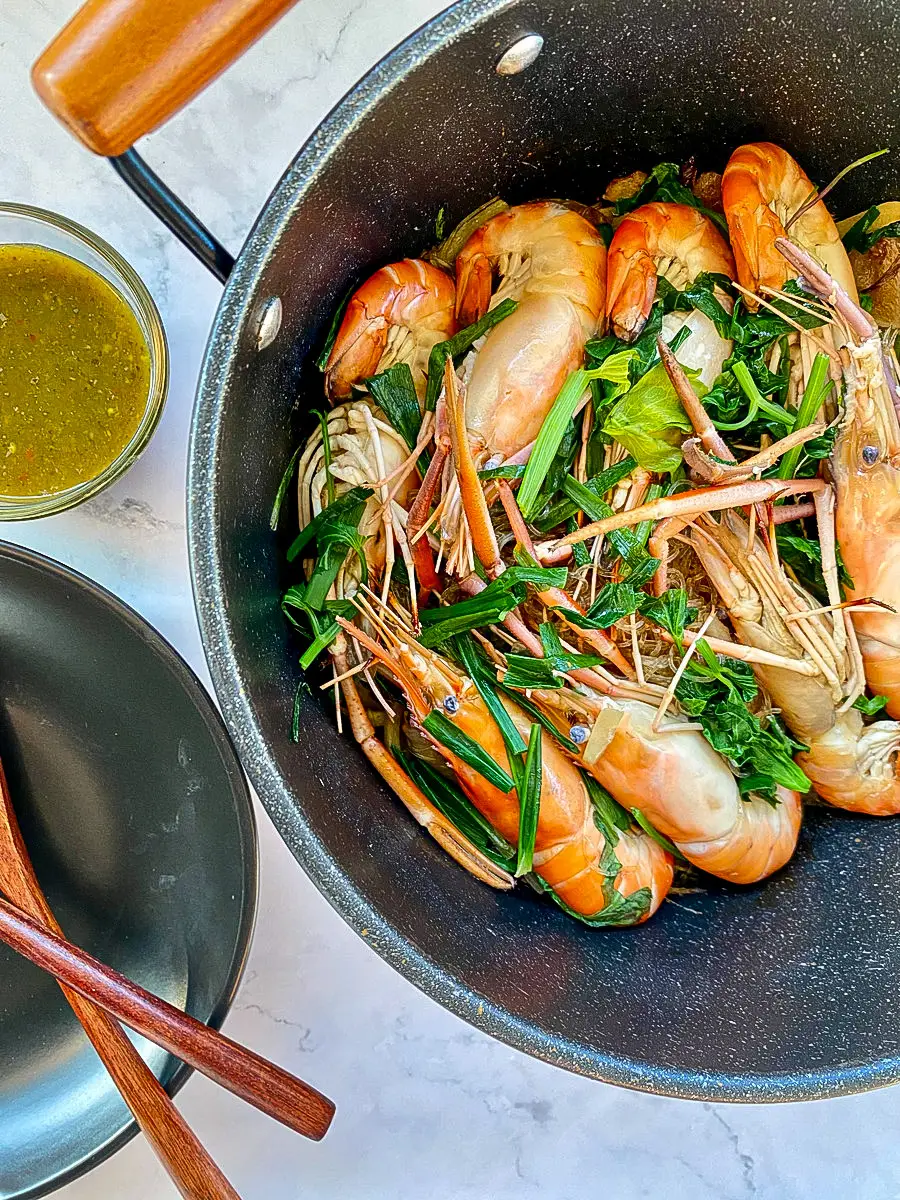
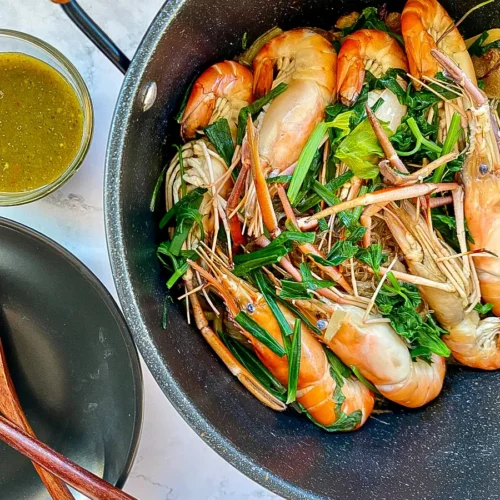
If you like garlic, ginger, seafood, and slippery noodles, this goong ob woon sen recipe is one to try. The glass noodles soak up all the savory sauce while the prawns steam gently on top, making the whole pot smell incredible by the end.
What is goong ob woon sen
Goong ob woonsen is a Thai one-pot glass noodle dish where prawns, glass noodles, ginger, garlic, herbs, sauces, and often bacon all steam together in the same pot. As everything cooks, the noodles absorb the flavors of the seafood, sauce, and aromatics, which is what makes the dish so good.
The noodles turn savory, peppery, slightly sweet, and especially aromatic from the ginger, garlic, and herbs.
In Thailand, it’s especially popular at seafood restaurants and shared family meals.
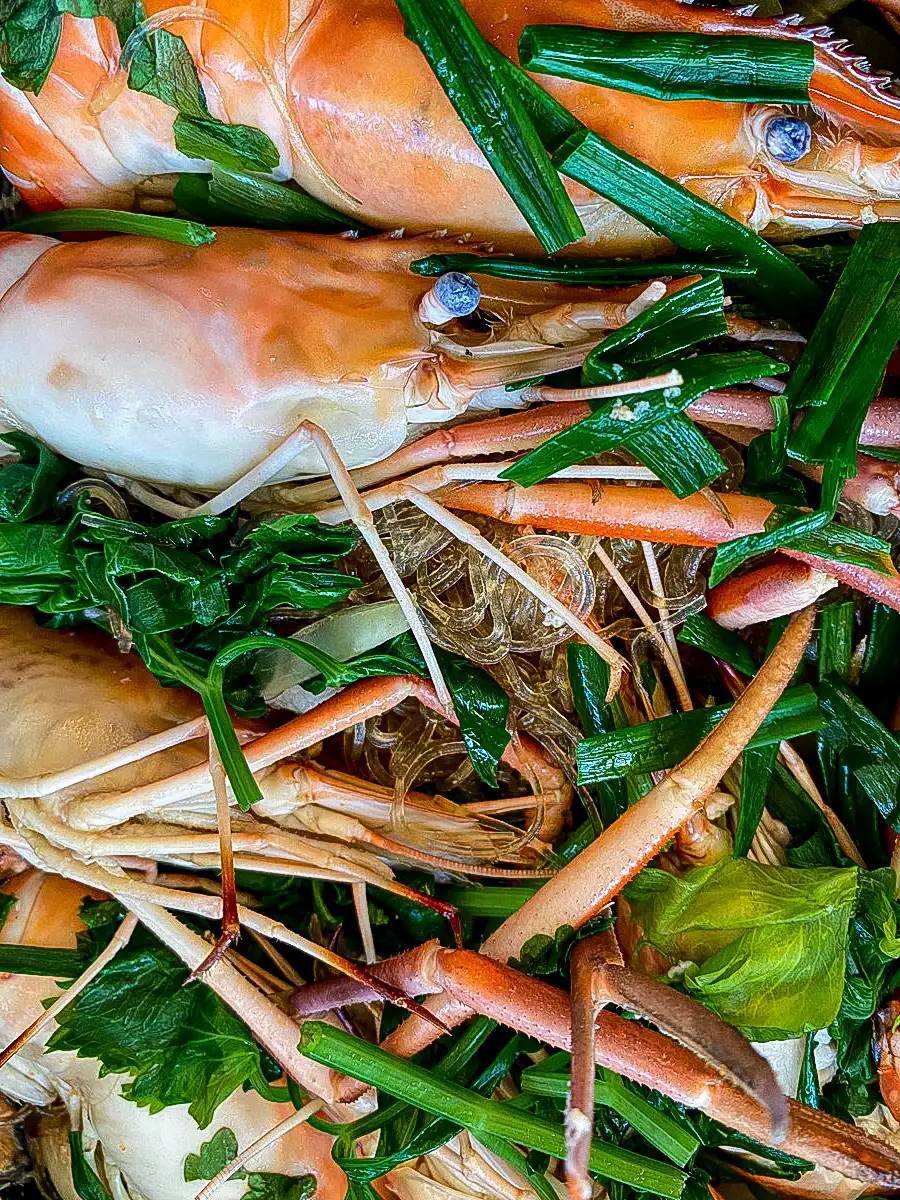

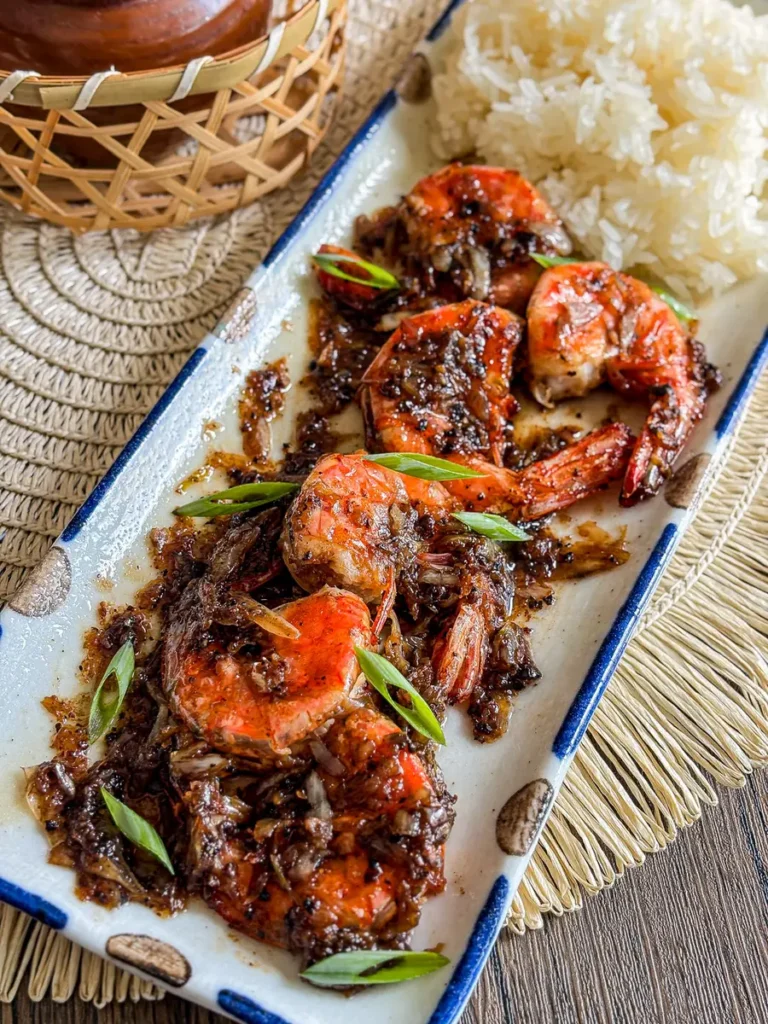
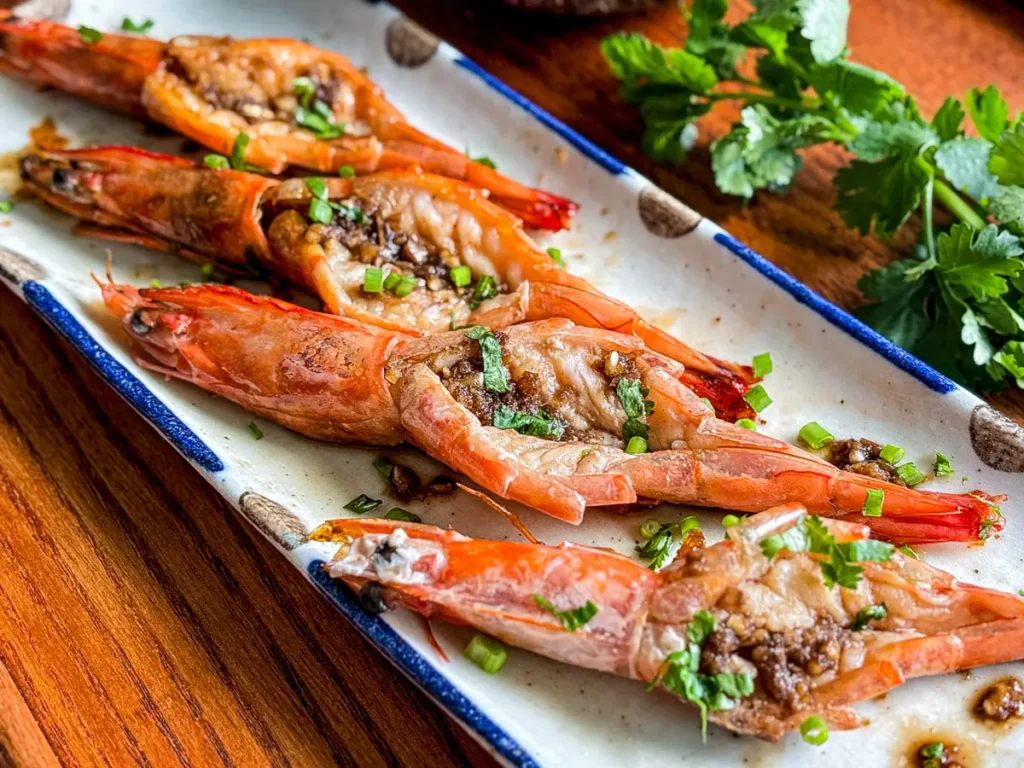
If you enjoy Thai seafood dishes like this, you’ll probably also love my crispy garlic prawns and goong tod.

Before you start
If it’s your first time making this, it’s much easier than it looks. Once everything is layered in the pot, the dish mostly takes care of itself.
The biggest thing is not over-soaking the glass noodles before cooking. They should feel softened and flexible, but not completely mushy since they continue cooking as they steam and absorb the sauce.
Another thing that surprises people is how little liquid goes into the pot at first. That’s completely normal. The prawns, vegetables, and noodles all release moisture while cooking, which creates the sauce naturally as everything steams together.
I also highly recommend using bacon if possible. This is one of those little Thai restaurant tricks that makes a big difference. The bacon fat replaces oil and gives the noodles a richer, more savory flavor without needing much extra seasoning.
Praew ♡
Learn Thai cooking step by step
My cookbook is a combination of authentic Thai recipes and Western dishes cooked with Thai flavors and ingredients. It’s a great starting point if you’re new to Thai cooking or want to cook it more often.

Ingredient notes & substitutes
You can find everything at Asian grocery stores or markets. Head to the recipe card at the bottom of this post for the exact measurements.
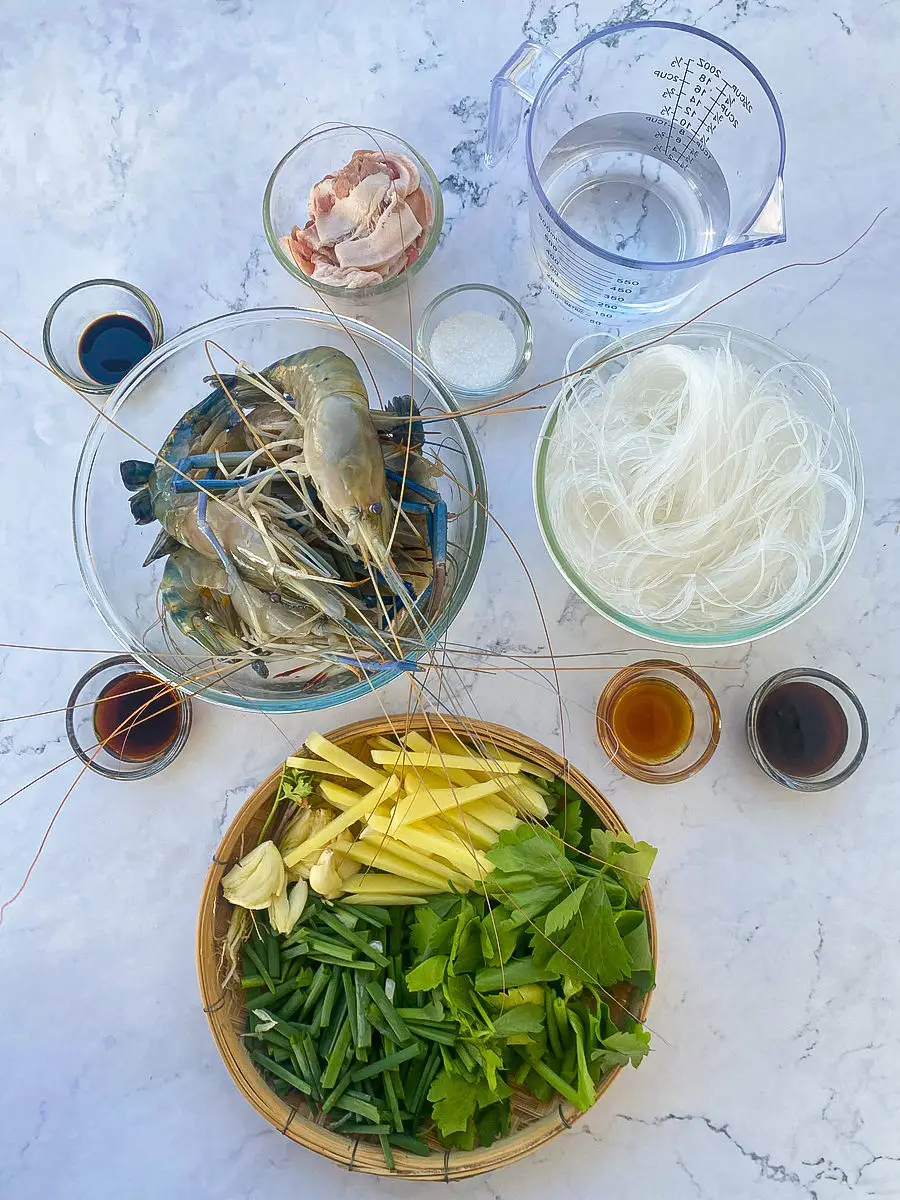
Main ingredients
- Prawns or shrimp: Large prawns give the best flavor and stay juicy while steaming. Black tiger shrimp also work really well. Shell-on prawns add extra flavor to the noodles, but peeled ones work too.
- Glass noodles: Also called bean thread noodles or cellophane noodles. Soak them until softened but still slightly firm since they continue cooking in the pot.
- Bacon: The bacon fat replaces oil and adds lots of savory flavor to the noodles.
- Garlic, coriander root & ginger: These aromatics give the dish its classic flavor and smell.
- Chinese celery & green onions: Added near the end for freshness and aroma.
Sauce ingredients
- Water: Helps steam the noodles and creates the sauce as everything cooks together.
- Oyster sauce: The main savory flavor base for the noodles.
- Dark soy sauce: Adds color and a slight sweetness.
- Golden mountain sauce: A common Thai seasoning sauce that adds extra umami flavor.
- White or black pepper: Gives the dish its signature peppery finish.
- Sesame oil: Adds a subtle nutty aroma.
- Sugar: Balances the savory sauces without making the dish sweet.
Step-by-step instructions
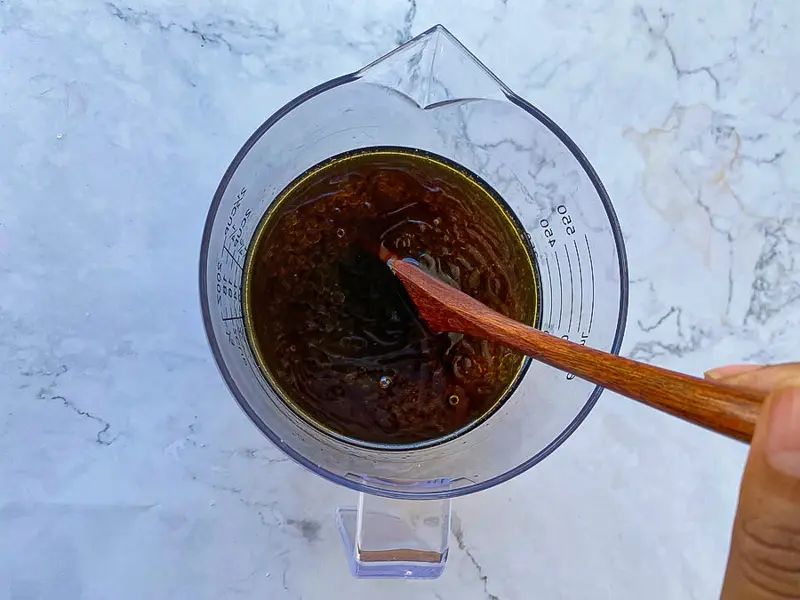
1. Mix the sauce: Stir together the water, oyster sauce, dark soy sauce, Golden Mountain sauce, sesame oil, sugar, and pepper in a bowl.
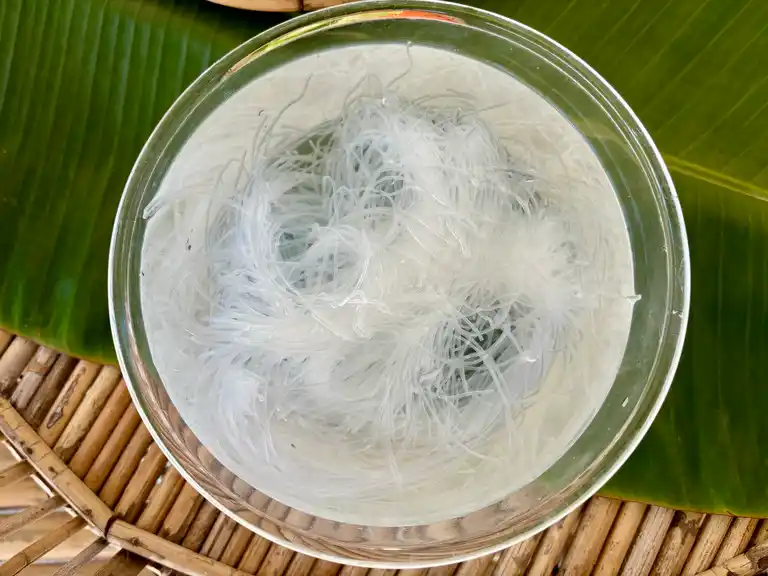
2. Soak the noodles: Soak the glass noodles until softened but still slightly firm. Drain well.
If the noodles become too soft at this stage, they can turn mushy later.
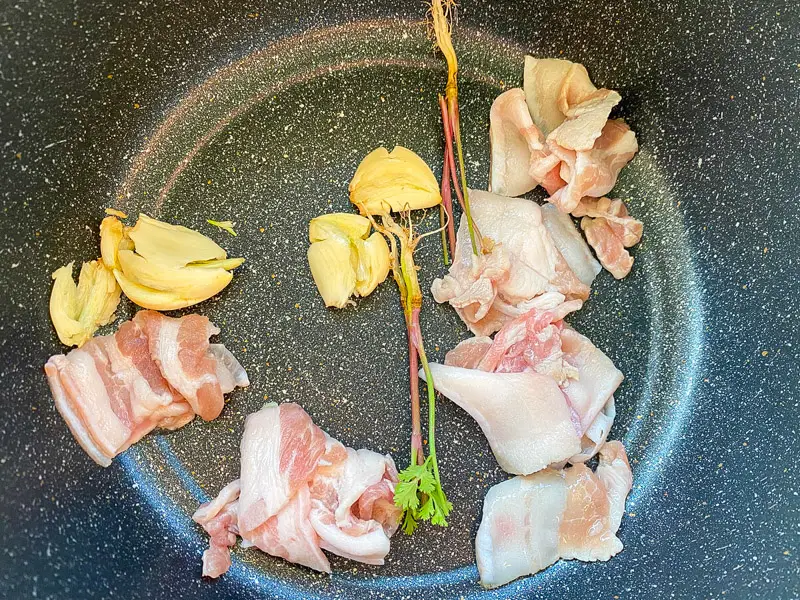
3. Cook the aromatics: In a heavy-bottomed pot or deep pan, cook the bacon until the fat renders out. Add the garlic and coriander root and cook until fragrant.
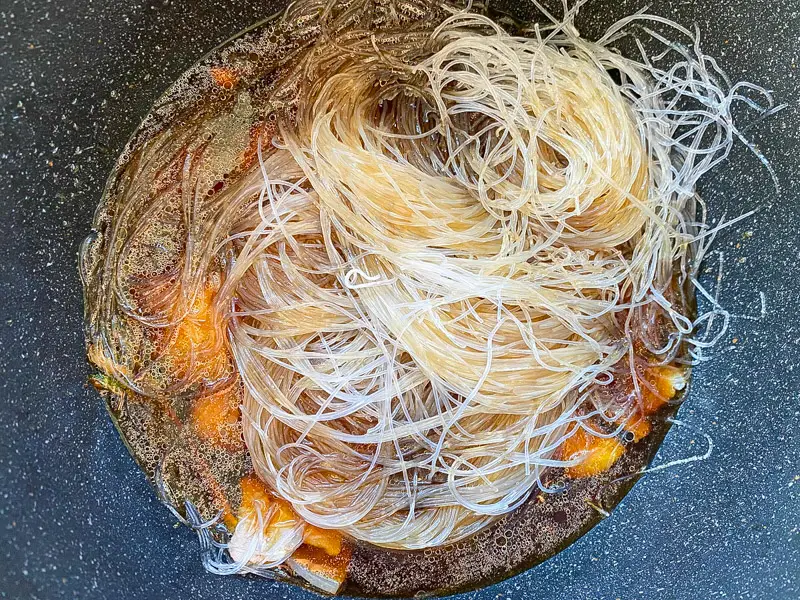
4. Add noodles and sauce: Add the soaked noodles and pour the sauce over them. Toss lightly so the noodles start absorbing the flavor evenly.
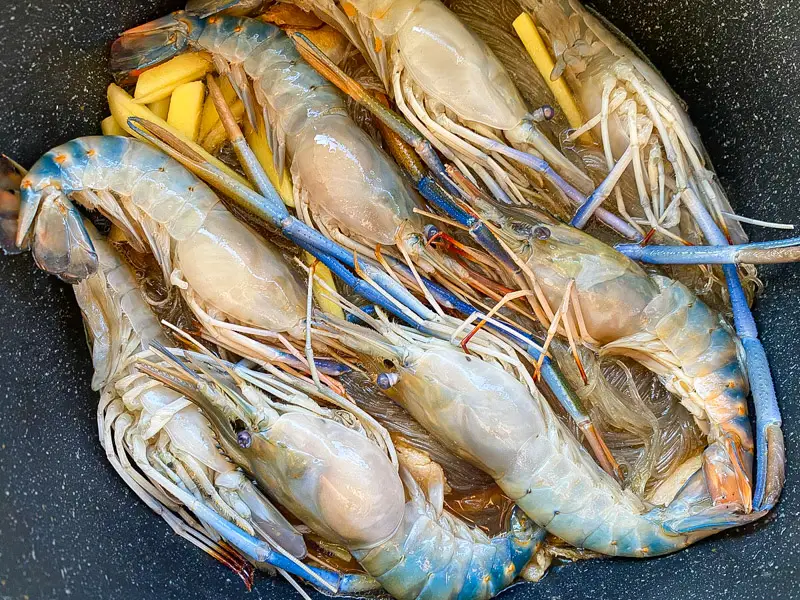
5. Layer the prawns: Arrange ginger slices over the noodles, then place the prawns on top in a single layer.
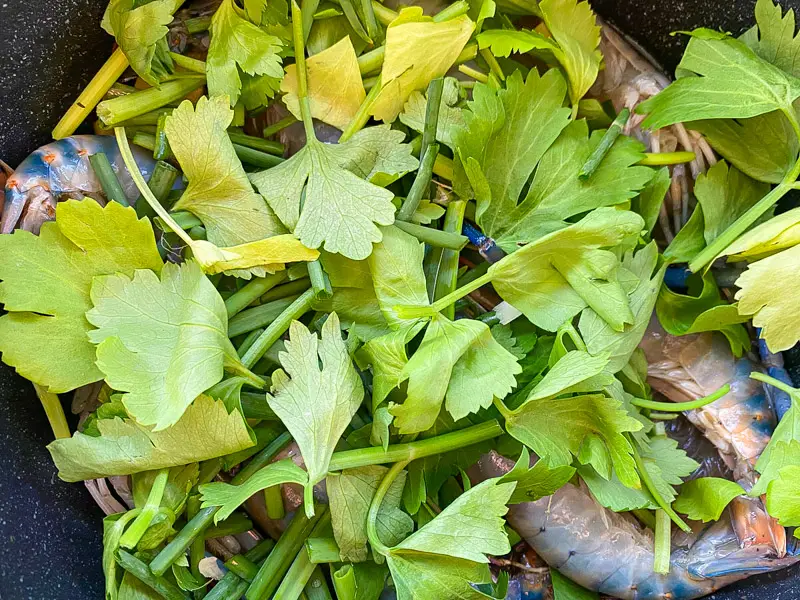
6. Finish with herbs: Top with Chinese celery and green onions. Cover the pot and let everything steam together for about 5 minutes.
The noodles should be glossy and fully seasoned while the prawns turn just cooked through.
The noodles should taste savory first, with lots of peppery aroma from the ginger and herbs at the end. The sauce should fully coat the noodles without pooling heavily at the bottom of the pot.

Serving tip
Goong ob woonsen is traditionally served straight in the pot it was cooked in. In Thailand, everyone usually scoops some noodles and prawns into their own bowls while the noodles are still steaming hot.
I also highly recommend serving it with my Thai seafood dipping sauce or Thai green seafood sauce on the side.
How to store & reheat
Storage: Store leftovers in an airtight container in the fridge for up to 2 days.
Reheating: Reheat gently in a pan over medium-low heat with a small splash of water if needed. Try not to overcook the prawns during reheating or they can become rubbery.

Goong Ob Woon Sen (Thai Glass Noodle Prawn)
Equipment
- Cutting board & sharp knife
- Mixing bowl
- Colander or sieve for draining noodles
- Large pot, Dutch oven, or deep skillet with lid
- Tongs
Ingredients
Main ingredients
- ½ cup bacon, thin slices
- 4 cloves garlic, bruised
- 2 coriander root
- 5 oz dry glass noodles
- 2 tbsp ginger, thin strips
- 1 lb prawns
- 1 handful Chinese celery, roughly chopped
- 1 handful green onions, roughly chopped
Sauce ingredients
- ½ cup + 2 tbsp water
- 2 tbsp oyster sauce
- 1 tbsp dark soy sauce
- 2 tbsp golden mountain sauce
- 2 tbsp sesame oil
- 1½ tbsp white sugar
- 1 tsp black pepper
Instructions
- Mix the sauce: Stir together the water, oyster sauce, dark soy sauce, golden mountain sauce, sesame oil, sugar, and pepper in a bowl.
- Soak the noodles: Soak the glass noodles in water until softened but still slightly firm. Drain well.
- Cook the aromatics: In a pot or deep skillet with a lid, cook the bacon until the fat renders out. Add the garlic and coriander root and cook until fragrant.
- Add noodles and sauce: Add the soaked noodles to the pot and pour the sauce over them. Toss lightly so the noodles are evenly coated.
- Layer the prawns: Arrange the ginger slices over the noodles, then place the prawns on top in a single layer. Add the Chinese celery and green onions on top.
- Steam and serve: Cover with a lid and cook for about 5 minutes, or until the prawns are cooked through and the noodles have absorbed the sauce. Serve hot.
Notes
- Use the nutrition card in this recipe as a guideline.
I love this recipe